What this heartbreak quiz measures
This am I heartbroken quiz estimates how often acute romantic loss pain shows up in your self-report. Twenty-two original frequency items group into four distress domains inspired by rejection grief research: grief waves, ex longing, identity loss, and physical strain. Each item also maps to a fear-of-intimacy stack layer so you can see whether vulnerability pull-back, trust hesitation, self-disclosure limits, or closeness anxiety rides alongside heartbreak. Your heartbreak distress index averages these patterns into a 0 to 100 score where higher numbers mean more distress endorsement on this screener.
Grief waves
Sudden sadness surges, crying until drained, numb shock, and grief that hits hardest when you are alone.
Ex longing
Replaying memories, social media checks, unsent messages, jealousy images, and ex-linked triggers.
Identity loss
Not knowing who you are without them, flat future vision, lost interests, and shame about feeling lost.
Physical strain
Sleep disruption, appetite shifts, chest or stomach tightness, and fatigue from carrying grief.
How it works
Three steps from first question to your heartbreak distress report with fear-of-intimacy stack. Click Start Quiz to open the interactive quiz in a full-screen modal.
Answer 22 frequency items
Rate how often each heartbreak pattern and closeness habit shows up since the loss, from Never to Almost always. You click Next after each answer; nothing auto-advances.
Items map to distress domains and intimacy stack
Your answers accumulate percentages for grief waves, ex longing, identity loss, and physical strain, plus four fear-of-intimacy stack layers.
View band and dual charts
Results show Lower, Mixed, or Higher Heartbreak Distress with distress domain bars and a fear-of-intimacy stack chart. Higher distress bands include crisis resources.
Take the am I heartbroken quiz
Rate 22 statements about heartbreak distress since your split or loss. Your answers produce a heartbreak distress index from 0 to 100, a fear-of-intimacy stack index, four domain scores, and a band label for reflection or therapy conversation.
Opens in a focused modal. No account required. Results stay on screen.
What your result means
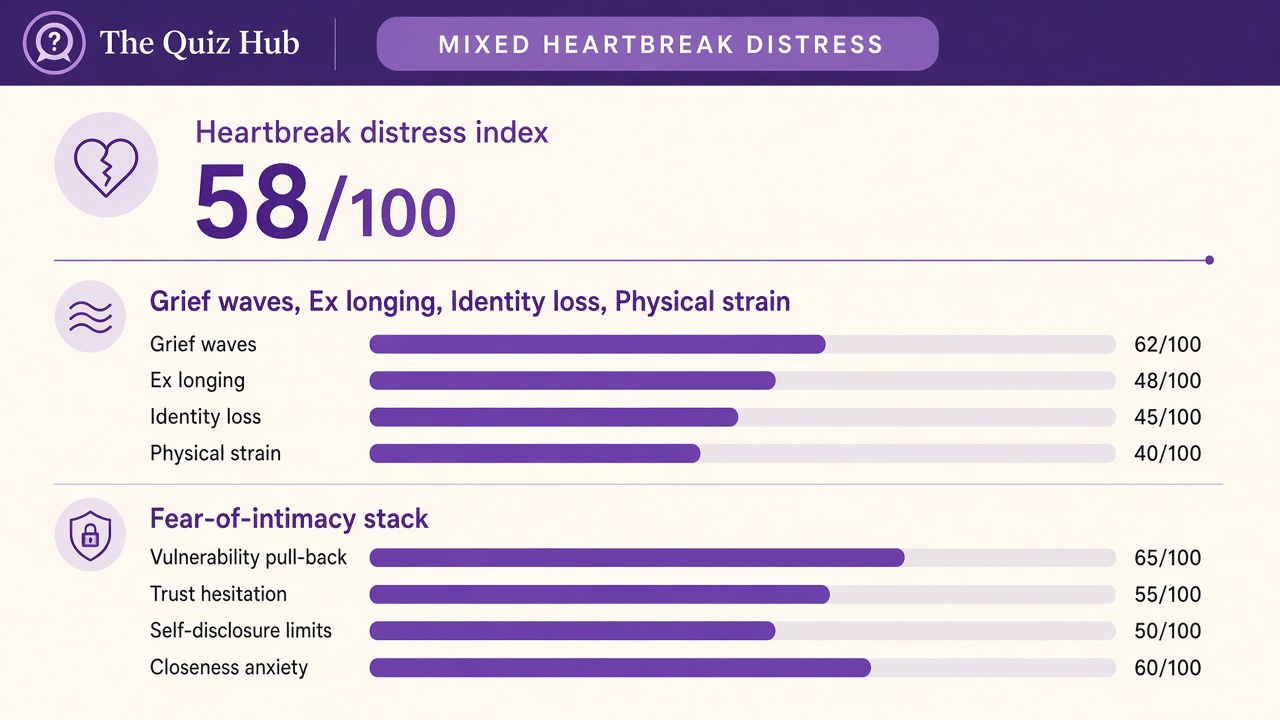
Your heartbreak distress index is the normalized total across all 22 items on a 0 to 100 scale. Higher scores mean more frequent grief waves, ex longing, identity loss, and physical strain on this screener. Domain bars show endorsement rates so you can see which pattern drives your result most. The fear-of-intimacy stack chart shows parallel layers for vulnerability pull-back, trust hesitation, self-disclosure limits, and closeness anxiety when hurt makes closeness feel risky.
| Band | Index range | Typical reading |
|---|---|---|
| Lower Heartbreak Distress | 0 to 35 | Acute heartbreak signals look milder; brief setbacks can still happen |
| Mixed Heartbreak Distress | 36 to 65 | Blend of pain and relief days; worth tracking triggers |
| Higher Heartbreak Distress | 66 to 100 | Frequent distress that may warrant professional grief support |
What your heartbreak report looks like
After all 22 items, you get a heartbreak distress index from 0 to 100, a band label, four distress domain bars, and a fear-of-intimacy stack chart with vulnerability pull-back, trust hesitation, self-disclosure limits, and closeness anxiety layers. Percentages reflect how you experience loss pain, not proof you will never heal.
What this quiz can and cannot tell you
Can tell you
- How often heartbreak distress patterns showed up for you since the loss
- A heartbreak distress index and fear-of-intimacy stack index with domain bars
- Which distress domain or intimacy stack layer feels strongest in your current experience
- A starting point for therapy conversation about grief, attachment, and closeness fears
Cannot tell you
- Whether you are truly heartbroken in a clinical sense without professional evaluation
- Whether getting back together with your ex is wise without mutual effort and safety checks
- Whether your grief is complicated grief or depression without a licensed clinician
- What treatment you need without professional mental health support
Romantic rejection, grief waves, and the fear-of-intimacy stack
Anthropologist Helen Fisher and psychologist Lucy Brown used brain imaging to show that romantic rejection can activate regions linked to physical pain and craving, which helps explain why heartbreak can feel like withdrawal. Grief after a split is not linear: a song, a mutual friend, or seeing your ex with someone new can restart longing even when you know the relationship ended. Researchers also note that hiding grief in public while spiraling alone can raise both distress and shame.
The Quiz Hub built this am I heartbroken quiz as an original self-report screener inspired by those themes, not a reproduction of any single published instrument. Readers often compare it to sibling tools on this site. Our am I healed from my breakup quiz screens recovery signals where higher scores mean more healing endorsement. The rebound relationship quiz maps rushed timing and ex comparison in a new romance. The trauma bond quiz tracks intermittent reinforcement cycles rather than general loss grief.
| The Quiz Hub test | What it adds |
|---|---|
| Am I healed from my breakup quiz | Breakup recovery index on processing, ex detachment, identity rebuild, and connection readiness |
| Rebound relationship quiz | Post-breakup timing, ex comparison, distraction use, and genuine investment in a new romance |
| Trauma bond quiz | Intermittent reinforcement, withdrawal cycles, and hope-hurt loops, not general grief frequency |
| Fear of intimacy quiz | FOIS-inspired avoidance index without heartbreak distress domains |
| Am I losing feelings for my boyfriend quiz | Fading affection in a current relationship, not post-split grief waves |
| This heartbreak quiz | Heartbreak distress index plus parallel fear-of-intimacy stack layers |
Sample item types include frequency ratings such as whether you replay their texts on repeat, or whether grief spikes hit hardest when you are alone at night. High ex longing with high physical strain often lands in Mixed Heartbreak Distress when pain is real but not constant. Elevated fear-of-intimacy stack layers may mean you guard vulnerability while grief is still active, which therapy can address separately from dating questions. Read how we review quizzes in our editorial policy or browse more tools on our relationships and dating hub.
Am I heartbroken quiz FAQ
What does heartbreak distress mean on this quiz?
Heartbreak distress describes how often acute grief waves, ex-centered longing, identity loss, and body strain show up after a romantic split or rejection. Pain intensity varies by attachment history, relationship length, and whether closure was clear. This am I heartbroken quiz measures those patterns with a heartbreak distress index from 0 to 100 where higher scores mean more distress endorsement on this screener. It is not a verdict on whether you should move on.
What does this heartbreak quiz measure?
Twenty-two original frequency items ask how often you notice grief waves, ex longing, identity loss, and physical strain since the breakup or loss. Each item also maps to a fear-of-intimacy stack layer: vulnerability pull-back, trust hesitation, self-disclosure limits, and closeness anxiety. You receive a heartbreak distress index from 0 to 100 and a band from Lower through Higher Heartbreak Distress.
What is the fear-of-intimacy stack on this quiz?
The fear-of-intimacy stack is a second results chart inspired by FOIS-style intimacy avoidance themes from Descutner and Thelen (1991), adapted to post-loss closeness habits. Each of the 22 items maps to one of four stack layers showing how heartbreak may connect to guarded closeness: hiding vulnerability, testing trust, limiting disclosure, or panicking when bonds deepen. The stack index summarizes those layers alongside the heartbreak distress index.
How is this different from the am I healed from my breakup quiz?
The am I healed from my breakup quiz screens recovery signals such as emotional processing, ex detachment, identity rebuild, and connection readiness, where higher scores mean more healing endorsement. This am I heartbroken quiz focuses on acute distress frequency: grief waves, ex longing, identity loss, and physical strain, where higher scores mean more heartbreak pain on this screener. Both include a parallel fear-of-intimacy stack chart.
Can this quiz diagnose depression or complicated grief?
No. The heartbreak distress index describes self-reported pattern frequency on this abbreviated screener. Only a licensed mental health professional can evaluate depression, complicated grief, or any disorder through clinical interview and structured tools. Online quizzes cannot confirm or rule out psychiatric conditions.
Who reviewed this content?
Dr. Elena Vasquez, PhD, reviewed the test framing and result explanations. See our editorial policy for review standards.
Reviewed by