What the Homophobia Test measures
This test does not label your ex, coworkers, or celebrities homophobic from one session. It measures how much you agree with unofficial bias reflection statements grouped four ways: personal bias reflection about noticing your discomfort without blaming couples; respectful language habits about slurs, privacy, and neutral workplace talk; ally learning and accountability about listening, challenging unfair rules, and repairing harm; and quiz-not-label-others limits about refusing stranger dunk threads and bar-height verdict cosplay. You rate 22 statements from strongly disagree to strongly agree, with reverse-worded traps so dunk myths cannot inflate every bar. Your answers also feed a second chart on closeness and trust habits. The total becomes an index from 0 to 100 where higher means more reported inclusive reflection habits on this screener, not moral authority to shame others.
Personal bias reflection
Notice discomfort without blaming couples.
Respectful language habits
Slurs off; privacy on for coming out.
Ally learning and accountability
Listen, challenge unfair rules, repair slips.
Quiz not label others
Self-work mirror; no stranger dunk license.
How it works
Answer 22 agreement items
Rate each statement from Strongly disagree to Strongly agree. Tap Next after each answer.
Answers sort into four domains
Each answer feeds one of four bias reflection groups, and every item also feeds a closeness and trust layer.
See your index and charts
You get a 0 to 100 index, a band, four domain bars, and a second chart for intimacy habits.
Take the Homophobia Test
Answer 22 short statements to see your bias reflection index, four domain bars, and a closeness and trust chart.
What your result means
Your index is the average of all 22 answers, scaled from 0 to 100, with reverse-worded items flipped first. Read quiz-not-label-others bars together with ally learning before you treat a high score as permission to call someone homophobic. Licensed mediators and crisis lines still matter when harm is present.
| Band | Index range | Typical reading |
|---|---|---|
| Building bias reflection habits | 0 to 35 | Fewer agreed habits on core domains or unofficial limit items on this screener. |
| Mixed bias reflection habits | 36 to 65 | Solid habits with softer slips on some domains or unofficial limits. |
| Strong bias reflection habits | 66 to 100 | Frequent agreement with habits and limits; still unofficial reflection only. |
Tips at a glance
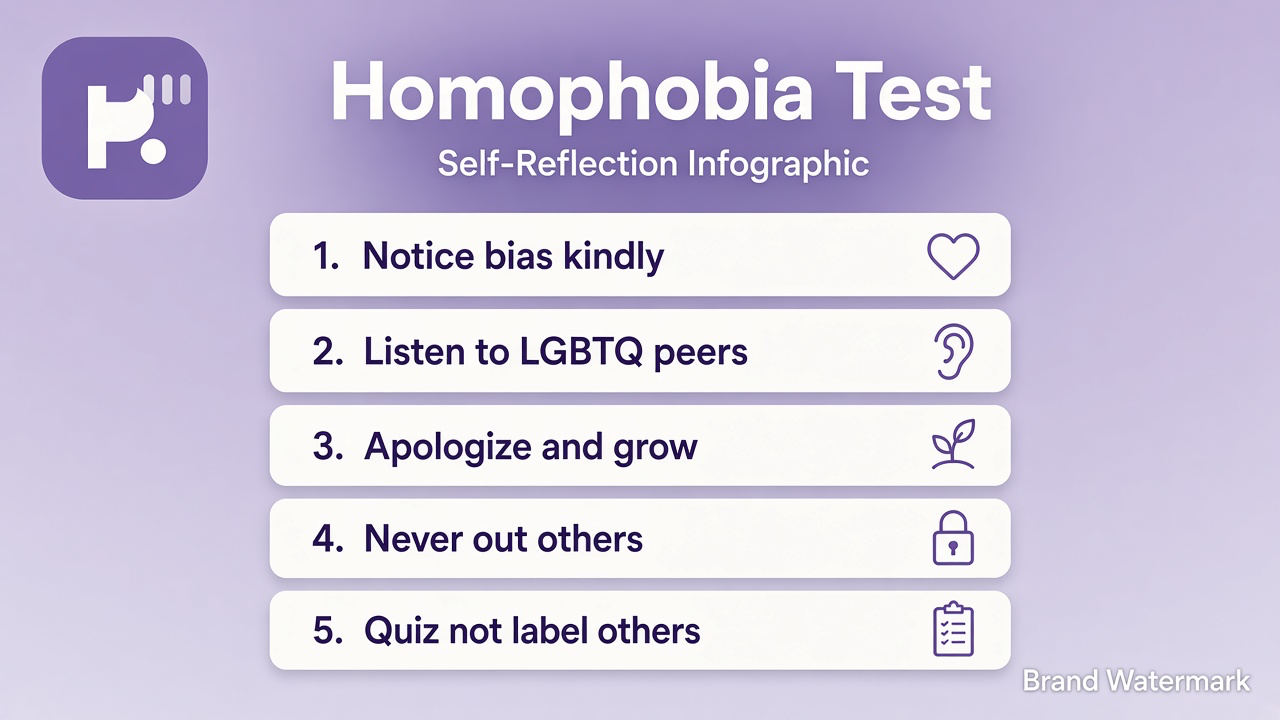
A quick takeaway graphic with topic tips (not your personal quiz scores). Start the quiz for your index, bands, and charts.
What this quiz can and cannot tell you
Can tell you
- Highlight personal bias and language habits worth revisiting in private journaling
- Separate self-reflection from public label dunk threads and verdict cosplay
- Encourage ally learning without demanding perfection performances from LGBTQ friends
- Spark better private conversations without claiming authority to label strangers
Cannot tell you
- Prove someone else is homophobic from your bar height or screenshot shares
- Replace therapists, educators, or crisis care when harassment or self-harm appears
- Substitute for formal prejudice scales used in research clinics
- Out partners or classmates from reflection totals you post online
Why homophobia screeners need self-reflection, not stranger labels
Comment threads want a homophobia test that feels like a mirror after awkward family dinner talk, not a license to dunk exes or classmates. Those goals help when readers notice personal discomfort, upgrade language, and learn from LGBTQ voices. They hurt when agree bars become proof someone may organize public shame campaigns about coworkers who never took the quiz.
Dr. Morgan Chen reviews sexuality screeners with a split between honest self-noticing and honest refusal to label others. Personal bias reflection tracks discomfort without blaming couples. Respectful language tracks slurs, privacy, and neutral workplace talk. Ally learning tracks listening and accountability without lecturing queer friends. Quiz-not-label-others keeps screeners separate from stranger verdict threads.
Real readers mix bars. You might score high on language while keeping ally learning moderate during a news-heavy week. Reverse items catch outing rumors, dunk threads, and cosplay trials that should not inflate bars meant to track private inclusive habits.
Pair results with siblings instead of forcing one prejudice story. Our am I homophobic quiz uses separate tendency stems rather than bias reflection limits on this page. Our gay stereotype quiz focuses on myth refusal rather than personal discomfort journaling here. Our am I racist quiz explores parallel bias reflection lanes for racial attitudes. Browse the sexuality and LGBTQ+ hub for more tools. Keep scores private and skip grading strangers.
| Test | Focus |
|---|---|
| Am I homophobic quiz | Separate tendency stems rather than label-others limits on this page |
| Gay stereotype quiz | Stereotype myth refusal rather than personal bias reflection here |
| Am I racist quiz | Parallel racial bias reflection rather than LGBTQ-specific lanes here |
Homophobia Test FAQ
What does the Homophobia Test measure?
It measures how much you agree with statements about personal bias reflection, respectful language, ally learning, and quiz-not-label-others limits. You get an index from 0 to 100 plus four bars reflecting self-rated habits on this screener.
Does this test label other people homophobic?
No. Limit items reject stranger dunk threads. Bars describe habits you endorsed about yourself here, not verdicts on exes or coworkers.
Is this the same as the am I homophobic quiz?
No. Both are unofficial tools with separate question banks on this hub. This page emphasizes self-reflection and anti-labeling limits.
Can I use a high score to call someone out online?
No. Reverse items reject public trial cosplay. Use results for private journaling or trusted conversations with consent.
Who reviewed this test?
Dr. Morgan Chen reviewed the YMYL framing, anti-labeling limits, and result explanations. See our editorial policy for review standards.
Reviewed by