What the Gay Stereotype Quiz measures
This quiz does not label strangers, rank family members, or prove orientation from hobbies. It measures how much you agree with stereotype refusal statements grouped four ways: spotting harmful generalizations about personality, profession, and insult humor without punch-down silence; voice style and presentation myths about pitch, clothes, and hobbies without surveillance cosplay; dating and desire assumptions about friendship, flirting, and coming-out pressure without one script for all; and quiz not label weapon limits about private reflection without outing posts or bar-height verdicts. You rate 22 statements from strongly disagree to strongly agree, with reverse-worded traps so one lucky guess cannot inflate every bar. Your answers also feed a second chart on closeness and trust habits, because shame and banter sometimes collide when friends discuss stereotypes. The total becomes an index from 0 to 100 where higher means more reported refusal habits on this screener, not proof you are morally superior to anyone.
Spotting harmful generalizations
Notice insult humor and one-type myths.
Voice, style, presentation myths
Reject pitch and outfit proof games.
Dating and desire assumptions
Friendship is not automatic flirting.
Quiz not label weapon
Mirror only; no outing or family polls.
How it works
Answer 22 agreement items
Rate each statement from Strongly disagree to Strongly agree. Tap Next after each answer.
Answers sort into four domains
Each answer feeds one of four stereotype refusal groups, and every item also feeds a closeness and trust layer.
See your index and charts
You get a 0 to 100 index, a band, four domain bars, and a second chart for intimacy habits.
Take the Gay Stereotype Quiz
Answer 22 short statements to see your stereotype refusal index, four domain bars, and a closeness and trust chart.
What your result means
Your index is the average of all 22 answers, scaled from 0 to 100, with reverse-worded items flipped first. Read quiz-not-label bars together with spotting habits before you treat a high score as permission to police others. Cozy reflection supports kinder spaces; apologies and repair still matter when you already hurt someone.
| Band | Index range | Typical reading |
|---|---|---|
| Building stereotype refusal habits | 0 to 35 | Fewer agreed habits on spotting generalizations, myth refusal, dating assumptions, or quiz limits. |
| Mixed stereotype refusal habits | 36 to 65 | Solid refusal with harmless stereotype myths, hobby proof, family ranking polls, or outing pressure slips. |
| Strong stereotype refusal habits | 66 to 100 | Frequent agreement with refusal habits and quiz limits; still reflection only. |
Tips at a glance
A quick takeaway graphic with topic tips (not your personal quiz scores). Start the quiz for your index, bands, and charts.
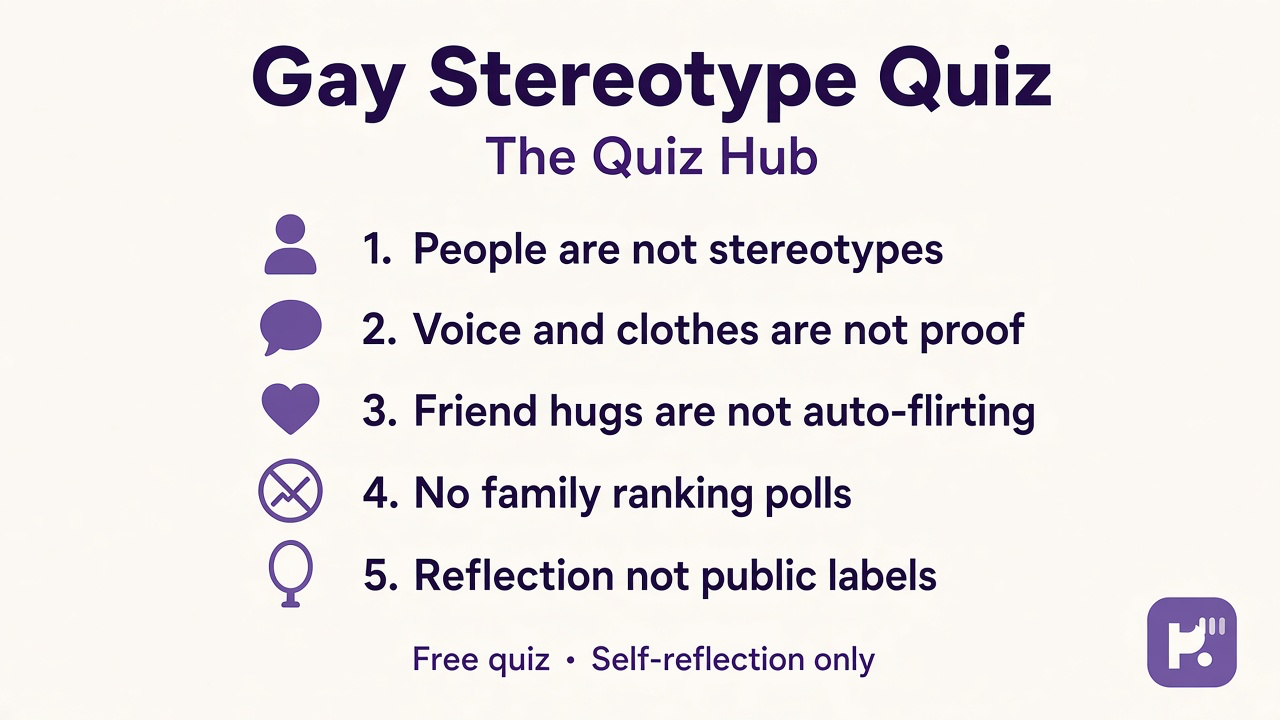
What this quiz can and cannot tell you
Can tell you
- Highlight stereotype habits worth revisiting before your next meme reply
- Separate unofficial reflection from outing games and family ranking polls
- Encourage kind myth busting without public shame spirals
- Spark better classroom questions without claiming authority over anyone identity
Cannot tell you
- Prove whether you or anyone else is gay from one couch screener
- Replace apologies, therapy, or community accountability when harm already happened
- Give permission to label strangers from voice, clothes, or hobby guesses
- Rank relatives in group chats because refusal bars looked tall
Why stereotype quizzes need myth refusal and label humility
Search traffic around gay stereotype quizzes often wants a mirror after a hurtful joke, a film trope debate, or a friend group guessing game, not a license to rank relatives or out classmates. Those goals help when readers name harmful generalizations, reject voice and outfit proof myths, and keep quiz totals private. They hurt when refusal bars become moral badges used to dunk people who know less vocabulary, or when meme polls replace direct kindness. Stereotype literacy works best when it pairs myth spotting with unofficial limits while staying distinct from culture trivia siblings.
Dr. Morgan Chen reviews sexuality screeners with a split between honest bias interruption and honest limits on labeling others. Spotting harmful generalizations tracks insult humor and one-type myths without silence cosplay. Voice style and presentation myths track pitch, clothes, and hobbies without surveillance sports. Dating and desire assumptions track friendship boundaries without flirting scripts for every gay person. Quiz not label weapon keeps screeners separate from outing posts and family ranking polls.
Real learners mix bars. You might score high on spotting while keeping presentation myths moderate, which can describe someone strong at work jokes yet playful with outfit memes. You might score high refusal with softer quiz limits, which can mean you avoid polls yet still treat totals like private verdicts about cousins. Reverse items catch harmless stereotype myths, hobby proof, and ranking polls that should not inflate bars meant to track respectful habits.
Pair results with siblings instead of forcing one bias story. Our gay culture quiz explores history and media curiosity rather than myth refusal habits here. Our gay test offers private identity reflection with separate stems from stereotype policing on this page. Our am I gay test focuses on attraction signals rather than meme myth busting here. Browse the sexuality and LGBTQ+ hub for more tools. Caption shares as reflection play, skip grading strangers, and credit friends who taught you kinder language.
Holiday gatherings and viral audio clips rotate faster than vocabulary lessons on classroom drives. A presentation bar might dip after one meme week while spotting stays high until you retake calmly. When you share results, say unofficial stereotype refusal habits. When you borrow tips, credit people who corrected you with patience. Retake after one media unit and watch whether quiz-limit bars stay high even if debate energy rises, which often means you separated learning joy from dunk pressure.
| Test | Focus |
|---|---|
| Gay culture quiz | History and media curiosity rather than stereotype refusal habits here |
| Gay test | Private identity reflection rather than myth policing on this page |
| Am I gay test | Attraction reflection rather than stereotype meme busting here |
Gay Stereotype Quiz FAQ
What does the Gay Stereotype Quiz measure?
It measures how much you agree with statements about spotting harmful generalizations, rejecting voice and style myths, checking dating assumptions, and quiz-not-label limits. You get an index from 0 to 100 plus four bars. It reflects self-rated refusal habits on this screener, not anyone real orientation.
Can I use this to tell if someone is gay?
No. Stereotype refusal items reject hobby and outfit proof games. Orientation is personal and complex; this quiz does not out strangers.
How is this different from the gay culture quiz?
This quiz centers myth refusal and label humility. The gay culture quiz sibling uses separate stems aimed at history and media literacy rather than stereotype interruption here.
Does a high score mean I am unbiased?
No. High bars describe habits you endorsed today. Everyone can slip; repair and listening still matter.
Who reviewed this quiz?
Dr. Morgan Chen reviewed the stereotype refusal framing, anti-outing limits, and result explanations. See our editorial policy for review standards.
Reviewed by