What the High Pain Tolerance Quiz measures
This quiz does not diagnose chronic pain disorders, rate clinical pain tolerance for disability decisions, or replace imaging or exam findings. It measures how much you agree with pain literacy statements grouped four ways: body signal listening literacy about noticing meaningful pain changes; push-through versus rest balance about grit with recovery; clinician boundary literacy about booking care when pain persists; and quiz-not-medical-pain-diagnosis limits about playful screeners versus clinic cosplay. You rate 22 statements from strongly disagree to strongly agree, with reverse-worded traps so one tough week cannot hide ignore-injury items. Your answers also feed a second chart on closeness and trust habits. The total becomes an index from 0 to 100 where higher means more reported literacy habits on this screener, not proof you should ignore red-flag symptoms.
Body signal listening literacy
Notice meaningful pain without hero myths.
Push-through versus rest balance
Grit that still schedules recovery.
Clinician boundary literacy
Care when pain outlasts recovery windows.
Quiz not medical pain diagnosis
Mirror play without clinic score cosplay.
How it works
Answer 22 agreement items
Rate each statement from Strongly disagree to Strongly agree. Tap Next after each answer.
Answers sort into four domains
Each answer feeds one of four pain literacy groups, and every item also feeds a closeness and trust layer.
See your index and charts
You get a 0 to 100 index, a band, four domain bars, and a second chart for intimacy habits.
Take the High Pain Tolerance Quiz
Answer 22 short statements to see your pain tolerance literacy index, four domain bars, and a closeness and trust chart.
What your result means
Your index is the average of all 22 answers, scaled from 0 to 100, with reverse-worded items flipped first. Read rest-balance bars together with clinician literacy bars before you treat a high score as medical clearance. Licensed clinicians still own formal pain evaluation.
| Band | Index range | Typical reading |
|---|---|---|
| Building pain literacy | 0 to 35 | Fewer agreed habits on body signals, rest balance, care literacy, or unofficial limit items. |
| Mixed pain literacy | 36 to 65 | Solid grit with signal slips, rest gaps, or quiz-as-diagnosis corners. |
| Strong pain literacy | 66 to 100 | Frequent agreement with signals, rest, care, and limits; still unofficial reflection only. |
Tips at a glance
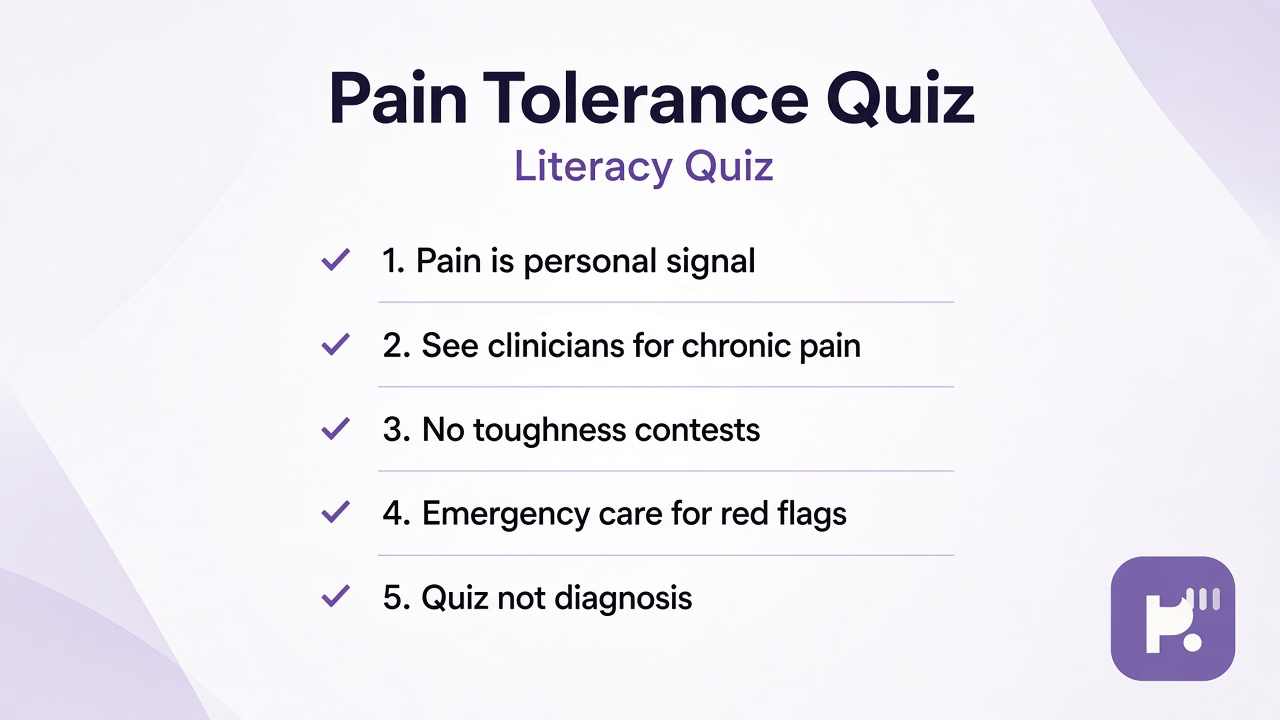
A quick takeaway graphic with topic tips (not your personal quiz scores). Start the quiz for your index, bands, and charts.
What this quiz can and cannot tell you
Can tell you
- Highlight signal, rest, and care habits worth revisiting before the next hard training block
- Separate respectful reflection from injury dunk threads and quiz-as-diagnosis cosplay
- Encourage modified loads and clinician visits without shame about needing help
- Spark better coach or coworker conversations without claiming clinical authority
Cannot tell you
- Replace emergency care, imaging, physical therapy, or addiction treatment plans
- Prove you may ignore numbness, fever with pain, or trauma red flags
- Certify disability status or harass athletes from bar height
- Declare clinical pain tolerance scores from literacy bars alone
Why pain tolerance quizzes need body signals, rest balance, and medical separation
Search traffic around high pain tolerance quizzes often arrives from gym culture, shift work, or friends comparing grit without naming injury signals. Those goals help when readers listen to tissue feedback, schedule recovery, and keep agree bars away from clinic cosplay. They hurt when couch scores become proof you may silence teammates through harm or skip clinicians when pain persists.
Dr. Elena Vasquez reviews pain literacy screeners with a simple split: reward honest grit agreement and honest limits on medical diagnosis myths at the same time. Body signal literacy tracks meaningful pain changes without hero cosplay. Rest balance tracks load modification without moral failure stories. Clinician literacy tracks visits when recovery windows stretch. Unofficial limits keep screeners separate from licensed pain scoring threads.
Real athletes and workers mix bars. You might score high on grit while keeping signal listening moderate, which often describes strong work ethic yet occasional push-through spikes during playoffs. Reverse items catch overconfidence: ignore-numbness myths, quiz-as-imaging cosplay, or dunking injured friends should not inflate bars meant to track respectful literacy manners.
Pair results with siblings instead of forcing one forever-tough story. Our am I tough quiz explores broader resilience habits with separate stems from pain literacy depth here. Our am I mentally strong quiz stays on coping under stress rather than tissue signal lanes on this page. Our chronic pain quiz sibling uses separate YMYL stems when persistent pain talk needs different wording. Browse the mental health and clinical hub for more unofficial screeners. Caption shares as private reflection, seek care for red flags, and skip ranking strangers who never asked for your coach cosplay.
| Test | Focus |
|---|---|
| Am I tough quiz | Broader toughness trait reflection rather than pain signal literacy depth on this page |
| Am I mentally strong quiz | Coping under stress rather than push-through versus rest tissue balance here |
| Chronic pain quiz | Persistent pain YMYL sibling with separate stems from tolerance literacy here |
High Pain Tolerance Quiz FAQ
What does the High Pain Tolerance Quiz measure?
It measures how much you agree with statements about body signals, rest balance, clinician literacy, and quiz-not-medical-diagnosis limits. You get an index from 0 to 100 plus four bars reflecting self-rated habits on this screener.
Is this a clinical pain tolerance test?
No. Limit items reject clinic cosplay. Licensed clinicians use exams, history, and sometimes imaging—not unofficial agree bars.
Does a high score mean I should keep training through pain?
No. Strong literacy includes rest and care when signals change. Red-flag symptoms need urgent medical attention regardless of bar height.
How is this different from the am I tough quiz?
This page emphasizes pain signal and care literacy. The am I tough sibling uses separate resilience stems with its own unofficial limits.
Who reviewed this quiz?
Dr. Elena Vasquez reviewed the YMYL framing, help-seeking language, and result explanations. See our editorial policy for review standards.
Reviewed by