What this toughness quiz measures
This am I tough quiz estimates how strongly you agree with statements about physical endurance, emotional grit, pain tolerance, and composure under pressure. Twenty-two original agreement items group into four domains inspired by resilience research from psychologist Angela Duckworth on grit and military psychology on stress inoculation, adapted for self-screening only. Each item also maps to a fear-of-intimacy stack layer. Your toughness trait index averages these patterns into a 0 to 100 score where higher numbers mean stronger toughness signals on this screener.
Physical endurance
Pushing through fatigue, cold, hunger, and long physical demands without quitting early
Emotional grit
Staying steady after setbacks, holding boundaries, and refusing to collapse when life hits hard
Pain tolerance
Working through discomfort, soreness, or minor injury without dramatizing or stopping
Composure under pressure
Keeping a clear head in conflict, deadlines, or high-stakes moments when others panic
How it works
Three steps from first question to your report with domain bars and fear-of-intimacy stack.
Answer 22 agreement items
Rate how much you agree with each statement, from Strongly disagree to Strongly agree. You click Next after each answer; nothing auto-advances.
Items map to domains and intimacy stack
Your answers accumulate percentages for four topic domains plus four fear-of-intimacy stack layers.
View band and dual charts
Results show your index from 0 to 100, a band label, domain bars, and a fear-of-intimacy stack chart.
Take the am I tough quiz
Rate 22 statements about endurance, grit, pain tolerance, and composure. Your answers produce a toughness trait index from 0 to 100, a fear-of-intimacy stack index, four domain scores, and a band label for honest self-reflection.
Opens in a focused modal. No account required. Results stay on screen.
What your toughness trait index means
Your toughness trait index is the normalized total across all 22 items on a 0 to 100 scale. The fear-of-intimacy stack index uses inverted scoring on the same answers so higher stack scores mean more closeness-guarding patterns on these items.
| Band | Index range | Typical reading |
|---|---|---|
| Lower Toughness Signals | 0 to 35 | Fewer endurance, grit, and composure signals |
| Mixed Toughness Signals | 36 to 65 | Blend of limits and toughness habits; domain chart shows strongest pattern |
| Higher Toughness Signals | 66 to 100 | Frequent endurance, grit, and composure signals on this screener |
What your am i tough quiz report looks like
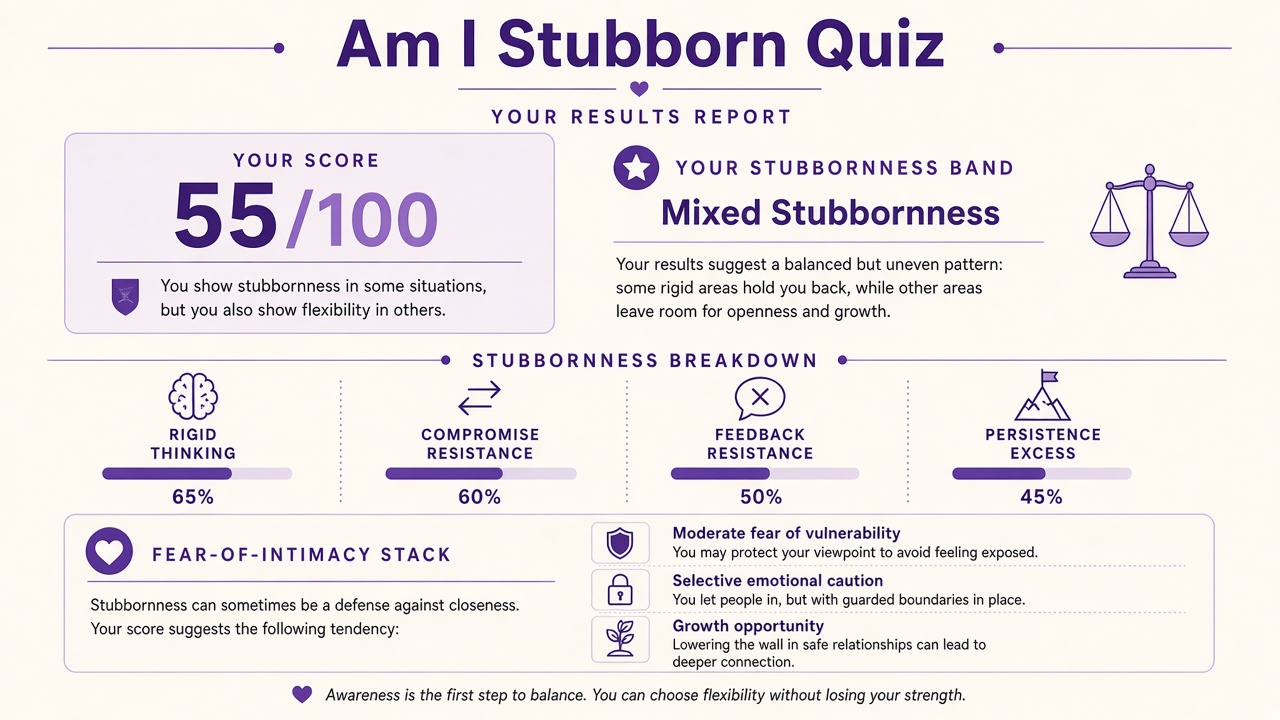
After all 22 items, you get an index from 0 to 100, a band label, four domain bars, and a fear-of-intimacy stack chart with vulnerability pull-back, trust hesitation, self-disclosure limits, and closeness anxiety layers.
What this quiz can and cannot tell you
Can tell you
- How strongly your self-reported patterns showed up on this screener
- An index from 0 to 100 plus fear-of-intimacy stack index with domain bars
- Which domain feels strongest in your current answers
- A starting point for honest reflection or therapy conversation
Cannot tell you
- Whether you are permanently tough or weak
- Whether you should ignore pain or injury signals
- Military, athletic, or clinical resilience assessment
- How every group reads your strength
Grit, stoicism, and the fear-of-intimacy stack
Psychologists study grit as passion plus perseverance toward long goals, while everyday toughness language mixes physical endurance with emotional stoicism. Online quizzes often reward never quitting without asking whether rest or support would serve you better.
The Quiz Hub built this am I tough quiz as an original agreement screener plus FOIS-style intimacy avoidance layers from Descutner and Thelen (1991). Our am I dangerous quiz screens harmful impulse habits rather than healthy resilience. The am I mentally strong quiz focuses on coping under stress rather than push-through pain tolerance.
| The Quiz Hub test | What it adds |
|---|---|
| Am I dangerous quiz | Harmful impulse and aggression habits, not healthy toughness |
| Am I mentally strong quiz | Coping under stress, not physical endurance |
| Am I stoic quiz | Emotional restraint philosophy, not grit under fatigue |
| Am I stubborn quiz | Rigidity and concession holdouts, not endurance |
| This quiz | Toughness trait index plus fear-of-intimacy stack for endurance, grit, pain tolerance, and composure |
Sample items include whether you function on little sleep during crunch weeks or stop when your body sends warning signals. High composure with high vulnerability pull-back on the stack often lands in Mixed bands when toughness replaces honest support. Read our editorial policy or browse the personality and psychology tests hub.
Am I Tough Quiz FAQ
What does the am I tough quiz measure?
Twenty-two original agreement items ask about physical endurance, emotional grit, pain tolerance, and composure under pressure. Each item also maps to a fear-of-intimacy stack layer. You receive a toughness trait index from 0 to 100 where higher scores mean stronger toughness signals on this screener.
Is being tough the same as ignoring pain?
Not always. Healthy toughness can include composure and persistence while still resting when injured. This quiz measures self-reported push-through habits, not medical advice about when to stop.
What is the fear-of-intimacy stack on this quiz?
The fear-of-intimacy stack is a second results chart inspired by FOIS-style intimacy avoidance themes from Descutner and Thelen (1991), adapted to toughness framing. Higher stack scores may reflect using stoicism to avoid softer vulnerability.
How is this different from the am I dangerous quiz?
The am I dangerous quiz screens aggression, recklessness, and manipulative control. This am I tough quiz focuses on endurance, grit, pain tolerance, and calm under pressure without harmful intent.
Can this quiz tell me if I am mentally strong?
No. The toughness trait index describes self-reported endurance and composure on this abbreviated screener. Try our am I mentally strong quiz for broader coping and resilience domains.
Who reviewed this content?
Dr. James Whitfield, reviewed the test framing and result explanations. See our editorial policy for review standards.
Reviewed by