What this GPIUS-inspired screener measures
This page does not administer the published Generalized Problematic Internet Use Scale-3, and it cannot diagnose internet use disorder, ADHD, or mood conditions from one score. It measures how often you noticed habits clinicians and digital wellness educators discuss when online life strains daily functioning, organized four ways: preoccupation and cue reactivity when notifications and unfinished threads pulled attention; mood and withdrawal strain when offline time felt irritable or numb; role conflict and sleep when scrolling hurt responsibilities or rest; and balance help plus GPIUS limits when unofficial screeners replaced therapy, skipped clinicians when loops stuck, or ignored crisis resources when hopelessness peaked. You answer 22 how-often statements about the past two weeks, with reverse-worded items so one good boundary day cannot hide frequent strain across other days. Your responses also feed a second chart on closeness and trust habits, because people sometimes scroll to avoid difficult conversations. The total becomes an index from 0 to 100 where higher means more frequent concern on this screener, not proof of addiction.
Preoccupation and cues
Notifications and unfinished loops.
Mood and withdrawal
Irritability when offline.
Role conflict and sleep
Work, school, and home trust.
Balance help and limits
Clinicians; not diagnosis from bars.
How it works
Answer 22 frequency items
Rate how often each pattern showed up in the past two weeks. Tap Next after each answer.
Answers sort into four domains
Each answer feeds one of four GPIUS-inspired groups, and every item also feeds a closeness and trust layer.
See your index and charts
You get a 0 to 100 index, a band, four domain bars, and a second chart for intimacy habits.
Take the General Problematic Internet Use Scale (GPIUS-3 Inspired)
Answer 22 frequency statements to see your problematic internet use strain index, four domain bars, and a closeness and trust chart.
What your result means
Your index summarizes how often you endorsed strain items, scaled from 0 to 100, with reverse-worded items flipped first. Read balance-help and GPIUS-limit bars together with role conflict before you treat a high score as a diagnosis. Cozy reflection can motivate kinder boundaries; licensed clinicians still own formal assessment.
| Band | Index range | Typical reading |
|---|---|---|
| Lower reported internet strain | 0 to 35 | Fewer frequent preoccupation, mood, conflict, or help-avoidance items in the past two weeks. |
| Mixed reported internet strain | 36 to 65 | Some balanced days alongside preoccupation, mood, conflict, or skipped help on others. |
| Higher reported internet strain | 66 to 100 | Frequent preoccupation, sleep or role conflict, or missing balance habits; support may help. |
Tips at a glance
A quick takeaway graphic with topic tips (not your personal quiz scores). Start the quiz for your index, bands, and charts.
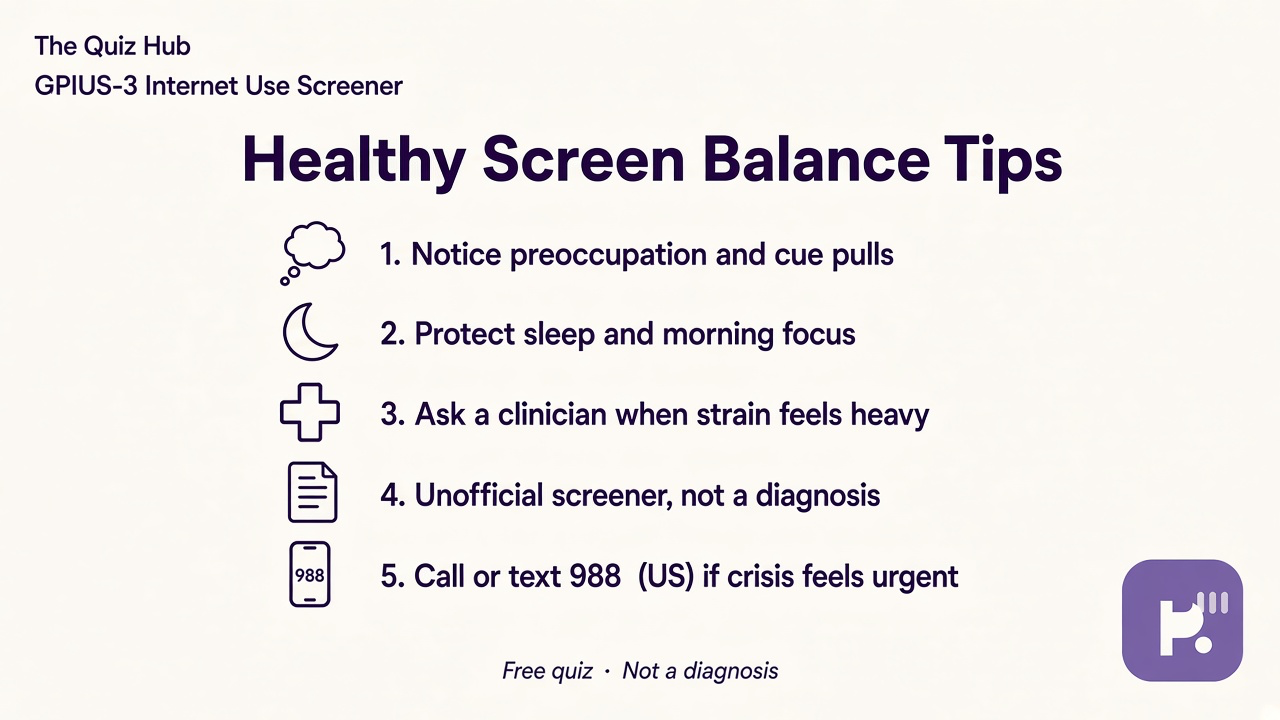
What this quiz can and cannot tell you
Can tell you
- Highlight preoccupation, mood, sleep, and help habits worth discussing with a clinician
- Separate unofficial GPIUS literacy from published instrument myths and partner-shame polls
- Encourage timers, offline plans, and crisis lookups without public dunk threads
- Spark better questions about digital balance without claiming diagnostic authority
Cannot tell you
- Diagnose internet use disorder, ADHD, or mood conditions without evaluation
- Replace therapy, medication decisions, or safety planning from one web session
- Prove someone should lose phone access or relationship trust from bar height alone
- Substitute for the published GPIUS-3 scoring keys used in research clinics
Why GPIUS literacy needs cues, mood, roles, and unofficial limits together
Search traffic around GPIUS-3 often follows digital wellness classes citing problematic internet use research while social feeds paste hour counts beside acronyms as if both were one public shaming machine. Those goals help when readers name preoccupation cues, practice habit versus disorder language, and refuse partner ranking polls. They hurt when literacy bars become proof someone may confiscate a roommate phone online, or when frequency totals replace listening when exclusion is already present. GPIUS literacy works best when it pairs overuse vocabulary with unofficial limits and stays distinct from doomscrolling and FOMO siblings on this hub.
Dr. Elena Vasquez reviews mental health screeners with a simple split: reward honest frequency reporting and honest limits on diagnosis substitution myths at the same time. Preoccupation items track cue reactivity. Mood items track withdrawal strain. Role conflict items track sleep and responsibility harm. Balance and limit items keep screeners separate from published instrument cosplay, partner dunk threads, and crisis avoidance.
Real people mix bars. You might score high on preoccupation while keeping role conflict moderate, which often describes busy workers during news cycles. You might score mixed with strong limit awareness, which can mean you refuse diagnosis myths yet still delay clinician calls. Reverse items catch overconfidence: believing only influencers need balance, treating bars as partner verdicts, or skipping crisis resources should not hide frequent strain elsewhere.
Pair results with siblings instead of forcing one phone-police story. Our doomscrolling scale sibling centers headline-loop frequency rather than full GPIUS cue framing here. Our fear of missing out scale explores social comparison strain rather than generalized problematic use wording on this page. Our Kimberly S. Young author literacy quiz names early internet addiction research themes without duplicating these GPIUS stems. Browse the mental health and clinical hub for more reflection screeners. Caption shares as private habits talk, protect sleep, and skip ranking partners who never asked for your verdict.
App updates and stress seasons rotate faster than focus-app reminders on home screens. A mood bar might dip after one honest offline weekend while preoccupation stays high until you retake calmly. When you share results, say unofficial GPIUS-inspired frequency habits. When you borrow tips, credit clinicians who taught balance plans and friends who modeled consent before phone checks. Retake after one month with new boundaries and watch whether limit bars stay high even if curiosity rises, which often means you separated literacy from diagnosis pressure.
| Test | Focus |
|---|---|
| Doomscrolling scale | Headline-loop frequency rather than full GPIUS cue framing on this page |
| Fear of missing out scale | Social comparison strain rather than generalized problematic use wording here |
| Kimberly S. Young author literacy quiz | Research author literacy rather than GPIUS-3 frequency stems here |
General Problematic Internet Use Scale (GPIUS-3 Inspired) FAQ
What does this GPIUS-3 inspired quiz measure?
It measures how often you noticed preoccupation, mood strain, role conflict, and balance-or-help patterns in the past two weeks, plus unofficial limit habits. You get an index from 0 to 100 and four bars. It reflects self-report frequency on this screener, not published GPIUS-3 research scores.
Is this the official GPIUS-3 questionnaire?
No. This page offers unofficial literacy reflection inspired by problematic internet use themes. The published GPIUS-3 uses separate items and scoring in research settings.
Can this quiz diagnose internet addiction?
No. Only a qualified clinician can assess internet use disorder or related conditions after full evaluation. Use this tool to describe patterns and start conversations, not to label yourself or others.
When should I call 988?
Call or text 988 (US) if you feel hopeless, unsafe, or unable to cope tonight. This screener cannot provide crisis care or replace emergency services.
Who reviewed this quiz?
Dr. Elena Vasquez reviewed the mental health framing, unofficial instrument limits, crisis resources, and result explanations. See our editorial policy for review standards.
Reviewed by