What the Doomscrolling Scale measures
This quiz does not diagnose internet use disorder, depression, or anxiety. Only a qualified clinician using interview methods and history can do that. It measures how often you have noticed screen habits specialists discuss when doomscrolling and feed overload affect daily life, grouped four ways: compulsive checking and refresh loops, mood impact after scrolling, sleep boundary breaks, and offline coping when unplugging feels hard. You answer 22 how-often statements about the past two weeks, with reverse-worded items so one good boundary day cannot hide frequent strain across other days. Your responses also feed a second chart on closeness and trust habits, because people sometimes scroll to avoid difficult conversations or loneliness. The total becomes an index from 0 to 100 where higher means more frequent concern on this screener, not proof of addiction.
Compulsive checking
How often refresh loops, alerts, and lost time on upsetting feeds ran on autopilot.
Mood impact
How often scrolling left you tense, sad, irritable, or hopeless afterward.
Sleep boundary
How often late or in-bed scrolling cut sleep or left you wired at night.
Offline coping
How often restlessness without a screen appeared, or offline habits helped you recover.
How it works
Answer 22 frequency items
Rate each statement from Never to Very often for the past two weeks. Tap Next after each answer.
Answers sort into four domains
Each answer feeds one of four habit groups, and every item also feeds a closeness and trust layer.
See your index and charts
You get a 0 to 100 index, a band, and two bar charts you can bring to a clinician.
Take the Doomscrolling Scale
Answer 22 short statements to see your doomscrolling habit index, four domain bars, and a closeness and trust chart.
What your result means
Your index is the average of all 22 answers, scaled from 0 to 100, with reverse-worded items flipped first. Higher means more frequent reported strain on this screener. Read mood impact and sleep boundary bars together before the total, since checking can look moderate while sleep collapses.
| Band | Index range | Typical reading |
|---|---|---|
| Lower reported doomscrolling strain | 0 to 35 | Fewer frequent checking loops, mood crashes, or sleep trade-offs in the past two weeks. |
| Mixed reported doomscrolling strain | 36 to 65 | Some domains spike while others look manageable. |
| Higher reported doomscrolling strain | 66 to 100 | Frequent checking, mood strain, or sleep loss; consider professional support. |
Tips at a glance
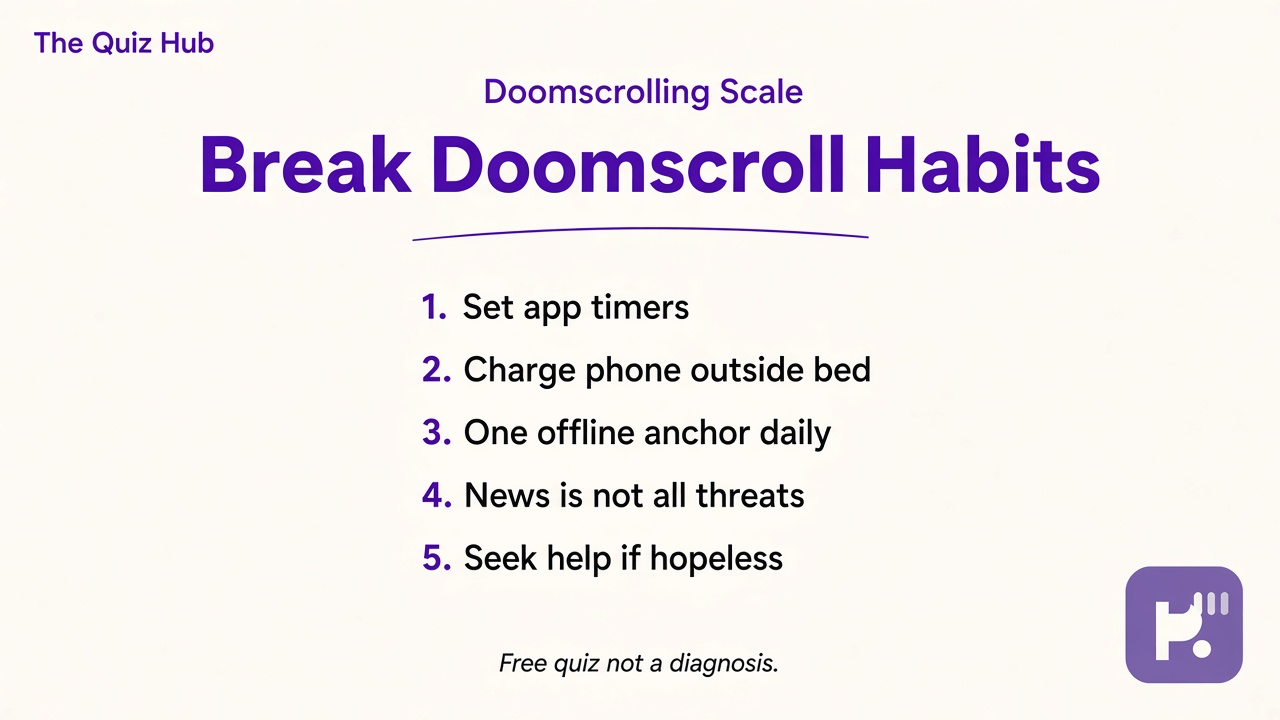
A quick takeaway graphic with topic tips (not your personal quiz scores). Start the quiz for your index, bands, and charts.
What this quiz can and cannot tell you
Can tell you
- Organize habits into checking, mood, sleep, and offline coping buckets
- Give you language for therapist or primary care intake
- Highlight when feed use may be fueling sleep or mood problems
- Offer a baseline if you retake after trying boundaries
Cannot tell you
- Diagnose internet use disorder, ADHD, or mood disorders without evaluation
- Replace validated clinical screeners administered by professionals
- Tell you which news sources are safe or which causes deserve your attention
- Prove you should quit all social media based on one score
Doomscrolling: when staying informed becomes overload
Doomscrolling is not caring too much about the world. It is the loop: open a feed for a second, absorb crisis after crisis, feel worse, and refresh anyway. Researchers describe problematic smartphone use as loss of control, mood regulation attempts, and sleep cost, not as reading one thoughtful article. Your brain treats unpredictable bad news like a slot machine, so knowing the headline does not stop the next pull.
The American Psychological Association stress and media overload guidance notes that constant exposure to distressing coverage can increase anxiety without improving preparedness. Clinicians who treat internet and smartphone overuse look for functional impact: sleep, work, relationships, and mood on days with heavy use. This screener mirrors those lived signals in four bars so you can describe patterns without guessing diagnostic labels.
Compulsive checking items capture autopilot refreshes and notification pulls during meals or conversations. Mood impact items separate informed concern from hours of dread or irritability afterward. Sleep boundary items matter because blue-light scrolling at night is one of the fastest paths from headlines to insomnia. Offline coping items ask whether you can tolerate an hour unplugged and whether walks, friends, or hobbies still help when feeds feel numbing.
If your score is high, start with one boundary you can measure, such as charging the phone outside the bedroom or a twenty-minute delay before opening news in the morning. Pair limits with an offline recovery plan, not white-knuckle abstinence alone. Cognitive behavioral therapy and, when indicated, medication for anxiety or depression are evidence-based paths when self-help stalls. Our phone addiction quiz emphasizes device attachment broadly; use it for reflection alongside this doomscroll-focused screener, not instead of care when mood or safety is at risk.
Retake after four weeks of one consistent boundary and compare domain bars, not only the total. If hopelessness persists despite limits, tell a clinician; shame about scrolling rarely fixes sleep or panic. Crisis lines exist for the nights when the feed and your thoughts both feel unbearable.
| Test | Focus |
|---|---|
| Phone addiction quiz | General mobile attachment rather than upsetting-news refresh and mood fallout emphasis |
| Social media addiction quiz | Platform habit patterns without sleep-boundary and offline-coping domain split |
Doomscrolling Scale FAQ
What does this quiz measure?
It measures how often you noticed compulsive feed checking, mood impact after scrolling, sleep boundary breaks, and offline coping strain in the past two weeks. You get an index from 0 to 100 plus four domain bars. It reports self-reported frequency, not a clinical diagnosis.
Is doomscrolling the same as internet addiction?
Not always. Doomscrolling often means repeated consumption of distressing news or social content. Internet use disorder is diagnosed with broader criteria and professional assessment. This screener organizes habit signals for reflection and intake conversations.
Can this quiz diagnose me?
No. Only a licensed clinician can diagnose mood, anxiety, sleep, or internet use disorders after full evaluation. Use this tool to describe patterns, not to label yourself.
What should I do if my score is high?
Try one measurable boundary, protect sleep, and seek a therapist or doctor if distress persists. Call or text 988 (US) if you feel unsafe or are thinking about self-harm.
Who reviewed this quiz?
Dr. Elena Vasquez, PhD reviewed the YMYL framing, medical limits, and crisis resource guidance. See our editorial policy for review standards.
Reviewed by