What the Four Horsemen Relationship Quiz measures
This quiz does not provide couples therapy, diagnose personality disorders, or declare whether you should stay or leave from one session. It measures how much you agree with Gottman-inspired literacy grouped four ways: criticism literacy about specific complaints versus global character attacks, soft startups, and provoked-attack myths; contempt literacy about eye rolls, mockery, disgust language, public humiliation limits, and screenshot diagnosis traps; defensiveness literacy about listening before counterattack, accountability, blame reversal, intention-only defenses, and catch-the-dodge habits; and stonewalling and therapy limits about planned timeouts versus punitive freeze-outs, return-to-repair plans, unofficial framing, divorce-verdict myths, and safety help when fear or control appears. You rate 22 statements from strongly disagree to strongly agree, with reverse-worded traps so agreeable mood cannot hide contempt habits. Your answers also feed a second chart on closeness and trust habits, because conflict stress sometimes tracks intimacy distance on the same week. The total becomes an index from 0 to 100 where higher means more reported literacy habits on this screener, not proof your relationship is healthy or doomed.
Criticism literacy
Complaints versus you-always character attacks.
Contempt literacy
Mockery, disgust, and superiority signals.
Defensiveness literacy
Listen, own part, and skip blame reversals.
Stonewalling and therapy limits
Timeouts with repair; bars are not therapy.
How it works
Answer 22 agreement items
Rate each statement from Strongly disagree to Strongly agree. Tap Next after each answer.
Answers sort into four domains
Each answer feeds one of four Horsemen literacy groups, and every item also feeds a closeness and trust layer.
See your index and charts
You get a 0 to 100 index, a band, four domain bars, and a second chart for intimacy habits.
Take the Four Horsemen Relationship Quiz
Answer 22 short statements to see your Four Horsemen literacy index, four domain bars, and a closeness and trust chart.
What your result means
Your index is the average of all 22 answers, scaled from 0 to 100, with reverse-worded items flipped first. Read contempt and stonewalling bars together with therapy-limit scores before you treat a high total as proof you need no help. Cozy reflection supports kinder conflict talk; licensed clinicians still own treatment when cycles hurt or feel unsafe.
| Band | Index range | Typical reading |
|---|---|---|
| Building Horsemen literacy | 0 to 35 | Fewer agreed habits on criticism, contempt, defensiveness, stonewalling awareness, or therapy-limit items on this screener. |
| Mixed Horsemen literacy | 36 to 65 | Solid naming in some domains with contempt slips, defensiveness traps, freeze-out myths, or therapy-substitution fantasies. |
| Strong Horsemen literacy | 66 to 100 | Frequent agreement with pattern naming, repair habits, timeout norms, and therapy limits; still not treatment. |
Tips at a glance
A quick takeaway graphic with topic tips (not your personal quiz scores). Start the quiz for your index, bands, and charts.
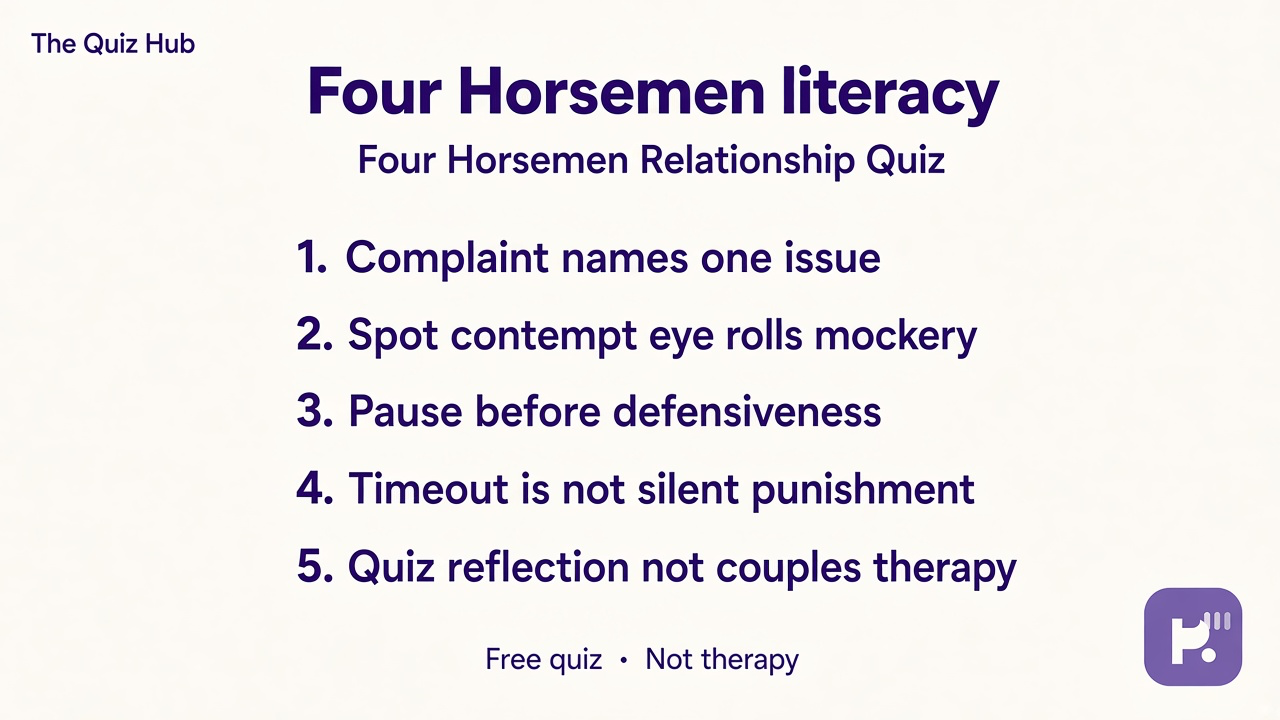
What this quiz can and cannot tell you
Can tell you
- Highlight criticism, contempt, defensiveness, and stonewalling vocabulary worth practicing before the next hard talk
- Separate unofficial literacy from therapy outcomes or public partner diagnosis
- Encourage timeout scripts and repair plans without shame spirals
- Spark better questions about Gottman concepts without claiming clinical authority
Cannot tell you
- Replace couples therapy, EFT, or Gottman-method sessions with licensed providers
- Prove abuse is absent or present from one agree screener
- Give permission to surveil, threaten, or dump a partner based on bar height
- Predict divorce success or failure from trivia habits alone
Why Four Horsemen quizzes need naming skills and therapy separation
Search traffic around Four Horsemen quizzes usually wants vocabulary after a podcast episode or a fight that felt bigger than the dishes, not a therapy discharge letter or a public partner diagnosis. Those goals help when readers separate complaints from criticism, name contempt early, and plan timeouts that return to repair. They hurt when literacy bars become proof you may mock a partner online, or when couch totals replace safety planning when fear is present. Conflict literacy works best when it names repair habits and unofficial limits together while staying distinct from attachment and anxiety siblings.
Dr. Priya Sharma reviews relationships screeners with a simple split: reward honest pattern naming and honest limits on therapy substitution and partner surveillance at the same time. Criticism literacy tracks specific complaints versus global attacks and soft startups without provoked-verdict myths. Contempt literacy tracks mockery, disgust, and superiority tones without hidden group-chat cruelty. Defensiveness literacy tracks listening, accountability, and blame reversal without intention-only shutdowns. Stonewalling and therapy limits track timed cool-downs, return plans, unofficial framing, and safety help when control appears.
Real couples mix bars. You might score high on criticism labels while keeping contempt moderate, which often describes partners who name issues yet still sarcasm under stress. You might score high literacy with softer therapy-limit items, which can mean you avoid public diagnosis yet still treat quiz totals like clinician notes. Reverse items catch overconfidence: provoked character attacks, hidden mockery, permanent silent treatment, therapist endorsement myths, or screenshot diagnosis of strangers should not inflate bars meant to track layered conflict manners.
Pair results with siblings on this hub instead of forcing one Gottman story. Our bird test relationship sibling stays on emotional bid habits with stems separate from Horsemen naming here. Our attachment style test explores anxiety and avoidance patterns when closeness fear rides beside conflict labels. Our relationship anxiety quiz measures reassurance loops when worry amplifies fights beyond Horsemen vocabulary. Browse the relationships and dating hub for more reflection screeners. Share scores as conversation starters with consent, not as orders to stay or leave.
Holiday stress and sleep debt move faster than one calm timeout script on the fridge. A defensiveness bar might dip after one flooded week while criticism recall stays high until you retake gently. When you share results, say unofficial literacy habits. When you borrow tips, credit therapists who taught you repair plans and partners who deserve privacy off-screen. Retake after one hard month and watch whether therapy-limit bars stay high even if contempt naming rises, which often means you separated curious study from verdict pressure.
| Test | Focus |
|---|---|
| Bird test relationship | Emotional bid and small-act habits rather than Four Horsemen naming on this page |
| Attachment style test | Anxiety and avoidance patterns rather than criticism-contempt-defensiveness literacy here |
| Relationship anxiety quiz | Reassurance loops and worry scan rather than Gottman conflict pattern stems on this screener |
Four Horsemen Relationship Quiz FAQ
What does the Four Horsemen Relationship Quiz measure?
It measures how much you agree with statements about criticism, contempt, defensiveness, and stonewalling literacy plus quiz-not-therapy limits. You get an index from 0 to 100 plus four bars. It reflects self-reported awareness habits on this screener, not therapy outcomes.
Is this the same as Gottman couples therapy?
No. This page offers informal literacy inspired by public summaries of Four Horsemen research. Licensed Gottman-method therapists use separate assessments and treatment plans.
Can a high score prove our marriage is healthy?
No. Strong bars describe habits you endorsed here, such as naming complaints and timeouts. They do not replace clinician interviews or safety planning when fear or control appears.
Should I show my partner my results to win an argument?
Use scores as private reflection or consented conversation starters, not as surveillance weapons. Contempt and defensiveness items warn against mockery and blame reversals in public threads.
Who reviewed this quiz?
Dr. Priya Sharma reviewed the unofficial framing, literacy not therapy separation, conflict ethics, and result explanations. See our editorial policy for review standards.
Reviewed by