What the Foot Fetish Quiz measures
This quiz does not diagnose paraphilic disorders, predict who owes you foot play, or replace direct consent conversations about touch and privacy. It measures how much you agree with unofficial foot interest literacy statements grouped four ways: enthusiastic consent foot play about asking before massage or admiration, honoring no and maybe later, reading closed body language, and rejecting persistence and owed-touch myths; privacy and opt-out boundaries about keeping partner interest confidential unless they consent, skipping stranger ranking from photos, and treating nonconsensual forum posts as harmful; interest literacy without pathology about consensual kink framing without automatic disorder labels, seeking clinicians when distress or compulsion dominates, and refusing quiz scores as medical charts; and quiz not paraphilia diagnosis about unofficial reflection, low bars as timing not predator labels, and refusing viral ranking games from bar height. You rate 22 statements from strongly disagree to strongly agree, with reverse-worded traps so one lucky guess cannot inflate every bar. Your answers also feed a second chart on closeness and trust habits, because shame about kink sometimes blocks honest opt-out language. The total becomes an index from 0 to 100 where higher means more reported foot interest consent literacy on this screener, not proof someone owes you attention.
Enthusiastic consent foot play
Ask before touch, honor no, read closed body language.
Privacy and opt-out boundaries
No outing, no stranger ranking, maybe later counts.
Interest literacy without pathology
Consensual kink talk without couch DSM cosplay.
Quiz not paraphilia diagnosis
Reflection only; clinicians own disorder evaluation.
How it works
Answer 22 agreement items
Rate each statement from Strongly disagree to Strongly agree. Tap Next after each answer.
Answers sort into four domains
Each answer feeds one of four foot interest consent groups, and every item also feeds a closeness and trust layer.
See your index and charts
You get a 0 to 100 index, a band, four domain bars, and a second chart for intimacy habits.
Take the Foot Fetish Quiz
Answer 22 short statements to see your foot interest consent literacy index, four domain bars, and a closeness and trust chart.
What your result means
Your index is the average of all 22 answers, scaled from 0 to 100, with reverse-worded items flipped first. Read quiz-not-diagnosis bars together with consent habits before you treat a high score as paraphilia proof or a low score as shame fuel. Reflection supports kinder sexuality talks; counselors still matter when distress or coercion is present.
| Band | Index range | Typical reading |
|---|---|---|
| Building foot interest consent literacy | 0 to 35 | Fewer agreed habits on enthusiastic consent, privacy, literacy-without-pathology, or quiz-not-diagnosis limits on this screener. |
| Mixed foot interest consent literacy | 36 to 65 | Solid privacy in some domains with persistence myths, outing slips, pathology cosplay, or quiz-as-diagnosis traps. |
| Strong foot interest consent literacy | 66 to 100 | Frequent agreement with consent, privacy, literacy-without-pathology, and quiz-not-diagnosis limits; still reflection only. |
Tips at a glance
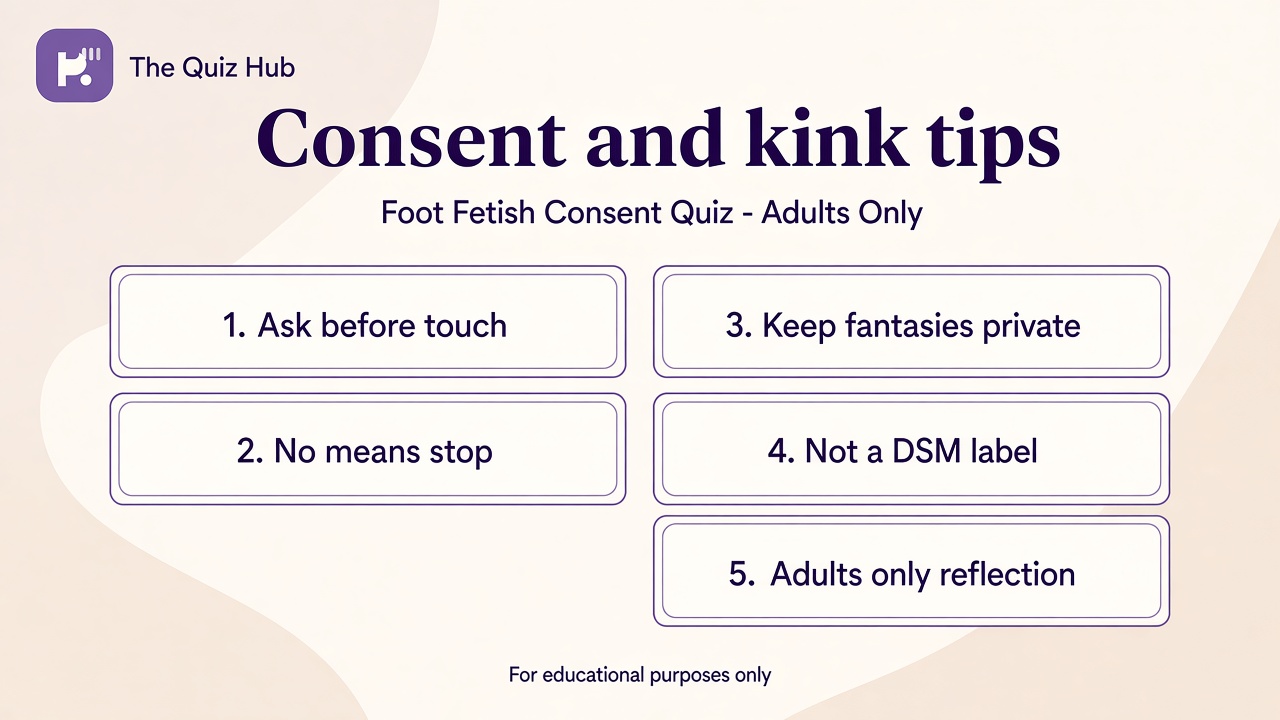
A quick takeaway graphic with topic tips (not your personal quiz scores). Start the quiz for your index, bands, and charts.
What this quiz can and cannot tell you
Can tell you
- Highlight ask-before-touch, privacy, and opt-out habits worth revisiting before the next invite
- Separate unofficial reflection from paraphilia diagnosis cosplay or public ranking games
- Encourage shame-free kink literacy without forcing public confessions
- Spark honest talk with trusted partners about mutual yes when you both consent
Cannot tell you
- Diagnose paraphilic disorders or any mental health condition from one score
- Replace direct consent about touch, photos, or shared posts
- License persistence after no because bars looked high
- Turn foot interest scores into pile-ons on people who never opted in
Foot interest with consent before pathology cosplay
Search traffic around foot fetish quizzes usually wants language for consensual admiration and guardrails when meme culture treats no as a puzzle or online bars as DSM proof. Those goals help when people ask before touch, honor opt-out, and keep partners private. They hurt when scores become paraphilia credentials, or when strangers get ranked from shoe photos. Foot interest literacy works best when it names consent and unofficial limits together while staying distinct from clinical diagnosis.
Dr. Priya Sharma reviews sexuality reflection screeners with a simple split: reward honest consent habits and honest limits on pathology fantasy at the same time. Enthusiastic consent foot play tracks ask-before-touch, safewords when kink is involved, and stopping when body language closes without persistence myths. Privacy and opt-out tracks confidential shares, no outing, and refusing nonconsensual forum posts. Interest literacy without pathology tracks consensual framing without automatic disorder labels and clinician outreach when distress dominates. Quiz not paraphilia diagnosis keeps screeners separate from DSM cosplay and fetish ranking threads.
Real adults mix bars. You might score high on privacy while keeping consent moderate, which often describes careful people who still need power-gap checks at work. You might score high consent with softer limit items, which can mean strong no-respect yet occasional quiz-as-diagnosis slips online. Reverse items catch sloppy answers: silence as yes, owed couch touch, quiz scores as charts, nonconsensual posts as harmless, or high bars ignoring no should not inflate charts meant to track layered consent literacy.
Pair results with siblings on this hub instead of forcing one sexuality story. Our flirting style quiz explores broader consent-forward signal habits with separate stems. Our feederism quiz covers adults-only kink consent on another hub with wholly different wording. Our familiar quiz angles partner comfort check-ins when language beyond foot play fits better. Browse the sexuality and LGBTQ+ test hub for more reflection screeners. Share scores as conversation starters with consent, not as diagnosis orders.
Crush seasons refresh faster than meme threads. When you share results, say mutual yes beats scoreboard and clinicians own disorder labels. When you borrow tips, credit partners who honored no gently. Retake after one calmer month and watch whether quiz-not-diagnosis bars stay high even if curiosity rises, which often means you separated consensual interest from pathology cosplay.
| Test | Focus |
|---|---|
| Flirting style quiz | General flirt signal and consent stems rather than foot-specific interest literacy here |
| Feederism quiz | Adults-only feeding kink consent on another hub rather than foot admiration stems on this page |
| Familiar quiz | Partner comfort and check-in habits rather than foot interest privacy and pathology limits here |
Foot Fetish Quiz FAQ
What does the Foot Fetish Quiz measure?
It measures how much you agree with statements about enthusiastic consent foot play, privacy and opt-out, interest literacy without pathology labels, and quiz-not-paraphilia-diagnosis limits. You get an index from 0 to 100 plus four bars. It describes self-reported habits on this screener, not a clinical diagnosis.
Does a high score mean I have a paraphilic disorder?
No. Consent and limit items keep the page unofficial. Only licensed clinicians evaluate disorders after history and safety context. High bars describe habits you endorsed here, not a DSM label from a couch quiz.
Is this quiz permission to touch someone feet without asking?
No. Enthusiastic consent items explicitly reject persistence and owed-touch myths. Mutual yes, context, and power awareness still own real decisions; this screener is reflection only.
Why is this on the sexuality and LGBTQ+ hub?
Foot interest often sits alongside broader sexuality reflection topics. Stems stay consent-forward and shame-reducing without replacing kink-specific siblings on other hubs.
Who reviewed this quiz?
Dr. Priya Sharma reviewed the educational framing, consent-forward limits, and separation from clinical diagnosis claims. See our editorial policy for review standards.
Reviewed by