What Feederism Quiz measures
This quiz does not diagnose eating disorders, certify kink educators, or prove someone should join a feeder dynamic. It measures how much you agree with adults-only habit statements grouped four ways: enthusiastic consent SSC about ongoing yes, safewords, and no surprise feeding; body autonomy not coercion about veto power, shame bets, and refusing stranger pressure; health safety check-ins about medical history, distress signals, and clinician support when daily life suffers; and quiz not fetish proof about private captions, negotiation prompts, and refusing body-shape labeling from bar height. You rate 22 statements from strongly disagree to strongly agree, with reverse-worded traps so one lucky guess cannot inflate every bar. Your answers also feed a second chart on closeness and trust habits, because food and control themes sometimes overlap with intimacy fear. The total becomes an index from 0 to 100 where higher means more reported feederism consent literacy on this screener, not proof you should pressure partners to eat.
Enthusiastic consent SSC
Ongoing yes, safewords, no surprise feeding games.
Body autonomy not coercion
Veto power without shame bets or hidden calories.
Health safety check-ins
Medical limits, distress pauses, clinician support when needed.
Quiz not fetish proof
Private reflection; fetish labels belong in negotiated play.
How it works
Answer 22 agreement items
Rate each statement from Strongly disagree to Strongly agree. Tap Next after each answer.
Answers sort into four domains
Each answer feeds one of four consent habit groups, and every item also feeds a closeness and trust layer.
See your index and charts
You get a 0 to 100 index, a band, four domain bars, and a second chart for intimacy habits.
Take the Feederism Quiz
Answer 22 short statements to see your feederism consent literacy index, four domain bars, and a closeness and trust chart.
What your result means
Your index is the average of all 22 answers, scaled from 0 to 100, with reverse-worded items flipped first. Read quiz-not-fetish-proof bars together with health check-ins before you treat a high score as recruitment authority. Adults-only reflection supports safer negotiation; licensed clinicians still own eating-disorder treatment and medical risk when symptoms interfere with daily life.
| Band | Index range | Typical reading |
|---|---|---|
| Quieter feederism consent habits | 0 to 35 | Fewer agreed items on enthusiastic consent, body autonomy, health check-ins, or quiz-not-fetish-proof limits on this screener. |
| Mixed feederism consent habits | 36 to 65 | Solid consent in some domains with surprise-feeding myths, veto overrides, health denial, outing slips, or fetish-proof cosplay. |
| Strong feederism consent habits | 66 to 100 | Frequent agreement with consent, autonomy, health check-ins, and unofficial limits; still adults-only reflection. |
Tips at a glance
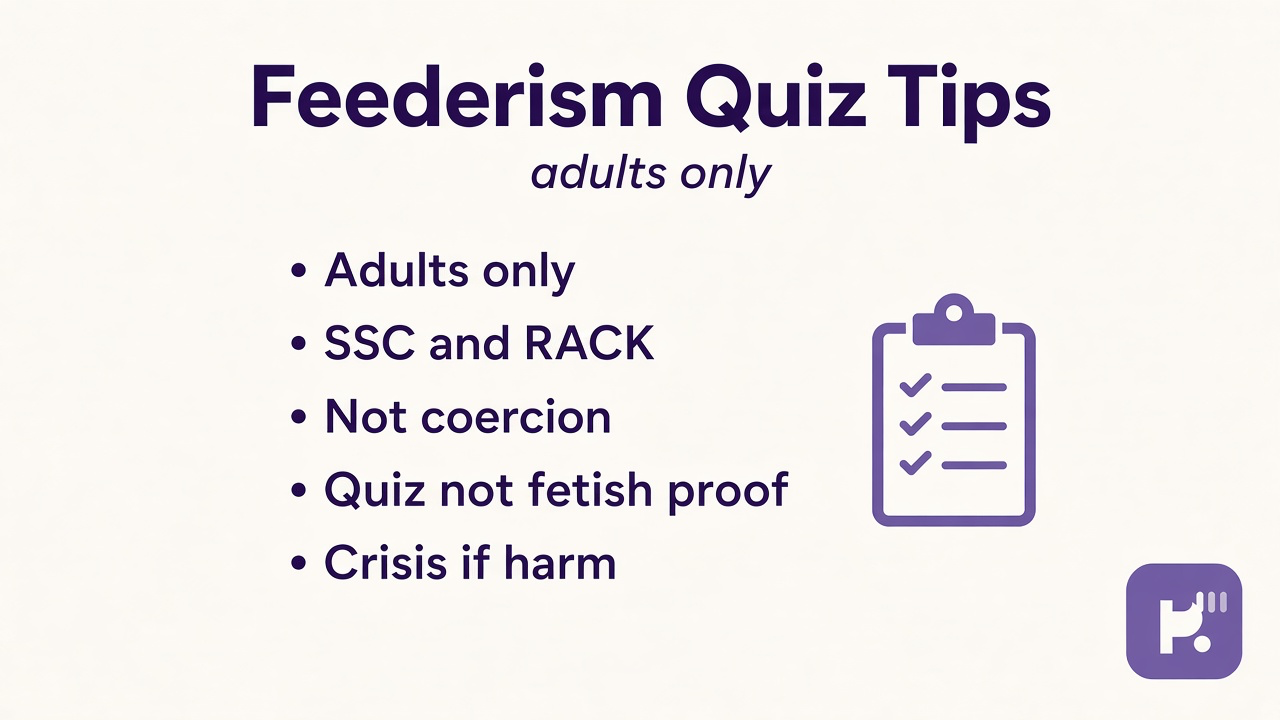
A quick takeaway graphic with topic tips (not your personal quiz scores). Start the quiz for your index, bands, and charts.
What this quiz can and cannot tell you
Can tell you
- Highlight consent, autonomy, and health pause habits worth revisiting before blending fantasy and meals
- Separate unofficial reflection from fetish rankings or body-shape labeling games
- Encourage SSC-style check-ins and written limits in adult relationships
- Spark better kink conversations without claiming educator credentials
Cannot tell you
- Replace eating-disorder treatment, medical nutrition advice, or emergency care
- Prove partners owe feeder play, weight gain, or weight loss from one couch screener
- Give permission to coerce, trick, or shame someone into food or body goals
- Out someone fetish or diagnose paraphilic disorders from bar height alone
Why feederism mirrors need SSC framing and coercion refusal
Search traffic around feederism quizzes usually wants two things: language for a niche kink, and shareable scores for adult communities. Those goals help when readers center enthusiastic consent, body autonomy, and health humility. They hurt when mirror bars become fetish proof, or when surprise feeding gets framed as devotion. Feederism literacy works best when it names SSC habits, autonomy, health check-ins, and unofficial limits together.
Dr. Priya Sharma reviews kink hub screeners with a simple split: reward honest consent habits and honest limits on unofficial advice at the same time. Enthusiastic consent SSC tracks ongoing yes and safewords without surprise-feeding myths. Body autonomy not coercion tracks veto power without shame bets or stranger commentary. Health safety check-ins tracks medical questions and distress pauses without fantasy-only denial. Quiz not fetish proof keeps screeners separate from recruitment, outing, and body-shape labeling games.
Real adults mix bars. You might score high on consent while keeping health check-ins moderate, which often describes careful negotiators who still need clinician input for ED history. You might score high autonomy with softer limit items, which can mean you protect partners yet still post mirrors like fetish diplomas. Reverse items catch overconfidence: serving food despite hesitation, skipping negotiation for mood, overriding choices, health denial, unstable blood sugar play, or perfect scores licensing feedee labels on strangers should not inflate bars meant to track consent-aware habits.
Pair results with siblings on this hub instead of forcing one kink story. Our kink archetype test explores broader power-exchange preference habits with stems separate from feeding consent on this page. Our how kinky are you quiz stays on general curiosity and comfort rather than feeder-specific autonomy items here. Our BDSM archetype quiz angles toward dominance, submission, and aftercare habits when sensation framing fits better than food themes. Browse the kink and BDSM hub for more consent-aware screeners. Caption shares as adults-only reflection and skip pressuring anyone who never asked for feeder play.
Dynamics and stressors rotate faster than group chat polls. A health check-in bar might dip after one intense script week while consent bars stay steady until you retake calmly. When you share results, say unofficial kink mirror. When you borrow tips, credit partners who honored vetoes and clinicians who treated eating concerns without shame. Retake after one negotiated season and watch whether autonomy bars stay high even if fantasy curiosity rises, which often means you separated playful reflection from actual coercion.
| Test | Focus |
|---|---|
| Kink archetype test | Broad power-exchange preferences rather than feeder consent and health check-in stems on this page |
| How kinky are you quiz | General kink curiosity rather than feeder-specific autonomy and SSC items here |
| BDSM archetype quiz | Dominance, submission, and aftercare habits rather than feeding play negotiation on this screener |
Feederism Quiz FAQ
What does Feederism Quiz measure?
It measures how much you agree with statements about enthusiastic consent SSC, body autonomy not coercion, health safety check-ins, and quiz-not-fetish-proof limits. You get an index from 0 to 100 plus four bars. It describes self-reported adults-only habits on this screener, not fetish authority.
Is this quiz proof I should pursue feederism with someone?
No. Quiz-not-fetish-proof items keep the page unofficial. Real dynamics need ongoing negotiation, safewords, and mutual enthusiasm; this screener is reflection only.
Does a high score mean surprise feeding is okay?
No. Consent items reject surprise-feeding and hesitation-pushing myths. High bars mean you related to habit statements here, not that you hold override power over a partner meals.
When should I talk with a clinician?
Consider licensed medical or mental health support when eating, weight, or control fights limit daily life, when disordered-eating symptoms appear, or when play causes pain, fainting, or distress. This quiz supports reflection; clinicians evaluate medical risk.
Who reviewed this quiz?
Dr. Priya Sharma reviewed the adults-only YMYL framing, consent tone, coercion refusal, and unofficial fetish-proof boundaries. See our editorial policy for review standards.
Reviewed by