What Familiar Quiz measures
This quiz does not read your partner mind, certify compatibility for life, or replace couples therapy when fear or harm is present. It measures how much you agree with familiarity habits grouped four ways: everyday comfort about steady routines, inside jokes, ordinary kindness, and resisting comfort-equals-boredom panic; check in not assume about gentle questions, updating guesses, and refusing long-dating mind-reading myths; novelty with consent about honest invites, respecting slow no, boredom talks, and rejecting surprise tests or pressure; and quiz not love verdict about unofficial reflection, low bars as timing not trash labels, and refusing to treat scores as public marriage proof or consent replacements. You rate 22 statements from strongly disagree to strongly agree, with reverse-worded traps so one romantic daydream cannot inflate every bar. Your answers also feed a second chart on closeness and trust habits, because ease and guardedness often share one relationship season. The total becomes an index from 0 to 100 where higher means more reported familiarity and comfort habits on this screener, not proof you should stay, leave, or skip asking.
Everyday comfort
Steady routines, silence, jokes, and ordinary care without fireworks panic.
Check in not assume
Gentle questions instead of sigh-reading and forever-guess myths.
Novelty with consent
Honest invites, slow no respect, and shared boredom talks.
Quiz not love verdict
Reflection only; bars not breakup courts or consent substitutes.
How it works
Answer 22 agreement items
Rate each statement from Strongly disagree to Strongly agree. Tap Next after each answer.
Answers sort into four domains
Each answer feeds one of four partner familiarity groups, and every item also feeds a closeness and trust layer.
See your index and charts
You get a 0 to 100 index, a band, four domain bars, and a second chart for intimacy habits.
Take the Familiar Quiz
Answer 22 short statements to see your partner familiarity index, four domain bars, and a closeness and trust chart.
What your result means
Your index is the average of all 22 answers, scaled from 0 to 100, with reverse-worded items flipped first. Read quiz-not-verdict bars together with check-in habits before you treat a high score as proof of forever love or a low score as a breakup command. Familiarity supports kinder talks; counselors still matter when fear shows up.
| Band | Index range | Typical reading |
|---|---|---|
| Quieter familiarity habits | 0 to 35 | Fewer agreed items on everyday comfort, check-ins, novelty consent, or quiz-not-verdict limits on this screener. |
| Mixed familiarity habits | 36 to 65 | Solid ease in some domains with mind-reading myths, surprise-test traps, or verdict cosplay in others. |
| Strong familiarity habits | 66 to 100 | Frequent agreement with everyday comfort, check-ins, novelty consent, and quiz-not-verdict limits; still reflection only. |
Tips at a glance
A quick takeaway graphic with topic tips (not your personal quiz scores). Start the quiz for your index, bands, and charts.
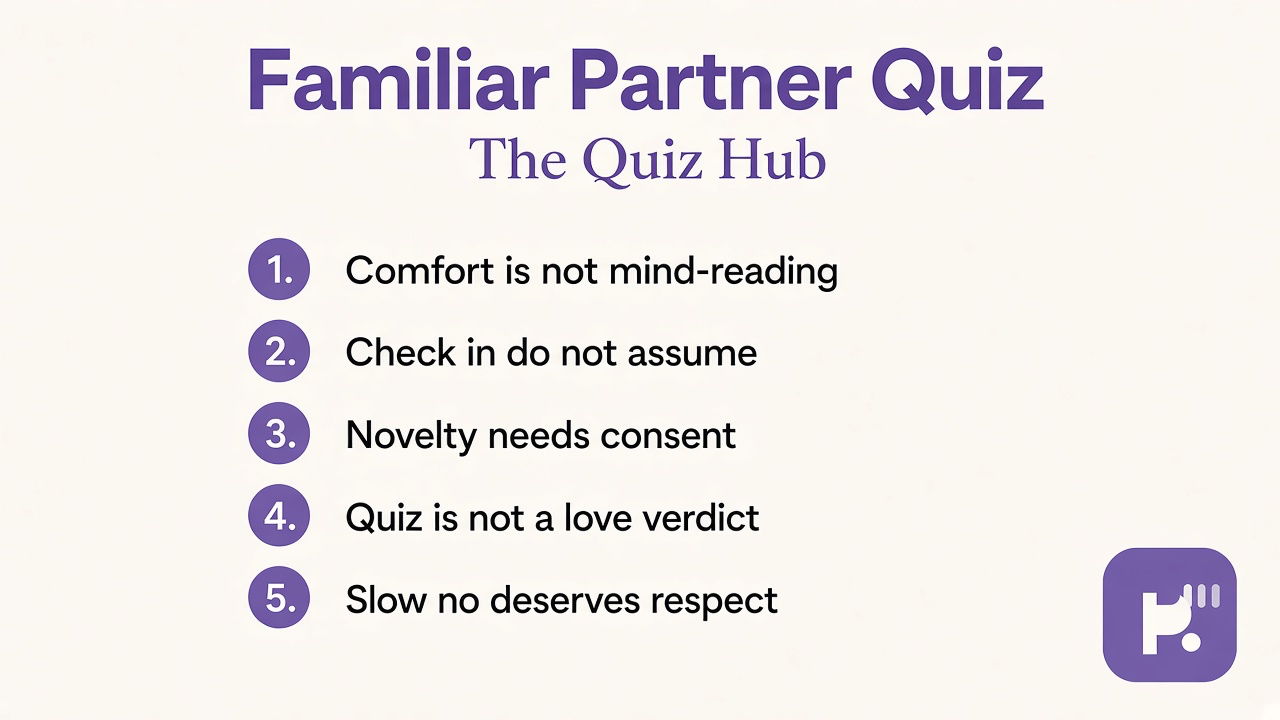
What this quiz can and cannot tell you
Can tell you
- Highlight comfort, check-in, and consent habits worth revisiting during a calm week
- Separate unofficial reflection from mind-reading cosplay or public score shaming
- Encourage gentle questions before big plan changes
- Spark honest talk with trusted friends about warm-up captions on shares
Cannot tell you
- Prove you should marry, stay, or leave from one agree screener
- Replace couples therapy, safety planning, or abuse assessment
- License inbox surveillance or guilt trips because bars look high
- Turn familiarity scores into pile-ons on partners who never opted in
Partner familiarity before mind-reading myths
Search traffic around familiar quizzes usually wants two things: relief when calm weeks feel safe, and language when boredom anxiety spikes. Those goals help when couples name ease, ask plain questions, and plan novelty together. They hurt when comfort scores become mind-reading proof, or when public bar drops shame partners who never opted in. Familiarity language works best when it names check-in habits and consent limits together.
Dr. Priya Sharma reviews relationships-dating reflection screeners with a simple split: reward honest comfort habits and honest limits on verdict fantasy at the same time. Everyday comfort tracks routines and kindness without calling every quiet dinner a breakup alarm. Check in not assume tracks gentle questions without ranking partners who need more words as difficult forever. Novelty with consent tracks invites and slow no respect without surprise tests dressed as romance. Quiz not love verdict keeps screeners, therapists, and safety plans separate from bar height.
Real couples mix bars. You might score high on everyday ease while keeping check-in items moderate, which often describes cozy routines who still guess after one sigh. You might score high on check-ins with softer limit items, which can mean good questions plus occasional public score sharing slips. Reverse items catch sloppy answers: comfort always meaning breakup, never asking again because dating is long, sigh-reading beating talk, surprise spending as romance, or high bars replacing consent should not inflate charts meant to track layered familiarity knowledge.
Pair results with siblings on this hub instead of forcing one love story. Our attachment style quiz explores closeness and trust patterns when you want language beyond routine ease on this page. Our ideal partner quiz angles toward values and limits when daydreams need a steadier frame. Our couples chemistry quiz covers spark and play habits when novelty talks need a lighter tone. Browse the relationships and dating hub for more reflection screeners. Share scores as conversation starters with consent, not as orders to merge or chase.
Travel seasons and family stress refresh faster than meme breakup threads. When you share results, say kindness and check-ins beat scoreboard. When you borrow tips, credit partners who corrected your guesses gently and friends who disagreed without lying labels. Retake after one calmer month and watch whether quiz-not-verdict bars stay high even if comfort rises, which often means you separated cozy routines from actual consent habits.
| Test | Focus |
|---|---|
| Attachment style quiz | Closeness and trust patterns rather than everyday familiarity and check-in habits on this page |
| Ideal partner quiz | Values and limits framing rather than routine comfort and novelty consent drills here |
| Couples chemistry quiz | Spark and play habits rather than familiarity reflection and quiz-not-verdict limits here |
Familiar Quiz FAQ
What does Familiar Quiz measure?
It measures how much you agree with statements about everyday partner comfort, check-ins instead of guessing, novelty with consent, and quiz-not-verdict limits. You get an index from 0 to 100 plus four bars. It describes self-reported familiarity habits on this screener, not proof your partner loves you or that you must stay together.
Does comfortable mean bored?
Not automatically. Everyday comfort items treat steady routines as possible safety while reverse items flag the myth that every calm week demands a breakup. Boredom feelings are framed as a talk topic, not a court ruling.
Can I use this quiz instead of asking my partner?
No. Check-in items explicitly reject mind-reading. High or low bars are mirrors for reflection; direct conversation with consent still owns real decisions.
Does a high score mean we should get married?
No. Quiz-not-verdict items reject using bars as public marriage proof or consent replacements. Strong familiarity scores describe habits you endorsed here, not destiny labels.
Who reviewed this quiz?
Dr. Priya Sharma reviewed the educational framing, anti-surveillance limits, and separation from therapy or safety planning claims. See our editorial policy for review standards.
Reviewed by