What the Fight or Flight Quiz measures
This quiz does not diagnose panic disorder, PTSD, hyperthyroidism, or autonomic neuropathy, and it cannot replace medical workups or licensed trauma therapy from bar height. It measures how much you agree with unofficial fight-or-flight literacy statements grouped four ways: body alarm recognition about noticing heart rate, breath, tension, and stomach signals without defect labels; threat versus stress sorting about separating immediate danger from email dread, conflict worry, caffeine, or sleep debt; downshift recovery habits about consented breath, movement, rest, and support after spikes instead of hours of bracing; and unofficial stress limits about playful captions, clinician lookup prompts, and refusing viral arousal rankings from totals. You rate 22 statements from strongly disagree to strongly agree, with reverse-worded traps so one lucky guess cannot inflate every bar. Your answers also feed a second chart on closeness and trust habits, because shame about wired bodies sometimes blocks asking for help. The total becomes an index from 0 to 100 where higher means more reported fight-or-flight literacy on this screener, not proof you hold clinical authority over anyone else nervous system.
Body alarm recognition
Notice arousal signals without defect verdicts.
Threat versus stress sorting
Separate real danger cues from deadline and conflict stress.
Downshift recovery habits
Consented settling steps after spikes, not endless bracing.
Unofficial stress limits
Reflection only; medical labels belong with clinicians.
How it works
Answer 22 agreement items
Rate each statement from Strongly disagree to Strongly agree. Tap Next after each answer.
Answers sort into four domains
Each answer feeds one of four arousal literacy groups, and every item also feeds a closeness and trust layer.
See your index and charts
You get a 0 to 100 index, a band, four domain bars, and a second chart for intimacy habits.
Take the Fight or Flight Quiz
Answer 22 short statements to see your fight-or-flight literacy index, four domain bars, and a closeness and trust chart.
What your result means
Your index is the average of all 22 answers, scaled from 0 to 100, with reverse-worded items flipped first. Higher means more reported body-alarm literacy, threat sorting, recovery habits, and humble limits on this screener. Read unofficial stress limits with downshift recovery before you treat a high score as medical expertise. Playful reflection supports kinder conversations; licensed clinicians still own panic evaluation and graded plans when daily life shrinks.
| Band | Index range | Typical reading |
|---|---|---|
| Quieter fight-or-flight literacy habits | 0 to 35 | Fewer agreed items on body alarms, threat sorting, downshift recovery, or unofficial limits on this screener. |
| Mixed fight-or-flight literacy habits | 36 to 65 | Solid naming in some domains with tiger-equals-email slips, dare pressure, influencer cosplay, or viral ranking traps in others. |
| Strong fight-or-flight literacy habits | 66 to 100 | Frequent agreement with body alarms, threat sorting, recovery, and unofficial limits; still reflection only. |
Tips at a glance
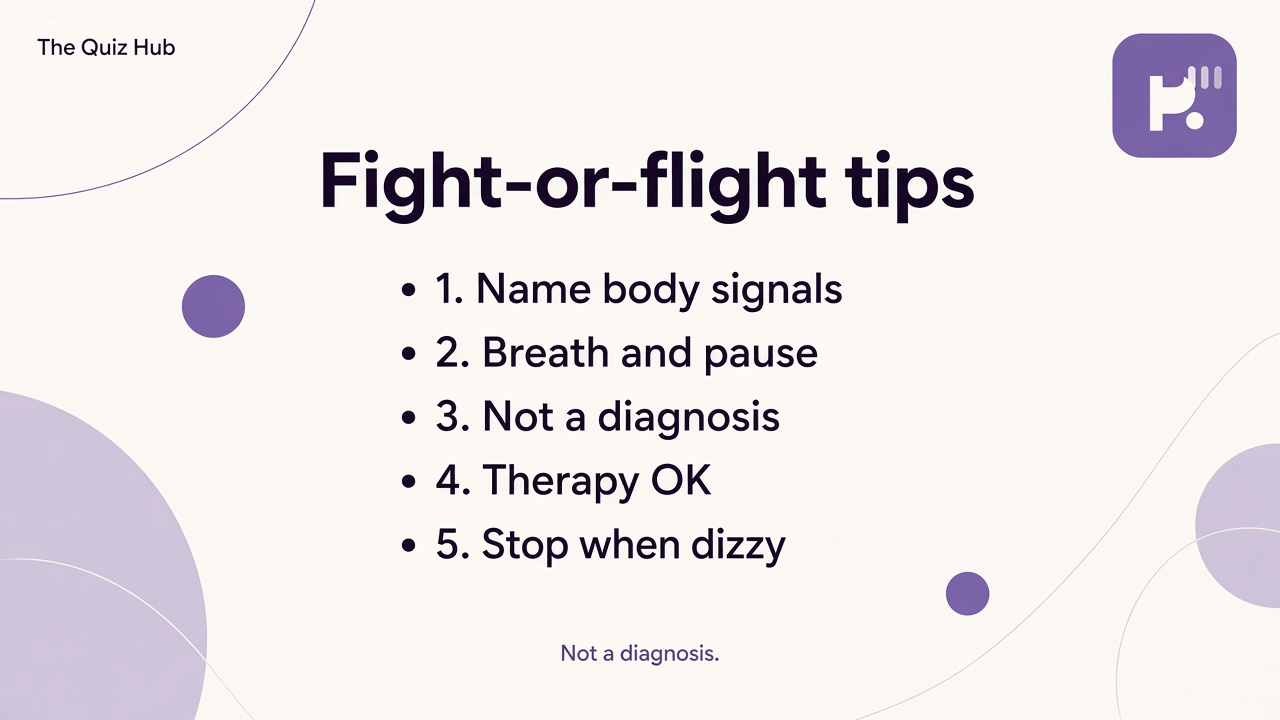
A quick takeaway graphic with topic tips (not your personal quiz scores). Start the quiz for your index, bands, and charts.
What this quiz can and cannot tell you
Can tell you
- Spot whether you treat every stressor like immediate physical danger
- Encourage consented downshift habits without spoiling beginner coping
- Separate hobby reflection from medical or dare-culture pressure
- Give a playful baseline to retake after one calmer sleep week
Cannot tell you
- Prove autonomic lab results or heart monitor readings from one score
- Tell you to ignore chest pain, fainting, or new neurological symptoms
- Replace therapy, trauma care, or physician clearance for exercise
- Certify that you mastered polyvagal theory from one influencer thread
Body alarms, threat sorting, and quiz-not-medical limits
People land on fight-or-flight quizzes because racing heart clips get more views than quiet biology lessons. Sympathetic arousal can speed heart rate, shallow breathing, and muscle tension when your brain tags a situation as demanding or risky. That is physiology literacy, not a moral score about how brave you should look on camera.
Body alarm recognition covers naming signals before you fuse them with identity stories. Threat versus stress sorting covers asking whether you are unsafe right now versus stuck in a deadline spiral, conflict replay, caffeine jitters, or sleep debt. Downshift recovery covers consented breath, walks, transitions, and support after spikes instead of stacking meetings in permanent alarm mode.
Pop science sometimes sells vagus nerve hacks as instant off switches. Helpful skills exist, yet bodies differ, trauma history matters, and medical causes still deserve exams. This screener rewards humility: enjoy a meme, still label it a meme, and bring scary cardiac symptoms to clinicians instead of debating totals online.
Pair results with siblings on this hub instead of forcing one nervous system story. Our fear test tracks general fear naming and exposure safety with stems separate from arousal sorting here. Our fear of the exam SPE covers performance panic frequency rather than everyday threat-versus-stress habits on this page. Our feedback sensitivity scale emphasizes critique reactivity rather than body-alarm literacy here. Browse the personality and psychology hub for more light screeners with unofficial framing.
Use your index as a nudge toward kinder self-talk and consented recovery experiments, not a credential. If arousal limits work or sleep for weeks, bring bar examples to intake. If hopelessness spikes, prioritize 988 or a clinician over viral dare threads. Retake after one week of transition rituals between stressful blocks when safe and compare bars, not only the total.
| Test | Focus |
|---|---|
| Fear test | General fear naming, exposure safety, and kindness limits rather than threat-versus-stress sorting on this quiz |
| Fear of the exam SPE | Performance-exam panic frequency rather than everyday fight-or-flight literacy habits here |
| Feedback sensitivity scale | Critique and feedback reactivity rather than body-alarm recognition on this page |
Fight or Flight Quiz FAQ
What does the Fight or Flight Quiz measure?
It measures how much you agree with unofficial body alarm recognition, threat versus stress sorting, downshift recovery habits, and stress limit statements. You get an index from 0 to 100 and four bars. It reflects self-reported literacy habits, not hospital autonomic test scores.
Is fight-or-flight the same as a panic disorder diagnosis?
No. Fight-or-flight describes a common stress arousal pattern discussed in biology and psychology classes. Panic disorder and related conditions need clinician evaluation. This page is reflection only.
Why are some items worded negatively?
Reverse-worded statements balance optimism. Agreeing that every deadline equals a tiger attack, that forced panic builds character, or that bar height licenses medical labels on strangers should not inflate literacy scores.
How is this different from the fear test on this site?
The fear test sibling tracks phobia-adjacent naming, exposure consent, and mockery limits. This quiz focuses on everyday arousal sorting and downshift recovery language. Stems do not overlap; use each screener separately.
When should I see a doctor instead of retaking?
Seek urgent care for new chest pain, fainting, or neurological changes. Contact a licensed clinician when panic or arousal disrupts sleep, safety, or daily roles for weeks. Call or text 988 (US) when hopelessness feels immediate.
Who reviewed this quiz?
Dr. Priya Sharma, PhD reviewed the unofficial stress framing, sibling separation from fear and feedback screeners, and result explanations. See our editorial policy for review standards.
Reviewed by