What Fear Test measures
This quiz does not diagnose specific phobias, panic disorder, or trauma disorders, and it cannot replace exposure therapy plans from licensed clinicians. It measures how much you agree with general fear habit statements grouped four ways: naming fear signals about body and story awareness without coward labels; exposure safety habits about gradual steps, support, and opt-out rights instead of surprise dares; kindness not mockery about skipping phobia punchlines, panic filming, and pressure timelines; and quiz not DSM about playful captions, lookup prompts, and refusing viral fear rankings from bar height. You rate 22 statements from strongly disagree to strongly agree, with reverse-worded traps so one lucky guess cannot inflate every bar. Your answers also feed a second chart on closeness and trust habits, because fear shame sometimes blocks asking for help. The total becomes an index from 0 to 100 where higher means more reported general fear literacy on this screener, not proof you hold clinical authority over anyone else terror.
Naming fear signals
Notice body and story fear without coward verdicts.
Exposure safety habits
Small consented steps, not shame dares or panic content.
Kindness not mockery
Dignity for others phobias and panic moments.
Quiz not DSM limits
Reflection only; phobia labels belong with clinicians.
How it works
Answer 22 agreement items
Rate each statement from Strongly disagree to Strongly agree. Tap Next after each answer.
Answers sort into four domains
Each answer feeds one of four fear habit groups, and every item also feeds a closeness and trust layer.
See your index and charts
You get a 0 to 100 index, a band, four domain bars, and a second chart for intimacy habits.
Take the Fear Test
Answer 22 short statements to see your general fear reflection index, four domain bars, and a closeness and trust chart.
What your result means
Your index is the average of all 22 answers, scaled from 0 to 100, with reverse-worded items flipped first. Read quiz-not-DSM bars together with exposure safety before you treat a high score as clinical expertise. Playful reflection supports kinder conversations; licensed clinicians still own phobia diagnosis and graded exposure when daily life shrinks.
| Band | Index range | Typical reading |
|---|---|---|
| Quieter fear literacy habits | 0 to 35 | Fewer agreed items on naming signals, exposure safety, kindness, or quiz-not-DSM limits on this screener. |
| Mixed fear literacy habits | 36 to 65 | Solid naming in some domains with dare pressure, mockery slips, DSM cosplay, or viral ranking traps in others. |
| Strong fear literacy habits | 66 to 100 | Frequent agreement with naming, exposure safety, kindness, and unofficial limits; still reflection only. |
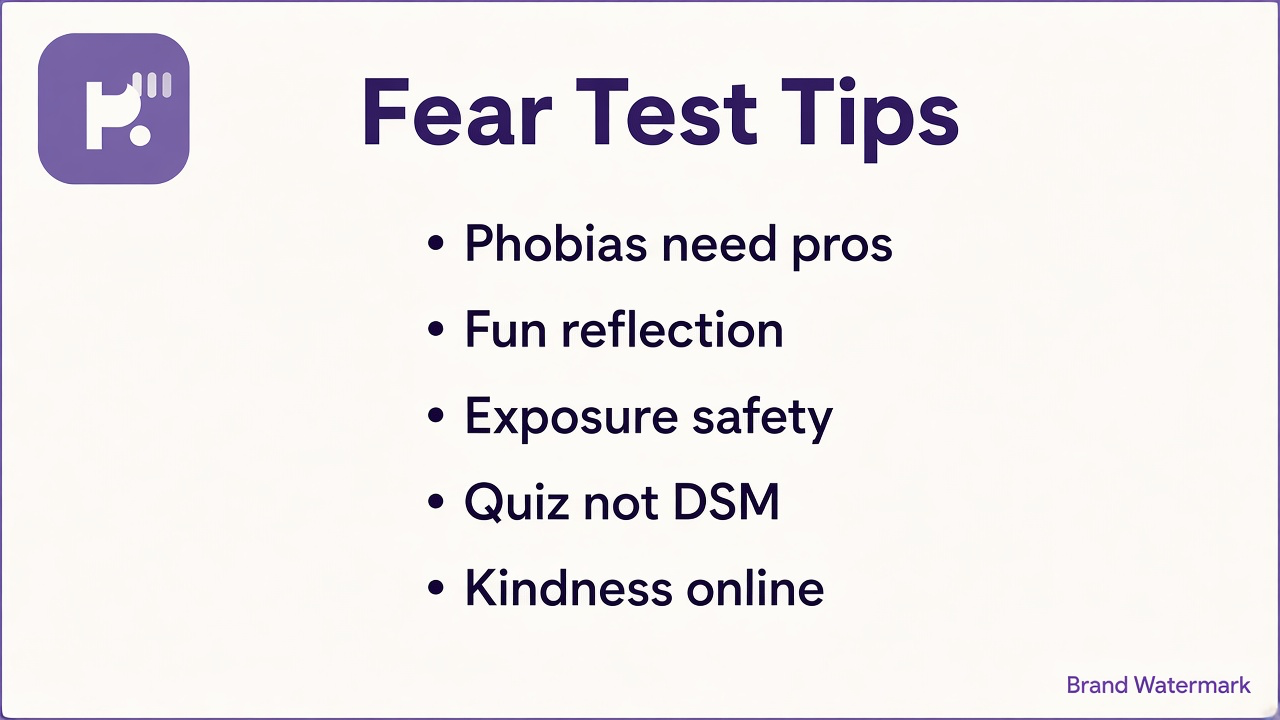
Tips at a glance
A quick takeaway graphic with topic tips (not your personal quiz scores). Start the quiz for your index, bands, and charts.
What this quiz can and cannot tell you
Can tell you
- Highlight naming, consent-first exposure, and kindness habits worth revisiting before the next dare thread
- Separate unofficial reflection from DSM labels or viral coward rankings
- Encourage professional help prompts when phobias limit roles for weeks
- Spark better fear conversations without claiming diagnostic authority
Cannot tell you
- Diagnose specific phobia subtypes, panic disorder, or PTSD from one couch screener
- Replace trauma-informed exposure therapy or medication decisions
- Prove moral worth, bravery rank, or relationship fitness from bar height
- Give permission to prank, film, or pressure someone through panic for content
Why general fear mirrors need exposure safety and unofficial framing
Search traffic around fear tests usually wants two things: a quick label for what scares them, and shareable scores for friend-group chats. Those goals help when readers name body signals honestly, face triggers with consent, and skip mockery. They hurt when mirror bars become DSM cosplay, or when dare culture films panic for clips. Fear literacy works best when it names awareness, safety, kindness, and unofficial limits together.
Dr. Priya Sharma reviews personality psychology fear screeners with a simple split: reward honest naming habits and honest limits on unofficial advice at the same time. Naming fear signals tracks body and story awareness without coward verdicts. Exposure safety habits tracks gradual steps and opt-out rights without surprise toughness tests. Kindness not mockery tracks dignity when others phobias differ from yours. Quiz not DSM keeps screeners separate from clinical labels and viral ranking games.
Real players mix bars. You might score high on naming while keeping exposure safety moderate, which often describes self-aware people who still need clinician-led plans for phobias. You might score high kindness with softer limit items, which can mean you protect friends yet still post mirrors like diagnostic proof. Reverse items catch overconfidence: teasing ordinary fear as cowardice, consent-free exposure dares, spider pranks on roommates, pressuring others on your timeline, filming panic, or perfect scores licensing agoraphobia labels on strangers should not inflate bars meant to track kind fear habits.
Pair results with siblings on this hub instead of forcing one terror story. Our on topic fear sibling explores situational fear themes with stems separate from habit literacy here. Our fear of intimacy quiz stays on closeness avoidance rather than general phobia mockery norms on this page. Our fear of compassion scale covers kindness anxiety in clinical frequency language, not agree-item fear dare culture here. Browse the personality and psychology hub for more light screeners. Caption shares as fun reflection and skip sentencing strangers who never asked for a phobia label.
Seasons and stressors rotate faster than group chat polls. An exposure safety bar might dip after one viral dare week while naming bars stay steady until you retake calmly. When you share results, say unofficial fear mirror. When you borrow tips, credit friends who honored opt-outs and clinicians who taught graded exposure without shame. Retake after one high-stress month and watch whether kindness bars stay high even if specific triggers change, which often means you separated playful reflection from actual DSM court.
| Test | Focus |
|---|---|
| On topic fear | Situational fear reflection rather than naming, exposure safety, and kindness habit stems on this page |
| Fear of intimacy quiz | Closeness and vulnerability avoidance rather than general phobia mockery and dare culture here |
| Fear of compassion scale | Clinical kindness-anxiety frequency rather than agree-item general fear habit literacy on this screener |
Fear Test FAQ
What does Fear Test measure?
It measures how much you agree with statements about naming fear signals, exposure safety habits, kindness not mockery, and quiz-not-DSM limits. You get an index from 0 to 100 plus four bars. It describes self-reported habits on this screener, not clinical phobia authority.
Is this a phobia diagnosis or DSM checklist?
No. Quiz-not-DSM items keep the page unofficial. Licensed clinicians own phobia diagnosis and exposure plans; this screener is couch reflection and habit prompts only.
Does a high score mean I should force exposure dares?
No. Exposure safety items reject consent-free toughness myths. High bars mean you related to habit statements here, not that you hold override power over someone else panic timeline.
When should I see a professional about fear?
Consider licensed care when avoidance limits work, sleep, relationships, or safety for weeks, or when panic and trauma flashbacks repeat. This quiz supports reflection; clinicians evaluate phobias and trauma with validated tools.
Who reviewed this quiz?
Dr. Priya Sharma reviewed the soft YMYL framing, kindness tone, exposure safety limits, and unofficial DSM boundaries. See our editorial policy for review standards.
Reviewed by