What this Fear of the Exam SPE measures
This page does not administer a validated Fear of the Exam SPE from research clinics, and it cannot diagnose panic disorder, specific phobia, learning disabilities, or ADHD from one score. It measures how often you noticed habits counselors and disability offices often discuss when test anxiety strains school or licensing paths, organized four ways: somatic exam strain when racing heart, nausea, shaky hands, or sleepless nights showed up before exams; cognitive test worry when blanking, failure spirals, or stupid-self talk lingered; avoidance and cram strain when dread delayed study, fueled all-nighters, or pulled you away from review; and screener support limits when unofficial totals replaced counselor visits, accommodation questions, breathing pauses, or crisis awareness. You answer 22 how-often statements about the past month, with reverse-worded items so one calm exam, one steady walk-in, one planned study block, or one counselor question cannot hide frequent strain on other days. Your responses also feed a second chart on closeness and trust habits, because shame about exam fear sometimes blocks asking for help. The total becomes an index from 0 to 100 where higher means more frequent reported test anxiety strain on this screener. Your responses suggest intensity to discuss with support; they do not prove you failed at learning.
Somatic exam strain
How often body alarm showed up before quizzes, midterms, or proctored labs.
Cognitive test worry
How often blanking, spirals, or IQ myths tracked with timed tests.
Avoidance and cram strain
How often dread delayed study or fueled last-minute panic.
Screener support limits
How often accommodations, counselors, breathing, and 988 awareness beat quiz myths.
How it works
Answer 22 frequency items
Rate each statement from Never to Very often for the past month. Tap Next after each answer.
Answers sort into four domains
Each answer feeds one of four test-anxiety groups, and every item also feeds a closeness and trust layer.
See your index and charts
You get a 0 to 100 index, a band, and two bar charts you can bring to a counselor.
Take the Fear of the Exam (SPE)
Answer 22 short statements to see your test anxiety strain index, four domain bars, and a closeness and trust chart.
What your result means
Your index is the average of all 22 answers, scaled from 0 to 100, with reverse-worded items flipped first. Higher means more frequent reported test anxiety strain on this screener. Read screener support limits with somatic and cognitive bars before you treat any total as proof of low intelligence. Persistent panic or safety worries deserve crisis support, not only breathing tips.
| Band | Index range | Typical reading |
|---|---|---|
| Lower reported test anxiety strain | 0 to 35 | Fewer frequent somatic, cognitive, avoidance, or cram patterns in the past month. |
| Mixed reported test anxiety strain | 36 to 65 | Some steadier stretches alongside racing heart, blanking, cram nights, accommodation myths, or IQ labels on other days. |
| Higher reported test anxiety strain | 66 to 100 | Frequent somatic, cognitive, or avoidance strain; counselor follow-up, accommodations, and crisis lines may help more than another solo retake. |
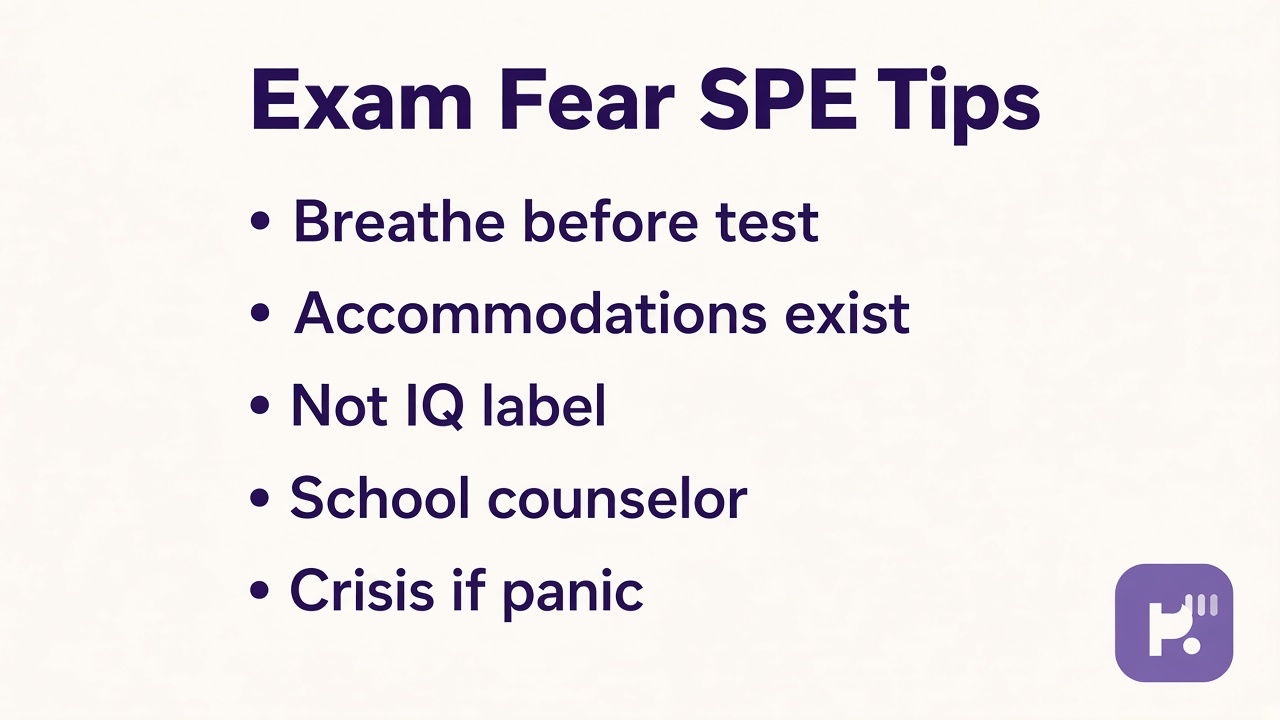
Tips at a glance
A quick takeaway graphic with topic tips (not your personal quiz scores). Start the quiz for your index, bands, and charts.
What this quiz can and cannot tell you
Can tell you
- Name somatic, cognitive, and avoidance patterns in plain language for counselor or disability intake
- Highlight when accommodation questions, breathing pauses, or counselor planning habits are missing
- Support honest conversations with school support staff without forcing an IQ shame story
- Offer a baseline if you retake after one exam cycle with planned study and sleep
Cannot tell you
- Diagnose panic disorder, learning disabilities, or ADHD from one score
- Replace psychoeducational evaluations, medication decisions, or official accommodation letters
- Prove you are stupid or faking from bar height
- Substitute for crisis care when panic, hopelessness, or safety fears feel urgent
Test anxiety frequency, accommodations, and screener-not-diagnosis limits
People search fear of the exam SPE pages when scantrons spike their heart rate, when studied facts vanish on page one, or when comment threads treat anxious students like they chose not to try. Counselors discuss test anxiety as distress that interferes with showing what you know, often alongside sleep loss, perfectionism, learning differences, or trauma history. This online screener uses that reflection lens unofficially; it cannot replace interview-based assessment or tell you which single cause fits without your history.
Somatic exam strain covers racing heart, nausea, shaky hands, and sleepless nights before exams, not whether you ever feel calm. Naming body alarm without IQ shame and noticing when panic deserves counselor support are signals worth bringing to intake even when bars run high. Cognitive test worry covers blanking, failure spirals, and stupid-self talk without defaulting to character attacks. Avoidance and cram strain covers delayed study, dread all-nighters, skipped review, and question-avoidance compared with your baseline.
Real readers mix bars. You might score high on somatic strain while moderate on avoidance, which often describes body-heavy weeks without total study shutdown. You might score high cognitive worry with low limit outreach, which can mean spirals spike yet you still treat web totals as intelligence proof. Reverse items catch overconfidence: steady walk-ins, remembering one score is not your IQ, keeping study after a rough test, breathing mid exam, planned study blocks, counselor questions, refusing licensed-form myths, and 988 awareness should not inflate a strain index meant to track frequency of harm-linked test fear habits.
Pair results with siblings on this hub instead of stacking one verdict. Our test of exam anxiety stays on general exam worry reflection when you want a sibling lane separate from SPE-style domain splits here. Our motivation for success and fear of failure MSF angles toward performance fear language with its own stem bank. Browse the mental health and clinical hub for more screeners. Bring bar examples to counselors, ask about accommodations honestly, and call 988 when panic feels unsafe tonight.
Semesters and licensing windows change faster than one retake. A somatic bar might spike during stacked finals while cognitive bars sleep until sleep returns. When you share results, say unofficial screener. When you borrow tips, credit teachers who offered extended time and friends who modeled breathing before login screens. Retake after one exam cycle and watch whether screener support limits bars rise even if strain drops, which often means you separated test fear facts from IQ labels.
| Test | Focus |
|---|---|
| Test of exam anxiety | General exam worry reflection rather than SPE-style somatic, cognitive, and avoidance domain splits on this page |
| Motivation for success and fear of failure MSF | Performance and failure fear habits rather than this past-month SPE-style four-domain bank |
Fear of the Exam (SPE) FAQ
What does Fear of the Exam SPE measure?
It measures how often in the past month you noticed somatic exam strain, cognitive test worry, avoidance and cram strain, and screener support limit habits. You get an index from 0 to 100 plus four bars. It describes self-reported frequency on this screener, not a clinical diagnosis.
Is this the official published SPE from research clinics?
No. This is an unofficial reflection tool inspired by common test-anxiety domains. Licensed school psychology forms and treating clinicians own official scoring; this page is for self-reflection only.
Does a high score mean I am not smart enough?
No. Test anxiety strain is a distress signal for many capable students. High bars mean you reported frequent items here, not low intelligence. Counselors and learning specialists evaluate causes; this quiz does not label IQ.
When should I talk with a school counselor about these results?
Consider a visit when anxiety limits attendance, sleep, or showing what you know for weeks, when accommodations might help, or when panic rises. Bring domain examples, not only the total. Call or text 988 (US) if hopelessness feels urgent.
Who reviewed this quiz?
Dr. Elena Vasquez reviewed the YMYL framing, accommodation prompts, and crisis resource guidance. See our editorial policy for review standards.
Reviewed by