What Female Anatomy Quiz measures
This quiz does not perform pelvic exams, diagnose infections, or certify nursing programs. It measures how much you agree with anatomy study habit statements grouped four ways: respectful terminology about clinical words without mockery or crude-only vocab; symptoms need clinicians about pain, bleeding, lumps, and discharge changes deserving licensed care; edu not porn framing about diagrams and courses separate from explicit bait and harassment; and unofficial kind shares about playful captions, lookup prompts, and refusing roast threads from bar height. You rate 22 statements from strongly disagree to strongly agree, with reverse-worded traps so one lucky guess cannot inflate every bar. Your answers also feed a second chart on closeness and trust habits, because body shame sometimes blocks asking health questions aloud. The total becomes an index from 0 to 100 where higher means more reported anatomy study literacy on this screener, not proof you should diagnose strangers online.
Respectful terminology
Clinical words kindly; no mockery-only vocab.
Symptoms need clinicians
Pain and bleeding deserve appointments, not quiz verdicts.
Edu not porn framing
Diagrams and courses separate from explicit bait.
Unofficial kind shares
Study reflection with lookup prompts, not roast threads.
How it works
Answer 22 agreement items
Rate each statement from Strongly disagree to Strongly agree. Tap Next after each answer.
Answers sort into four domains
Each answer feeds one of four anatomy study groups, and every item also feeds a closeness and trust layer.
See your index and charts
You get a 0 to 100 index, a band, four domain bars, and a second chart for intimacy habits.
Take the Female Anatomy Quiz
Answer 22 short statements to see your female anatomy literacy index, four domain bars, and a closeness and trust chart.
What your result means
Your index is the average of all 22 answers, scaled from 0 to 100, with reverse-worded items flipped first. Read symptoms-need-clinicians bars together with edu-not-porn limits before you treat a high score as medical authority. Educational reflection supports kinder study chats; licensed clinicians still own diagnosis when your body hurts or bleeds in new ways.
| Band | Index range | Typical reading |
|---|---|---|
| Building anatomy study literacy | 0 to 35 | Fewer agreed habits on respectful terms, clinician prompts, edu-not-porn limits, or kind shares on this screener. |
| Mixed anatomy study literacy | 36 to 65 | Solid terminology in some domains with mockery slips, meme-trust myths, porn-as-class framing, online diagnosis cosplay, or roast-thread shares. |
| Strong anatomy study literacy | 66 to 100 | Frequent agreement with respectful terms, clinician humility, edu-not-porn limits, and kind shares; still unofficial study only. |
Tips at a glance
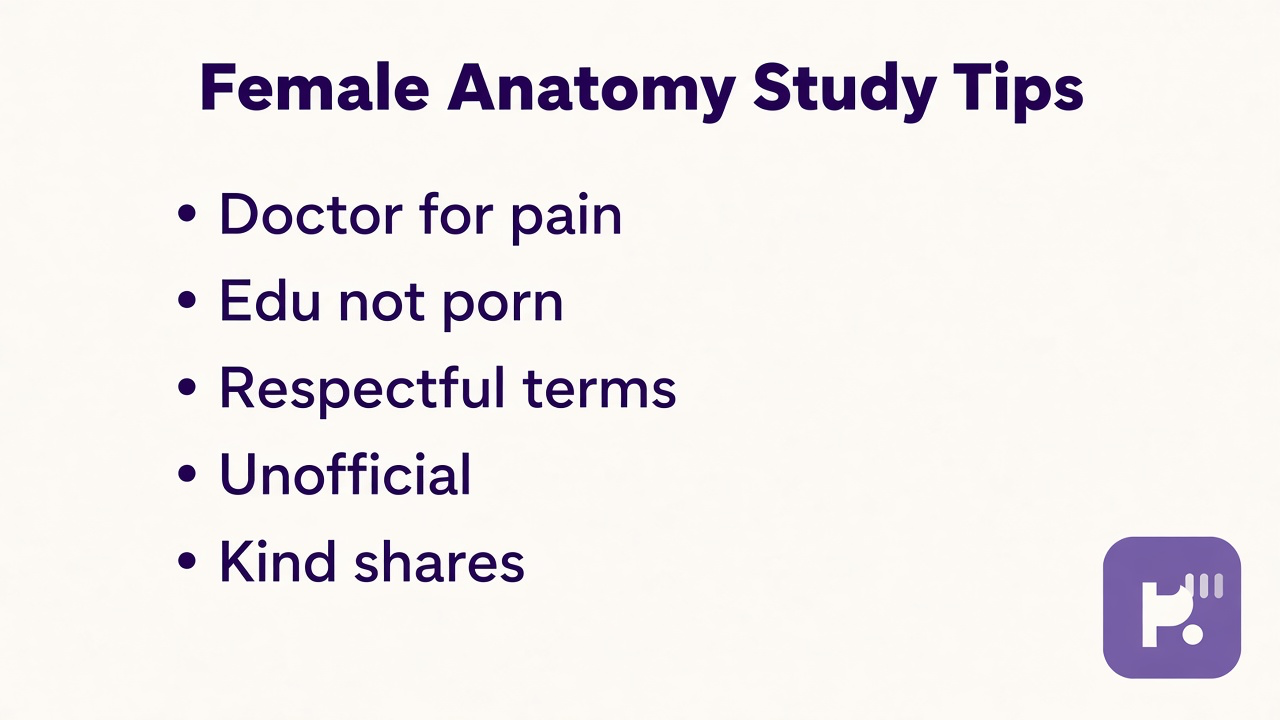
A quick takeaway graphic with topic tips (not your personal quiz scores). Start the quiz for your index, bands, and charts.
What this quiz can and cannot tell you
Can tell you
- Highlight respectful terminology, clinician-when habits, and edu framing worth revisiting before the next study share
- Separate unofficial trivia from med-school credentials or porn-site study myths
- Encourage kind captions and private wrong guesses without body-shame pile-ons
- Spark better health literacy conversations without claiming clinical authority
Cannot tell you
- Diagnose PCOS, endometriosis, STIs, or pregnancy from one couch screener
- Replace OB-GYN exams, ultrasounds, or labs when symptoms persist
- Prove moral worth, purity, or attractiveness from bar height
- Give permission to sexualize classmates, coworkers, or strangers from anatomy trivia scores
Why anatomy study needs respectful terms and clinician humility
Search traffic around female anatomy quizzes usually wants two things: confidence with labels before a health class or appointment, and shareable scores for study group chats. Those goals help when readers use respectful words, book clinicians for symptoms, and keep diagrams educational. They hurt when trivia bars become roast fuel, or when porn clips get framed as anatomy class. Study literacy works best when it names terminology, clinician prompts, edu limits, and kind shares together.
Dr. Elena Vasquez reviews self-image anatomy screeners with a simple split: reward honest study habits and honest limits on unofficial advice at the same time. Respectful terminology tracks clinical words without mockery-only vocab. Symptoms need clinicians tracks pain, bleeding, and discharge changes deserving appointments without meme-trust myths. Edu not porn framing tracks diagrams and courses separate from explicit bait threads. Unofficial kind shares keeps screeners separate from med-school cosplay and public dunking on wrong guesses.
Real learners mix bars. You might score high on terminology while keeping clinician items moderate, which often describes curious students who still delay appointments from embarrassment. You might score high edu framing with softer kind-share items, which can mean you study respectfully yet still post mirrors like diagnostic proof. Reverse items catch overconfidence: public mockery for mixed-up terms, trusting memes over clinicians, skipping doctors from shame, porn as class, sexualized captions, or perfect scores licensing online diagnosis should not inflate bars meant to track respectful study habits.
Pair results with siblings on this hub instead of forcing one body story. Our anatomy and physiology quiz widens to whole-body systems with stems separate from female-specific respect habits on this page. Our body image questionnaire (BIQ) explores appearance distress with clinical frequency language, not agree-item anatomy trivia here. Our fake smile quiz stays on expression-reading humility when social shame rides beside health questions. Browse the self image and appearance hub for more gentle screeners. Caption shares as edu-only and skip roasting friends who never opted in.
Semesters and symptoms rotate faster than meme cycles. A clinician-when bar might spike after one scary week while terminology sleeps until you retake calmly. When you share results, say unofficial study mirror. When you borrow tips, credit nurses who answered kind questions and friends who shared diagrams without mockery. Retake after one health season and watch whether kind-share bars stay high even if recall rises, which often means you separated playful trivia from actual exam-room care.
| Test | Focus |
|---|---|
| Anatomy and physiology quiz | Whole-body systems trivia rather than female-specific respectful terminology and clinician-when stems on this page |
| Body image questionnaire (BIQ) | Appearance distress frequency rather than agree-item anatomy study habits here |
| Fake smile quiz | Expression-reading humility rather than edu-not-porn anatomy framing on this screener |
Female Anatomy Quiz FAQ
What does Female Anatomy Quiz measure?
It measures how much you agree with statements about respectful terminology, symptoms need clinicians, edu not porn framing, and unofficial kind shares. You get an index from 0 to 100 plus four bars. It describes self-reported study habits on this screener, not clinical authority.
Is this sexual content or a medical exam?
No. Edu-not-porn items keep the page educational. Licensed clinicians perform exams and diagnostics; this screener is study reflection and respectful language habits only.
Does a high score mean I do not need a doctor for pain?
No. Symptoms-need-clinicians items reject meme-trust and embarrassment myths. High bars mean you related to study statements here, not that you can skip care when your body hurts or bleeds in new ways.
When should I see a clinician about pelvic symptoms?
Consider licensed care when pain persists, periods change sharply, bleeding is heavy or between cycles, you notice lumps, or discharge and fever worry you. This quiz supports literacy; clinicians evaluate symptoms with exams and tests.
Who reviewed this quiz?
Dr. Elena Vasquez reviewed the edu framing, respectful terminology tone, clinician-when limits, and unofficial study boundaries. See our editorial policy for review standards.
Reviewed by