What this fear of missing out scale FOMOS 1908 measures
This page does not administer the published Fear of Missing Out Scale FOMOS 1908 or its official scoring keys, and it cannot diagnose social anxiety or internet addiction from one total. It measures how often you noticed habits counselors and therapists often discuss when belonging fears spike in a single week, organized four ways: social scroll pull when feeds reopened after you planned to unplug; rest counts when sleep and recovery were not treated as laziness; plan consent when RSVPs checked energy and budget instead of panic; and FOMOS limits when unofficial screeners stayed separate from published-scale cosplay, phone shaming, and skipped care when despair persisted. You answer 22 how-often statements about the past seven days, with reverse-worded items so one good sleep night cannot hide frequent comparison spirals on other days. Your responses also feed a second chart on closeness and trust habits, because FOMO sometimes blocks asking for support. The total becomes an index from 0 to 100 where higher means more frequent reported FOMO strain or limit gaps on this screener.
Social scroll pull
How often feeds and chats pulled you back after you tried to unplug.
Rest counts
How often sleep and recovery were protected instead of shamed.
Plan consent
How often invites matched energy, budget, and honest interest.
FOMOS limits
How often reflection stayed humble versus phone-police myths or skipped care.
How it works
Answer 22 frequency items
Rate each statement from Never to Very often for the past week. Tap Next after each answer.
Answers sort into four domains
Each answer feeds one of four past-week FOMO groups, and every item also feeds a closeness and trust layer.
See your index and charts
You get a 0 to 100 index, a band, and two bar charts you can bring to a counselor.
Take the Fear of Missing Out Scale FOMOS 1908
Answer 22 short statements to see your past-week FOMO habit index, four domain bars, and a closeness and trust chart.
What your result means
Your index is the average of all 22 answers, scaled from 0 to 100, with reverse-worded items flipped first. Higher means more frequent reported scroll pull, rest shame, panic plans, or limit gaps on this screener. Read FOMOS-limit bars with rest habits before you treat any total as proof you should never go offline. Persistent hopelessness deserves crisis support, not only digital hygiene pep talks.
| Band | Index range | Typical reading |
|---|---|---|
| Lower reported past-week FOMO strain | 0 to 35 | Fewer frequent scroll pulls, rest shame loops, consent-skipping RSVPs, or quiz-as-phone-police habits in the past week. |
| Mixed reported past-week FOMO habits | 36 to 65 | Some calm stretches alongside scroll pulls, rest shame, panic RSVPs, or unofficial-scale myths on other days. |
| Higher reported past-week FOMO strain | 66 to 100 | Frequent scroll pulls, rest shame, panic plans, or quiz-as-published-FOMOS habits; skilled support may help more than another solo retake. |
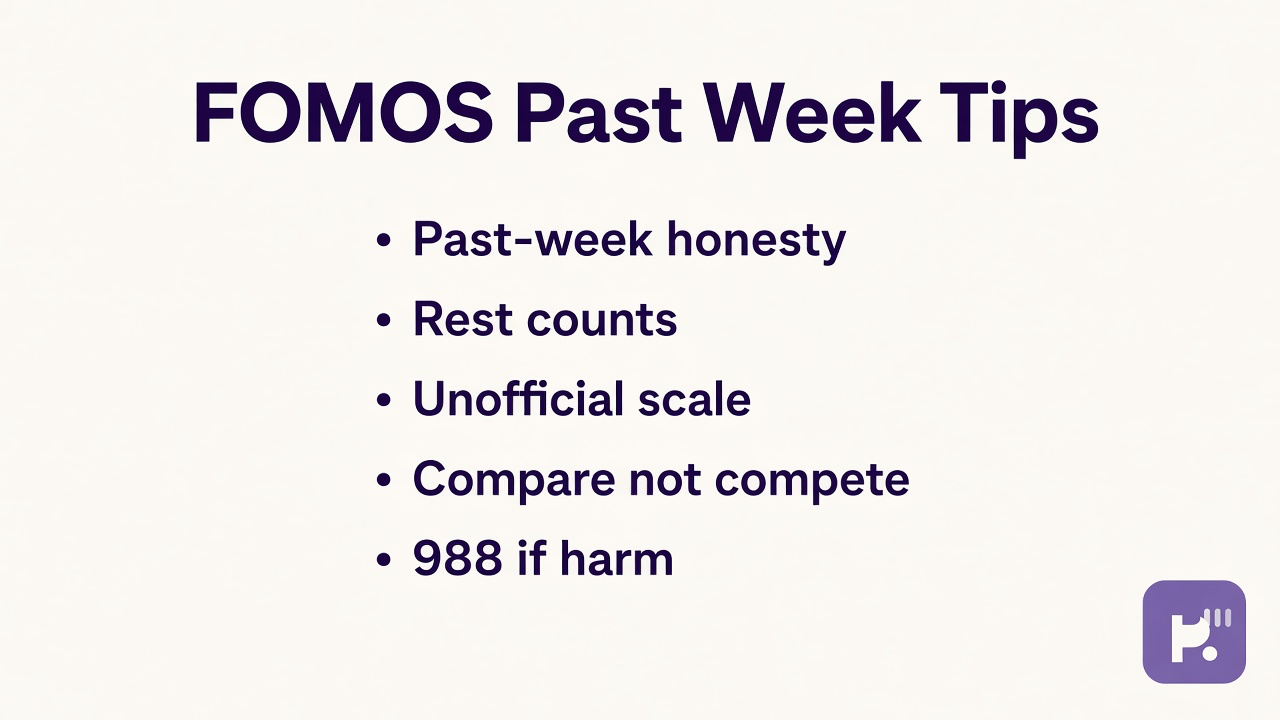
Tips at a glance
A quick takeaway graphic with topic tips (not your personal quiz scores). Start the quiz for your index, bands, and charts.
What this quiz can and cannot tell you
Can tell you
- Name scroll, rest, and consent habits in plain language for therapist intake
- Highlight when published-FOMOS cosplay or phone-police myths blocked support
- Support honest overlap conversations with clinicians without forcing one online label
- Offer a baseline if you retake after one week of scroll windows and honest RSVPs
Cannot tell you
- Administer or score the published Fear of Missing Out Scale FOMOS 1908 clinical form
- Diagnose social anxiety, depression, or internet use disorder from one score
- Prove you are unlikable or that friends secretly hate you from one bar height
- Substitute for crisis care when hopelessness or safety fears feel urgent
Past-week scroll pull, rest, consent, and no phone police
People search FOMOS pages when one week of group chats feels louder than real life, when sleep erodes for story checking, or when declining plans triggers shame spirals. Therapists discuss FOMO as belonging fear plus habit loops, not as proof you are defective for caring about friends. This online screener uses that reflection lens unofficially with past-week wording distinct from our FOMO sibling stems; it cannot replace interview-based assessment.
Social scroll pull covers reopening apps, bedtime refreshes, and mood drops after comparison clips. Rest counts covers calling naps lazy, choosing earlier bedtimes, and rejecting the myth that alone time means permanent exile. Plan consent covers panic RSVPs, double booking, and honest maybes without ghosting.
FOMOS limits covers refusing phone-police shame, rejecting published-scale cosplay, and planning therapy or crisis lines instead of feed debates. Pair results with siblings on this hub instead of forcing one label story. Our fear of missing out scale FOMO sibling uses its own stem bank for broader FOMO reflection, not these past-week frequency sentences. Our fear of compassion scale sibling angles toward kindness avoidance when warmth feels risky separate from scroll pull here. Our fear test sibling stays playful on general fear habits rather than clinical past-week FOMO frequency on this page. Browse the mental health and clinical test hub for more YMYL screeners with study-not-diagnosis framing.
Higher scores mean more frequent self-reported strain on this tool, not proof you should shame yourself or others about screens. Bring domain bars to intake so sessions start with examples, not guilt. If hopelessness spikes, skip online debate and prioritize 988 or a clinician. Retake after one week of named scroll windows and one consent-based RSVP when safe and compare bars, not only the total.
| Test | Focus |
|---|---|
| Fear of missing out scale FOMO | Separate FOMO stem bank for reflection, not these past-week FOMOS 1908 frequency items |
| Fear of compassion scale | Kindness avoidance and warmth fear rather than social scroll pull on this page |
| Fear test | General fear habit agree items rather than past-week clinical FOMO frequency here |
Fear of Missing Out Scale FOMOS 1908 FAQ
What does this fear of missing out scale FOMOS 1908 measure?
It measures how often you noticed social scroll pull, rest shame or protection, plan consent habits, and FOMOS-limit boundaries during the past week. You get an index from 0 to 100 plus four domain bars. Your responses suggest self-reported frequency for adult reflection, not a clinical diagnosis or published FOMOS score.
How is this different from the FOMO sibling test on this hub?
This page uses past-week frequency stems focused on scroll pull, rest, and consent loops. The fear of missing out scale FOMO sibling uses its own separate stem bank. Compare them as reflection tools, not stacked proof that you failed twice.
Is this the official Fear of Missing Out Scale FOMOS 1908?
No. Published FOMOS instruments use validated item banks and trained scoring in research settings. This page is an unofficial screener with its own stems inspired by public FOMO themes for reflection only, not a licensed clinical form.
Does a high score mean I am addicted to my phone?
No. High scores describe how often you reported certain habits on this tool, not a DSM label or a mandate to throw away your device. Sleep loss, mood dips, and daily role strain are better reasons to seek skilled support than bar height alone.
What should I do if FOMO still disrupts sleep or mood?
Schedule a counselor visit with domain examples, try one scroll window plus one honest RSVP this week, and call or text 988 (US) if hopelessness or safety worries feel urgent. Prioritize support over retakes when strain spikes.
Who reviewed this screener?
Dr. Elena Vasquez reviewed the YMYL framing, crisis resources, quiz-not-phone-police limits, sibling separation from the FOMO page, and result explanations. See our editorial policy for review standards.
Reviewed by