What Family Values measures
This quiz does not grade your soul, certify therapists, or replace safety planning when harm is present. It measures how much you agree with values habits grouped four ways: shared priorities about naming money, faith, parenting, loyalty, and time without one-template myths; respect boundaries about no on talks and posts, privacy, and skipping surveillance loyalty scripts; conflict repair about pauses, apologies, and calmer return talks without eternal scoreboards; and unofficial limits about playful reflection separate from love verdicts, inheritance dunking, and public moral ranking. You rate 22 statements from strongly disagree to strongly agree, with reverse-worded traps so one righteous mood cannot inflate every bar. Your answers also feed a second chart on closeness and trust habits, because values fights and guardedness often share one household season. The total becomes an index from 0 to 100 where higher means more reported values alignment habits on this screener, not proof you should shame cousins online.
Shared priorities
Name money, faith, parenting, and loyalty without fake harmony myths.
Respect boundaries
Consent on posts, paused talks, and privacy without surveillance loyalty.
Conflict repair
Apologies, calmer returns, and shorter scoreboards after loud fights.
Unofficial limits
Reflection only; bars not therapy notes or love verdict orders.
How it works
Answer 22 agreement items
Rate each statement from Strongly disagree to Strongly agree. Tap Next after each answer.
Answers sort into four domains
Each answer feeds one of four family values groups, and every item also feeds a closeness and trust layer.
See your index and charts
You get a 0 to 100 index, a band, four domain bars, and a second chart for intimacy habits.
Take the Family Values
Answer 22 short statements to see your family values index, four domain bars, and a closeness and trust chart.
What your result means
Your index is the average of all 22 answers, scaled from 0 to 100, with reverse-worded items flipped first. Read unofficial limit bars together with boundary respect before you treat a high score as moral proof or a low score as a breakup command. Values language supports kinder talks; counselors still matter when fear shows up.
| Band | Index range | Typical reading |
|---|---|---|
| Building values alignment habits | 0 to 35 | Fewer agreed habits on shared priorities, respect boundaries, conflict repair, or unofficial limit items on this screener. |
| Mixed values alignment habits | 36 to 65 | Solid priority or boundary habits in some domains with verdict myths, boundary shaming, scorekeeping fights, or quiz-as-court slips in others. |
| Strong values alignment habits | 66 to 100 | Frequent agreement with shared priorities, respect boundaries, conflict repair, and unofficial limits; still reflection only. |
Tips at a glance
A quick takeaway graphic with topic tips (not your personal quiz scores). Start the quiz for your index, bands, and charts.
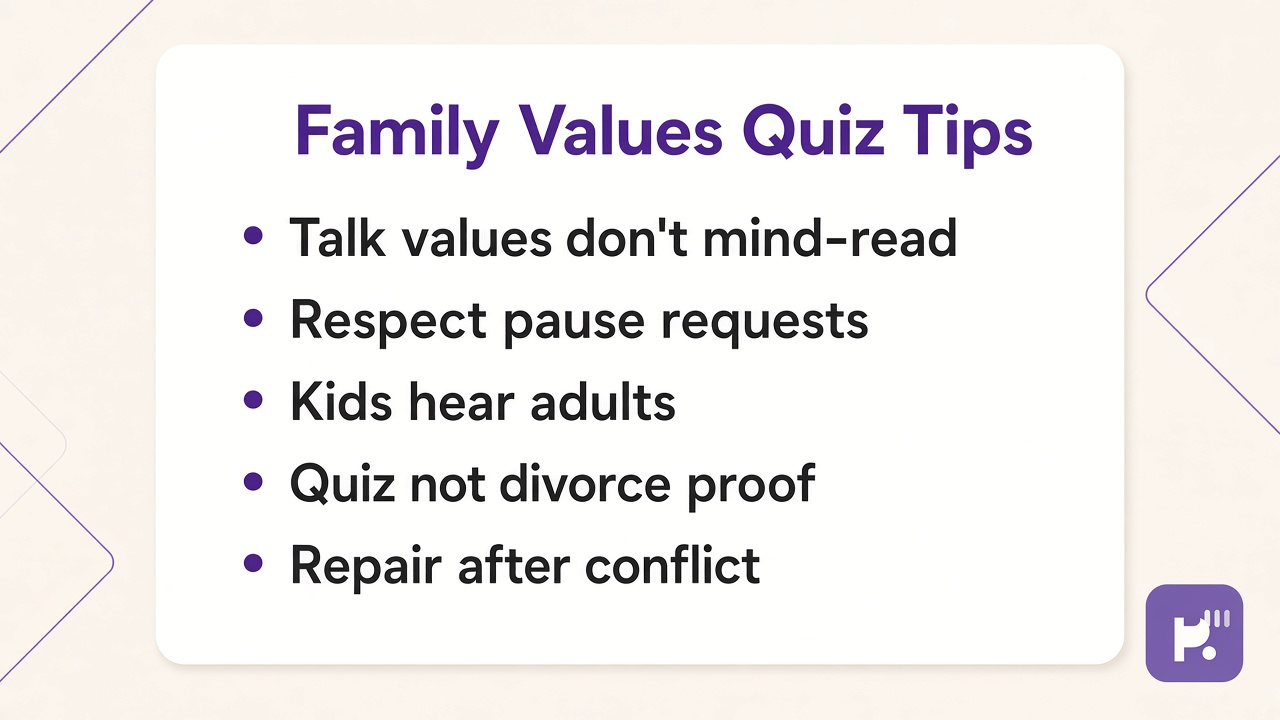
What this quiz can and cannot tell you
Can tell you
- Highlight priority, boundary, and repair habits worth revisiting during a calmer week
- Separate unofficial reflection from public moral ranking or inheritance dunking
- Encourage consent before you post family news or quiz screenshots
- Spark honest talk with trusted friends about warm-up captions on shares
Cannot tell you
- Prove you should stay, leave, or cut off relatives from one agree screener
- Replace couples therapy, mediation, or abuse assessment
- License guilt trips or inbox surveillance because bars look high
- Turn values scores into pile-ons on partners who never opted in
Family values before love verdict myths
Search traffic around family values quizzes usually wants two things: language when money and parenting priorities clash, and relief when group chats treat every disagreement like a moral failure. Those goals help when households name priorities, honor boundaries, and return to repair talks. They hurt when agree bars become love verdicts, or when public screenshots shame partners who never opted in. Values language works best when it names repair habits and unofficial limits together.
Dr. Priya Sharma reviews relationships-dating reflection screeners with a simple split: reward honest priority habits and honest limits on verdict fantasy at the same time. Shared priorities tracks money, faith, kid plans, and loyalty talks without fake families never disagree myths. Respect boundaries tracks paused talks, post consent, and privacy without surveillance loyalty scripts. Conflict repair tracks apologies and calmer returns without eternal scoreboards. Unofficial limits keeps screeners, therapists, and safety plans separate from bar height.
Real households mix bars. You might score high on shared priorities while keeping repair items moderate, which often describes clear values talkers who still scorekeep old fights. You might score high on boundaries with softer limit items, which can mean strong no respect plus occasional public moral ranking slips. Reverse items catch sloppy answers: silent value adoption demands, inbox surveillance loyalty, public boundary lectures, fight winning over apology, crying as performance, high bars overriding no, or perfect scores licensing court talk should not inflate charts meant to track layered values habits.
Pair results with siblings on this hub instead of forcing one moral story. Our familiar quiz explores everyday partner comfort when values talk needs a softer routine frame than priority naming here. Our constructive destructive family CDF sibling tracks warmth and hostile routine habits with separate wording from values alignment on this page. Our family emotional communications FEC uses agree statements on talk habits rather than priority and repair items here. Browse the relationships and dating hub for more reflection screeners. Share scores as conversation starters with consent, not as orders to obey.
Holiday seasons and kid milestones refresh faster than meme verdict threads. When you share results, say reflection beats scoreboard. When you borrow tips, credit partners who honored a paused talk and cousins who disagreed without moral dunking. Retake after one calmer month and watch whether unofficial limit bars stay high even if priority bars rise, which often means you separated named values from actual consent habits.
| Test | Focus |
|---|---|
| Familiar quiz | Everyday partner comfort and check-in habits rather than shared priority and repair stems on this page |
| Constructive destructive family CDF | Warmth and hostile routine climate habits rather than values alignment reflection here |
| Family emotional communications FEC | Family talk habits rather than priority naming and conflict repair items on this screener |
Family Values FAQ
What does Family Values measure?
It measures how much you agree with statements about shared priorities, respect boundaries, conflict repair, and unofficial limits. You get an index from 0 to 100 plus four bars. It describes self-reported values habits on this screener, not proof your family is good or bad at love.
Is this a verdict on whether we should stay together?
No. Unofficial limit items keep the page in reflection mode. Therapists, mediators, and safety plans still own serious decisions; this screener is a habit mirror only.
Does a high score mean my partner must adopt my values?
No. Shared priority items reject silent adoption myths. High bars mean you related to statements here, not that you hold moral authority when someone says no.
Why include boundaries with values items?
Values fights often spill into posts, privacy, and guilt scripts. Boundary items keep consent visible beside priority talk so results stay honest about household habits.
Who reviewed this quiz?
Dr. Priya Sharma reviewed the educational framing, anti-verdict limits, and separation from therapy or safety planning claims. See our editorial policy for review standards.
Reviewed by