What this FACES III inspired screener measures
This page does not administer the published Family Adaptability and Cohesion Scale III from research clinics, and it cannot diagnose family pathology, assign school labels, or decide custody from one score. It measures how often you noticed habits marriage and family therapists discuss when household strain rises, organized four ways: adaptability and flexibility when rules, roles, and problem-solving bent with stress or froze into all-or-nothing control; cohesion and connection when warmth, loyalty, and repair showed up without picture-perfect myths or weeks of silent distance; parent observation when you noticed kids with curiosity, sought professional guidance when worry persisted, or avoided shame labels and IEP threats from one mood week; and FACES scale limits when unofficial screeners replaced therapy, skipped clinicians when loops stuck, or ignored 988 when harm spiked. You answer 22 how-often statements about the past month, with reverse-worded items so one appreciation habit, flexible rule, counselor plan, or crisis lookup cannot hide frequent rigidity or disconnection on other days. Your responses also feed a second chart on closeness and trust habits, because shame about family conflict sometimes blocks asking for help. The total becomes an index from 0 to 100 where higher means more frequent reported family strain on this screener. Your responses suggest intensity to discuss with support; they do not prove your family is broken forever.
Adaptability and flexibility
How often rules and roles bent with stress versus froze into rigidity or chaos.
Cohesion and connection
How often warmth and repair showed up without perfection scorekeeping or silent distance.
Parent observation
How often you noticed kids with curiosity and professional guidance instead of label threats.
FACES scale limits
How often quiz humility, family therapy planning, and 988 awareness showed up versus Olson myths.
How it works
Answer 22 frequency items
Rate each statement from Never to Very often for the past month. Tap Next after each answer.
Answers sort into four domains
Each answer feeds one of four family climate groups, and every item also feeds a closeness and trust layer.
See your index and charts
You get a 0 to 100 index, a band, and two bar charts you can bring to a therapist or counselor.
Take the Family Adaptability and Cohesion Scale FACES III Screener
Answer 22 short statements to see your family adaptability and cohesion strain index, four domain bars, and a closeness and trust chart.
What your result means
Your index is the average of all 22 answers, scaled from 0 to 100, with reverse-worded items flipped first. Higher means more frequent reported rigidity, disconnection, or limit myths on this screener. Read FACES scale limits with adaptability bars before you treat any total as diagnostic proof. Harm or hopelessness at home deserves crisis support, not only communication tips.
| Band | Index range | Typical reading |
|---|---|---|
| Lower reported family strain | 0 to 35 | Fewer frequent rigidity loops, disconnection stretches, harsh labeling, or FACES-as-therapy myths in the past month. |
| Mixed reported family strain | 36 to 65 | Some flexible, connected stretches alongside rigidity, distance, labeling, or limit myths on other days. |
| Higher reported family strain | 66 to 100 | Frequent rigidity, disconnection, harsh labeling, or scale-as-therapy habits; professional support and crisis lines may help more than another solo retake. |
Tips at a glance
A quick takeaway graphic with topic tips (not your personal quiz scores). Start the quiz for your index, bands, and charts.
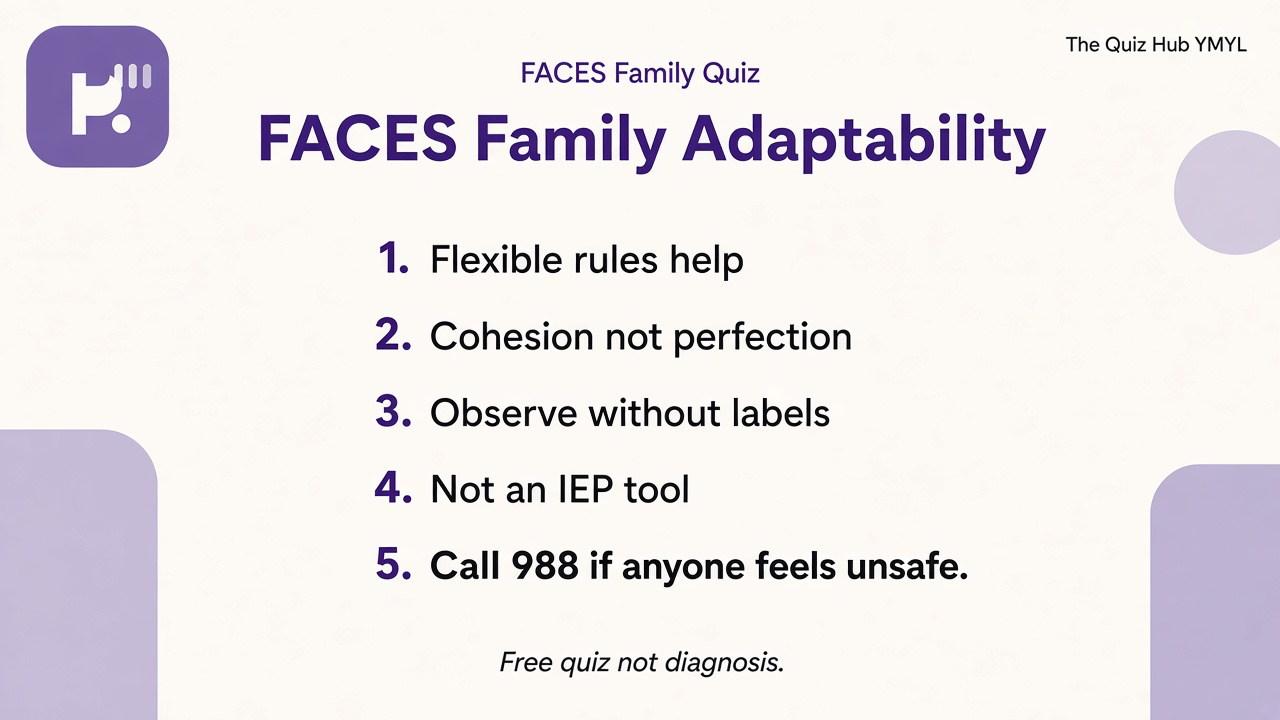
What this quiz can and cannot tell you
Can tell you
- Name rigidity, distance, and labeling habits in plain language for family therapy intake
- Highlight when flexibility, repair, counselor planning, or crisis outreach habits are missing
- Support honest conversations with clinicians without forcing one online label on kids
- Offer a baseline if you retake after one family ritual week and one rule bend experiment
Cannot tell you
- Diagnose family dysfunction, personality disorders, or child disorders from one score
- Replace family therapy, parenting programs, IEP processes, or custody evaluations
- Prove which parent is right in a divorce dispute from bar height
- Substitute for crisis care when harm, violence, or safety fears feel urgent
Adaptability, cohesion, and quiz-not-family-therapy limits
People search FACES III pages when schedules feel frozen, when teens pull away, or when parents wonder if love still lives in the same house. Marriage and family therapists discuss adaptability as how rules and roles flex under stress, and cohesion as emotional bonding without demanding a conflict-free fairy tale. This online screener uses that reflection lens unofficially; it cannot replace interview-based assessment or tell you which therapy model fits without your history.
Adaptability covers brainstorming options, bending plans for illness or grief, and avoiding all-or-nothing punishments when someone forgets one step. Cohesion covers appreciation, repair after tension, and refusing social media perfection as the only valid family photo. Parent observation covers curious questions before lectures, professional guidance when worry persists, and refusing to treat one screener bar as an IEP verdict.
Real households mix bars. You might score high rigidity with moderate cohesion, which often describes rule-heavy seasons that still include loyalty. You might score high distance with strong limit outreach, which can mean emotional pain yet you still plan therapist visits instead of endless retakes. Reverse items catch overconfidence: flexible rule changes, shared meals with warmth, kid check-ins without labels, counselor bookings, and crisis lookups should not inflate a strain index meant to track frequency of rigidity and disconnection.
Pair results with siblings on this hub instead of forcing one label story. Our constructive destructive family CDF sibling tracks warmth and hostile routine habits with separate wording. Our family values page explores value alignment rather than FACES adaptability frequency here. Our family emotional communications FEC sibling uses agree statements on talk habits, not past-month rigidity items on this page. Browse the mental health and clinical test hub for more YMYL screeners with study-not-diagnosis framing.
Higher scores mean more frequent self-reported strain on this tool, not proof you failed as a parent or partner forever. Bring domain bars to intake so sessions start with examples, not shame. If harm spikes, skip online debate and prioritize 988 or a clinician. Retake after one family meeting and one appreciation week when safe and compare bars, not only the total.
| Test | Focus |
|---|---|
| Constructive destructive family CDF | Warmth, hostile conflict, and routine climate habits rather than FACES adaptability frequency here |
| Family values | Shared values alignment rather than adaptability and cohesion strain frequency on this screener |
| Family emotional communications FEC | Agree-style family talk habits rather than past-month FACES rigidity and distance items here |
Family Adaptability and Cohesion Scale FACES III Screener FAQ
What does this FACES III screener measure?
It measures how often you noticed adaptability, cohesion, parent observation, and FACES limit habits during the past month. You get an index from 0 to 100 plus four domain bars. Your responses suggest self-reported frequency for reflection, not a clinical diagnosis.
Is this the official Olson FACES III used in research?
No. Published FACES III forms use validated item banks and trained scoring. This page is an unofficial inspired screener with its own stems for reflection only, not family therapy certification and not a licensed evaluation.
Can this quiz decide if my child needs an IEP or diagnosis?
No. School evaluations and clinical diagnoses require licensed professionals, records, and observation over time. Parent observation items encourage guidance when worry persists; they do not replace evaluation teams or threaten labels from one bar.
Why mention 988 and family therapy in the limits domain?
Intent brief readers asked for crisis honesty when harm or hopelessness spikes at home. Limit items keep outreach visible so unofficial bars do not replace professional care or safety planning.
What should I do if my score is high or someone at home feels unsafe?
Call or text 988 (US) if crisis feels immediate, or contact a licensed family therapist or counselor with domain examples from your results. Prioritize safety and support over retakes when harm or hopelessness spikes.
Who reviewed this screener?
Dr. Elena Vasquez, PhD reviewed the YMYL framing, crisis resources, unofficial scale limits, sibling separation from CDF and FEC wording, and result explanations. See our editorial policy for review standards.
Reviewed by