
What Eye Shape Quiz measures
This quiz does not diagnose conditions, schedule surgery, or speak for oculoplastic surgeons. It measures how much you agree with literacy statements grouped four ways: eye shape naming about almond, round, hooded, monolid, upturned, and downturned language from neutral selfies without one-style moralizing; crease and lid patterns about fold depth, mobile lid space, hooded overlap, and resisting monolid insult traps; makeup map habits about wing liner, crease shadow, mascara focus, and refusing one viral map for every face; and quiz not surgery about unofficial screeners, refusing procedure fantasies, and captioning shares as fun labels not clinical orders. You rate 22 statements from strongly disagree to strongly agree, with reverse-worded traps so one hot take cannot inflate every bar. Your answers also feed a second chart on closeness and trust habits, because how we talk about faces and appearance sometimes overlaps with how much we let people see our own mirror habits. The total becomes an index from 0 to 100 where higher means more reported eye shape literacy habits on this screener, not proof you need surgery or that your face failed a beauty test.
Eye shape naming
Almond, round, hooded, monolid, and corner-tilt labels from the mirror.
Crease and lid patterns
Fold depth, lid space, and hooded overlap without insult threads.
Makeup map habits
Liner, shadow, and lash placement that shifts by shape in tutorials.
Quiz not surgery
Fun reflection only; clinicians and surgeons stay separate.
How it works
Answer 22 agreement items
Rate each statement from Strongly disagree to Strongly agree. Tap Next after each answer.
Answers sort into four domains
Each answer feeds one of four eye shape literacy groups, and every item also feeds a closeness and trust layer.
See your index and charts
You get a 0 to 100 index, a band, four domain bars, and a second chart for intimacy habits.
Take the Eye Shape Quiz
Answer 22 short statements to see your eye shape literacy index, four domain bars, and a closeness and trust chart.
What your result means
Your index is the average of all 22 answers, scaled from 0 to 100, with reverse-worded items flipped first. Read quiz-not-surgery bars with makeup-map habits before you treat a high naming score as permission to advise strangers on procedures. Literacy supports kinder beauty talk; licensed clinicians still matter for medical questions.
| Band | Index range | Typical reading |
|---|---|---|
| Softer eye shape endorsement | 0 to 35 | You agreed with fewer naming, crease, makeup-map, and surgery-limit items on this screener. |
| Mixed eye shape endorsement | 36 to 65 | Solid naming or makeup-map habits with crease myths, one-map traps, or surgery fantasy slips in others. |
| Stronger eye shape endorsement | 66 to 100 | Frequent agreement with naming, crease, makeup maps, and surgery limits; still fun only. |
Tips at a glance
A quick takeaway graphic with topic tips (not your personal quiz scores). Start the quiz for your index, bands, and charts.
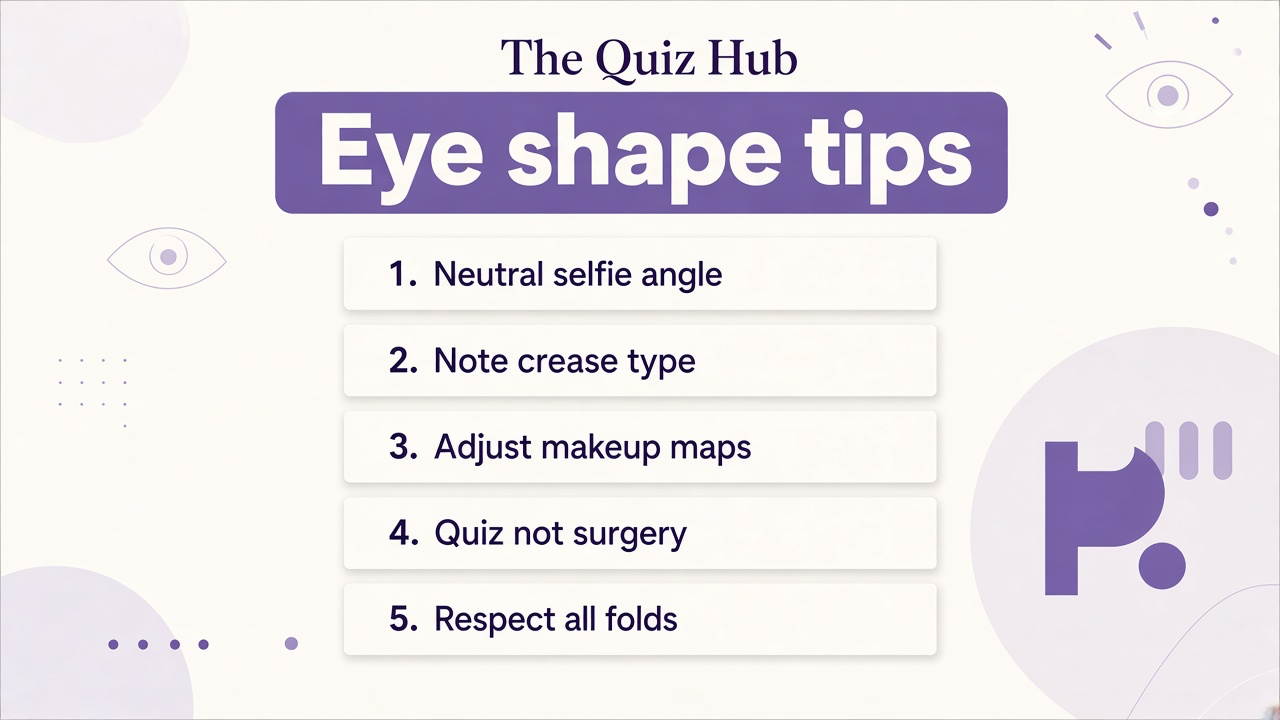
What this quiz can and cannot tell you
Can tell you
- Highlight naming, crease, and makeup-map habits worth revisiting before tutorial binges
- Separate fun shape reflection from surgical candidacy or clinical diagnosis fantasies
- Encourage neutral selfies with crease notes before big share threads
- Spark honest talk with friends about unofficial captions on eye shape results
Cannot tell you
- Replace oculoplastic consults, ophthalmology exams, or licensed surgical counseling
- Diagnose ptosis, thyroid eye disease, or other medical conditions from one screener
- Pressure friends toward blepharoplasty or rank faces as better people from lid folds
- Turn literacy scores into harassment, unsolicited procedure advice, or appearance pile-ons
Eye shape labels as makeup maps, not surgery verdicts
Eye shape search intent often blends two needs: name your lid fold and corner tilt for tutorials, and win approval in chats that treat faces like fix-it scoreboards. Those goals help when they spark neutral selfies and crease notes. They hurt when one viral map implies only one fold counts as pretty, or when threads blur makeup tips into pressure for strangers to book surgery.
Dr. Sarah Chen reviews self-image and lifestyle screeners with a simple split: reward honest mirror habits and honest limits on surgical pretense at the same time. Eye shape naming tracks almond, hooded, monolid, and corner-tilt language without ethnic insults or one-name beauty dogma. Crease and lid patterns tracks fold depth, mobile lid space, and hooded overlap without monolid shame traps. Makeup map habits tracks liner, shadow, and lash placement that shifts in tutorials without universal-map fantasy. Quiz not surgery keeps screeners, clinicians, and surgeons separate from bar height.
Real readers mix bars. You may score high on makeup maps while keeping naming moderate, which often describes strong liner tweaks before mirror vocabulary lands. You may score high naming with softer limit items, which can mean good label habits plus occasional unofficial caption slips. Reverse items catch sloppy answers: one true shape dogma, crease-color confusion, monolid insults, smudge shame, surgery orders from screenshots, or pile-ons tied to high bars should not inflate charts meant to track humble literacy habits.
Pair results with siblings instead of forcing one face story. Our eye color quiz stays on shade and lighting literacy separate from lid fold geometry on this page. Our eye anatomy quiz covers cornea, lens, and retina study trivia when you want biology class framing instead of beauty maps. Our face shape quiz widens to jaw and cheekline labels when eye shape curiosity joins whole-face grooming. Browse the self image and appearance hub for more low-stakes screeners. Caption shares fun-only, read the room, and skip bait threads on friends who never opted in.
Tutorial seasons shift with creators, cameras, and confidence. When you share results, say makeup maps beat scoreboards. When you borrow tips, credit artists who label hooded and monolid lids respectfully and clinicians who welcome medical questions. Retake after a tutorial block and watch whether crease bars rise even if naming trivia felt easy, which often means you separated performative dunking from actual mirror listening.
| Test | Focus |
|---|---|
| Eye color quiz | Iris shade and lighting literacy rather than lid fold, crease type, and makeup map habits on this page |
| Eye anatomy quiz | Cornea, lens, and retina study trivia rather than beauty naming and tutorial placement maps |
| Face shape quiz | Jaw, cheek, and hairline framing rather than crease depth and hooded lid makeup maps |
Eye Shape Quiz FAQ
What does Eye Shape Quiz measure?
It measures how much you agree with statements about eye shape naming, crease and lid patterns, makeup map habits, and unofficial quiz limits. You get an index from 0 to 100 plus four bars. It describes self-reported literacy habits on this screener, not surgical candidacy, clinical diagnosis, or beauty ranking.
Is this oculoplastic or medical advice?
No. Licensed surgeons and eye clinicians handle medical and surgical questions. This page stays fun shape and makeup-map reflection with clear not-a-consult disclaimers.
Does a high score mean I should tell friends to get surgery?
No. High bars mean you related to literacy statements here. Limit items explicitly reward fun captions and resist unsolicited procedure pressure; kindness still matters in real friend groups.
Why include makeup map items with naming?
Eye shape search intent blends mirror labels with tutorial placement. Makeup map items keep liner and shadow habits beside crease vocabulary without turning trivia into surgery homework.
Who reviewed this quiz?
Dr. Sarah Chen, PhD reviewed the fun-only self-image framing, surgery and diagnosis limits, and result explanations. See our editorial policy for review standards.
Reviewed by
