
What Eye Color Quiz measures
This quiz does not run genetic tests, certify ancestry, or diagnose eye disease. It measures how much you agree with literacy statements grouped four ways: iris shade literacy about brown, blue, green, hazel, gray, amber, and mixed-tone vocabulary without personality verdicts; lighting and perception about sun, shade, bulbs, flash, and golden-hour checks before shade claims; makeup and lens context about liner, shadow, mascara, colored contacts, and honest captions; and eye color quiz limits about unofficial screeners, refusing DNA fantasies, and captioning shares as fun labels not lab proof. You rate 22 statements from strongly disagree to strongly agree, with reverse-worded traps so one hot take cannot inflate every bar. Your answers also feed a second chart on closeness and trust habits, because how we talk about eyes and appearance sometimes overlaps with how much we let people see our unfiltered face. The total becomes an index from 0 to 100 where higher means more reported eye color literacy habits on this screener, not proof a lab verified your iris.
Iris shade literacy
Brown, blue, green, hazel, gray, and mixed-tone words without verdicts.
Lighting and perception
Sun, shade, bulbs, and flash before you claim a shade online.
Makeup and lens context
Liner, shadow, and contacts named honestly in captions.
Eye color quiz limits
Fun reflection only; DNA kits and clinical exams stay separate.
How it works
Answer 22 agreement items
Rate each statement from Strongly disagree to Strongly agree. Tap Next after each answer.
Answers sort into four domains
Each answer feeds one of four eye color literacy groups, and every item also feeds a closeness and trust layer.
See your index and charts
You get a 0 to 100 index, a band, four domain bars, and a second chart for intimacy habits.
Take the Eye Color Quiz
Answer 22 short statements to see your eye color literacy index, four domain bars, and a closeness and trust chart.
What your result means
Your index is the average of all 22 answers, scaled from 0 to 100, with reverse-worded items flipped first. Read quiz-not-genetics bars with lighting habits before you treat a high shade score as permission to guess ancestry on strangers. Literacy supports kinder appearance talk; genetic services and eye doctors still matter for hard questions.
| Band | Index range | Typical reading |
|---|---|---|
| Softer eye color literacy | 0 to 35 | You agreed with fewer iris shade, lighting, makeup context, and genetics-limit items on this screener. |
| Mixed eye color literacy | 36 to 65 | Solid shade or lighting habits with filter denial, lens hiding, ancestry fantasy, or ranking slips in others. |
| Stronger eye color literacy | 66 to 100 | Frequent agreement with iris shade words, lighting awareness, makeup context, and genetics limits; still fun only. |
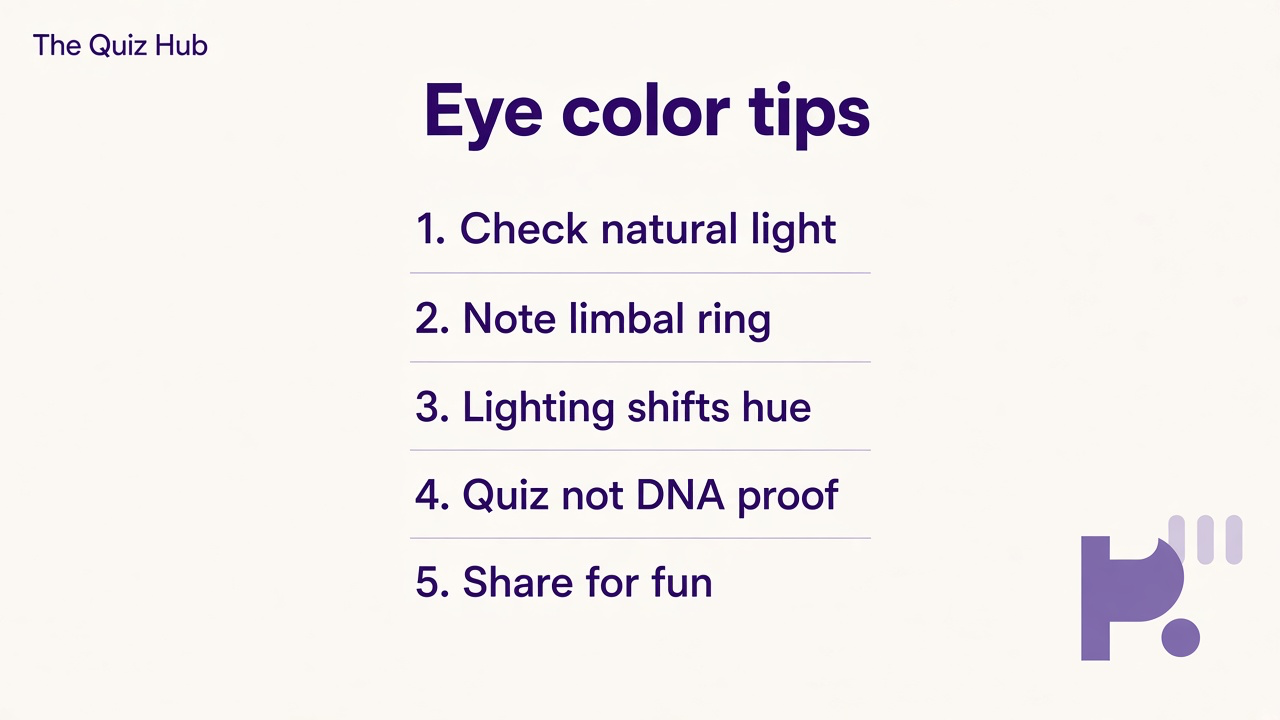
Tips at a glance
A quick takeaway graphic with topic tips (not your personal quiz scores). Start the quiz for your index, bands, and charts.
What this quiz can and cannot tell you
Can tell you
- Highlight iris shade, lighting, and makeup context habits worth naming before share threads
- Separate fun reflection from DNA kit, ancestry, or medical diagnosis fantasies
- Encourage window-light and outdoor shade photo pairs before shade claims online
- Spark honest talk with friends about lens and filter captions on eye color results
Cannot tell you
- Replace DNA tests, ancestry reports, or licensed genetic counseling from one screener
- Diagnose iris disease, glaucoma risk, or vision loss from trivia-style bars
- Rank strangers as more or less attractive based on iris shade alone
- Turn literacy scores into harassment, ancestry pile-ons, or filter-shaming threads
Iris shade words with lighting honesty, not DNA cosplay
Eye color search intent often blends two needs: name a shade lane for selfies and makeup boards, and win approval in group chats that treat iris photos like heritage scoreboards. Those goals help when they spark window-light checks and honest lens captions. They hurt when filters hide enhancement contacts, or when threads blur hazel flecks into ancestry dunk memes on people who never opted in.
Dr. Sarah Chen reviews self-image and lifestyle screeners with a simple split: reward honest shade habits and honest limits on genetics pretense at the same time. Iris shade literacy tracks brown, blue, green, hazel, gray, and mixed-tone vocabulary without personality verdicts. Lighting and perception tracks sun, shade, bulbs, and flash before online claims. Makeup and lens context tracks liner, shadow, and colored contacts with captions that match what you wore. Eye color quiz limits keeps screeners, DNA kits, and clinical eye care separate from bar height.
Real readers mix bars. You may score high on shade words while keeping lighting moderate, which often describes strong color vocabulary before golden-hour photo homework lands. You may score high lighting awareness with softer limit items, which can mean good sun-and-shade checks plus occasional unofficial caption slips. Reverse items catch sloppy answers: one genetic story for all light eyes, lighting never mattering, hidden lenses, ancestry comment dunking, or attractiveness ranking from shade alone should not inflate charts meant to track humble literacy habits.
Pair results with siblings instead of forcing one appearance story. Our color analysis quiz spreads seasonal palette language when you want wardrobe framing beyond iris shade words. Our aesthetic quiz stays on broader visual vibe labels when eye posts are one slice of your mood board. Our celebrity eyes quiz leans playful star-eye recall when you want fandom trivia separate from your own mirror habits. Browse the self image and appearance hub for more low-stakes screeners. Caption shares fun-only, read the room, and skip bait threads on friends who never opted in.
Photo habits shift with seasons, lenses, and new liners. When you share results, say lighting beats scoreboards. When you borrow tips, credit friends who compare window light kindly and pros who welcome vision questions on real exams. Retake after a makeup or lens experiment block and watch whether makeup context bars rise even if hazel trivia felt easy, which often means you separated performative shade dunking from actual noticing.
| Test | Focus |
|---|---|
| Color analysis quiz | Seasonal wardrobe palette habits rather than iris shade vocabulary and lighting checks on this page |
| Aesthetic quiz | Broader visual aesthetic labels rather than iris-specific literacy and lens honesty bars |
| Celebrity eyes quiz | Playful star-eye recall and fandom trivia rather than your own mirror and caption habits |
Eye Color Quiz FAQ
What does Eye Color Quiz measure?
It measures how much you agree with statements about iris shade literacy, lighting and perception, makeup and lens context, and unofficial quiz limits. You get an index from 0 to 100 plus four bars. It describes self-reported habits on this screener, not DNA results, ancestry proof, or clinical iris findings.
Can this quiz tell me my genetic ancestry from my eyes?
No. Ancestry and genetic questions belong with appropriate DNA services and qualified counselors. This page stays fun shade and lighting reflection with clear not-a-lab disclaimers.
Does a high score mean I should guess heritage in comment threads?
No. High bars mean you related to literacy statements here. Limit items explicitly reward fun captions and resist ancestry guessing on strangers; kindness still matters in mixed groups.
Why include makeup and contact lens items with shade words?
Eye color posts often mix bare iris photos with liner, shadow, or enhancement lenses. Context items keep captions honest without turning trivia into filter-shaming or hidden-lens pile-ons.
Who reviewed this quiz?
Dr. Sarah Chen, PhD reviewed the fun-only self-image framing, genetics and medical limits, and result explanations. See our editorial policy for review standards.
Reviewed by
