What Emotional Tension in the Educational Process measures
This quiz does not diagnose burnout, anxiety disorders, depression, or workplace misconduct. It is not a validated published school emotional climate scale reproduced item-for-item, and it is not an HR file or student discipline record. School counselors, employee assistance programs, and licensed clinicians evaluate persistent strain with interviews, policies, and support plans. It measures how often you noticed tension-linked patterns grouped four ways: classroom overload when mornings, sleep, to-do lists, or comparison culture kept your body on alert; strain between people when snaps, carryover moods, student distress, or avoided talks tracked interpersonal heat; boundaries and support when you paused, sought counselors or administrators, protected breaks, or rejected martyrdom myths; and not a report card when you refused to treat web bars as worth grades or public shaming tools while remembering shared systemic strain. You answer 22 how-often statements about the past two weeks, with reverse-worded items so one good day cannot hide frequent overload across other days. Your responses also feed a second chart on closeness and trust habits, because school strain sometimes overlaps with how much you share vulnerability or fear judgment when you need help. The total becomes an index from 0 to 100 where higher means more frequent reported tension signals on this screener. Your responses suggest intensity and patterns to discuss with support; they do not mean you failed school or deserve silent suffering.
Classroom overload
Morning dread, sleep loss over school work, unsustainable pacing, and comparison traps.
Strain between people
Snaps, carryover moods, empathy fatigue, avoided talks, and pause-before-react habits.
Boundaries and support
Counselor outreach, after-hours limits, breaks, reporting unsafe loads, and reset rituals.
Not a report card
Quiz limits, shared systemic strain, and refusing to shame others from screeners.
How it works
Answer 22 frequency items
Rate each statement from Never to Very often for the past two weeks in school settings. Tap Next after each answer.
Answers sort into four domains
Each answer feeds one of four tension-signal groups, and every item also feeds a closeness and trust layer.
See your index and charts
You get a 0 to 100 index, a band, and two bar charts you can bring to a counselor or trusted administrator.
Take the Emotional Tension in the Educational Process
Answer 22 short school-strain observations to see your educational tension index, four domain bars, and a closeness and trust chart.
What your result means
Your index is the average of all 22 answers, scaled from 0 to 100, with reverse-worded items flipped first. Higher means more frequent reported tension signals on this screener. Read overload and strain-between-people bars together before the total, because workload and interpersonal heat often rise as a pair during exam season.
| Band | Index range | Typical reading |
|---|---|---|
| Lower reported educational tension signals | 0 to 35 | Fewer frequent overload, interpersonal strain, or quiz-as-verdict patterns in the past two weeks. |
| Mixed reported educational tension signals | 36 to 65 | Some manageable school days alongside overload spikes, snaps, or support gaps on others. |
| Higher reported educational tension signals | 66 to 100 | Frequent overload, interpersonal strain, or support gaps; school-based or clinical follow-up may help. |
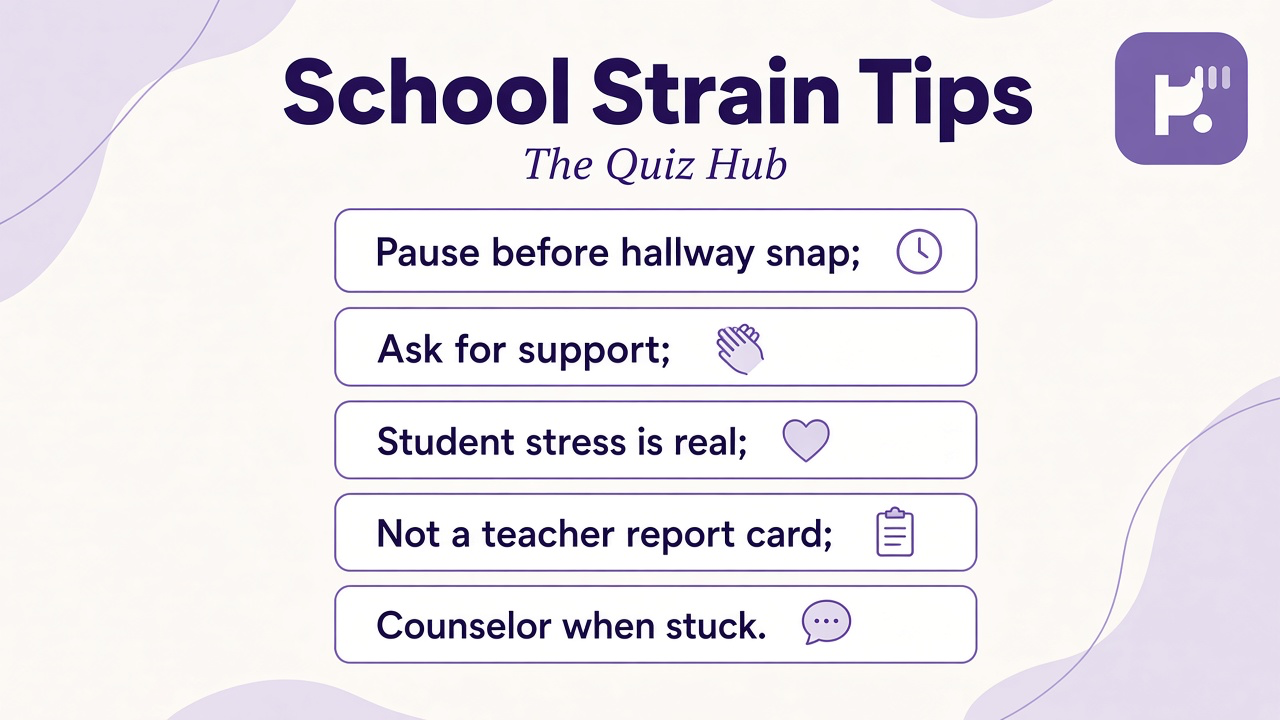
Tips at a glance
A quick takeaway graphic with topic tips (not your personal quiz scores). Start the quiz for your index, bands, and charts.
What this quiz can and cannot tell you
Can tell you
- Name overload, interpersonal strain, and support gaps in plain language for counselor or admin intake
- Highlight when self-reported bars run high enough to deserve school-based or clinical conversation
- Support talks with counselors, union reps, advisers, or co-teachers with domain examples
- Offer a baseline if you retake after a boundary, staffing, or self-care experiment
Cannot tell you
- Diagnose burnout, anxiety, or mood disorders from self-report alone
- Replace district HR processes, student discipline records, or formal performance evaluations
- Prove a student or colleague is the sole cause of systemic understaffing or policy strain
- Turn one score into a public report card on your worth, grades, or hiring fitness
School strain beyond blame posts: pause, support, and quizzes that are not report cards
Educators and students search emotional tension in school when mornings feel heavy, halls feel sharp, and everyone wonders whether they are the problem. Published climate tools exist for research and district surveys; this page is an original frequency screener for personal reflection, not a copy of those validated forms. Your responses suggest where patterns cluster so you can describe them to a counselor or administrator, not so a bar chart replaces context about staffing, bullying, or home stress.
Classroom overload is the first domain because bodies speak before policy memos. Chest tightness at the door, sleep loss over feedback piles, skipped breaks, and comparison scrolling can track load that no single person invented. Leaving one planning block at a sustainable pace is a reverse signal that recovery still happens some days. Naming overload without calling yourself lazy is literacy that pairs with union, HR, or advising conversations when conditions stay unsafe.
Strain between people is the second domain because school is relational. Snaps after hard blocks, moods carried into the next class, empathy fatigue when students look shut down, and avoided talks with admins or parents can reflect heat that needs repair, not character assassination. Pausing before a hallway reaction is a reverse signal that skills still land sometimes. One bad day should not inflate a worth story; agreeing that one bad day proves permanent failure is a myth this screener catches on purpose.
Boundaries and support are the third domain because martyrdom culture is loud. Counselors, mentors, union reps, after-hours limits, and brief resets belong in the same story as excellence. Skipping meals because tireless looks professional can track tension even when grades still post on time. Believing help-seeking is weakness is another reverse trap: support is often how people stay in roles they care about.
Not a report card is the fourth domain because YMYL school content must resist verdict culture. Treating unofficial screeners as performance reviews, shaming students or coworkers from web bars, or forgetting that staffing and budgets shape strain should not inflate a tension index meant to track real experience. Remembering shared systemic load and planning counselor follow-up when bars stay high keeps honesty intact. Our emotion regulation situations sibling emphasizes pause, label, and repair habits when conflict spikes beyond the classroom. Our emotional state scale sibling offers broader mood-frequency reflection when school is only part of the story. Our elementary school quiz stays in lighter study territory when you want grade-band trivia rather than strain screeners. Browse the mental health and clinical test hub for more non-diagnostic tools.
Retake after two weeks of one measurable experiment (after-hours email boundary, shared duty request, counselor intake, or sleep routine) and compare domain bars. Your responses suggest whether patterns are easing, not whether you deserve care. Licensed clinicians and school counselors turn examples into plans this page cannot deliver. If distress feels unbearable tonight, call or text 988 in the US or your local crisis line before debating results alone.
| Test | Focus |
|---|---|
| Emotion regulation situations | Pause, name, and repair habits when heated moments are not limited to school blocks |
| Emotional state scale | Broader mood-frequency reflection when strain spans home, work, and campus |
| Elementary school quiz | Grade-band study trivia rather than educational tension frequency screeners |
Emotional Tension in the Educational Process FAQ
What does this quiz measure?
It measures how often you noticed educational tension patterns in four areas during the past two weeks: classroom overload, strain between people, boundaries and support, and not-a-report-card limits. You get an index from 0 to 100 plus four domain bars. Your responses suggest frequency for reflection, not a clinical diagnosis or job evaluation.
Is classroom strain my fault alone?
Often not. Staffing, policy, bullying, exams, and home stress shape school strain. This screener tracks your reported patterns so you can seek support and boundaries; it does not blame you for systemic gaps or student crises you cannot solo-fix.
Can teachers and students both take this quiz?
Yes. Items refer to school settings broadly—classes, halls, meetings, and study blocks—so educators, K-12 students, and many college learners can answer from their role. Use results as a private mirror for support talks, not as a weapon in grading or discipline.
Does a high score mean I am a bad teacher or bad student?
No. Your responses suggest how often tension signals appeared on this screener. High frequency can reflect real overload worth counselor, union, or advising follow-up, not moral failure. Bring domain examples to people who can help change conditions or coping plans.
Should I share scores with my administrator?
Only if you choose and it feels safe. This tool is not an official district survey or HR file. Some people bring bar examples to counselors or union reps first; others use private notes to justify EAP or boundary requests. Never treat a web total as proof of misconduct by you or a colleague without proper processes.
Why are some statements about quiz limits or systemic strain?
Reverse-worded items catch overconfidence. Agreeing that screeners are report cards, that one bad day proves permanent failure, or that shame posts help should not inflate a tension index meant to track real school strain patterns.
Who reviewed this quiz?
Dr. Elena Vasquez, PhD reviewed the YMYL-light framing, crisis resources, counselor and boundary language, and result explanations. See our editorial policy for review standards.
Reviewed by