What the Emotion Regulation Situations Quiz measures
This quiz does not diagnose borderline personality disorder, bipolar disorder, PTSD, or any other condition. Only a licensed clinician using interview methods, safety screening, and history can do that. It measures how often you noticed situation-linked regulation habits grouped four ways: pause habits when conflict or surprise pulled instant words or actions before any breath or step-back; name the feeling when you could, or could not, label anger, fear, hurt, or overwhelm before debating fault; repair after snap when harsh tone, messages, shutdowns, or avoidance gave way to apology, impact checks, or follow-up plans; and skills practice limits when you treat regulation as learnable with setbacks, support, and humility rather than as a moral score from one web total. You answer 22 how-often statements about the past two weeks, with reverse-worded items so one good day cannot hide frequent strain across other days. Your responses also feed a second chart on closeness and trust habits, because some people snap or shut down hardest when vulnerability already feels unsafe. The total becomes an index from 0 to 100 where higher means more frequent reported strain patterns on this screener. Your responses suggest intensity and habits to discuss with support; they do not mean you are permanently dysregulated.
Pause habits
How often you created space before words or actions escalated in heated moments.
Name the feeling
How often you labeled emotions before blame stories or vague fine took over.
Repair after snap
How often you owned harm and reconnected after sharp reactions or shutdowns.
Skills practice limits
How often you treat regulation as practice with support, not moral rank from quizzes.
How it works
Answer 22 frequency items
Rate each statement from Never to Very often for the past two weeks. Tap Next after each answer.
Answers sort into four domains
Each answer feeds one of four situation-regulation groups, and every item also feeds a closeness and trust layer.
See your index and charts
You get a 0 to 100 index, a band, and two bar charts you can bring to a clinician.
Take the Emotion Regulation Situations Quiz
Answer 22 short statements to see your situation-based regulation habit index, four domain bars, and a closeness and trust chart.
What your result means
Your index is the average of all 22 answers, scaled from 0 to 100, with reverse-worded items flipped first. Higher means more frequent reported strain patterns on this screener. Read pause and repair bars together before the total, because instant reactions and delayed apologies often rise as a pair.
| Band | Index range | Typical reading |
|---|---|---|
| Lower reported situation regulation strain | 0 to 35 | Fewer frequent pause misses, label gaps, or repair skips in the past two weeks. |
| Mixed reported situation regulation strain | 36 to 65 | Some steadier days alongside pause misses, label fog, or repair gaps on others. |
| Higher reported situation regulation strain | 66 to 100 | Frequent pause misses, label gaps, or repair avoidance; skilled support may help. |
Tips at a glance
A quick takeaway graphic with topic tips (not your personal quiz scores). Start the quiz for your index, bands, and charts.
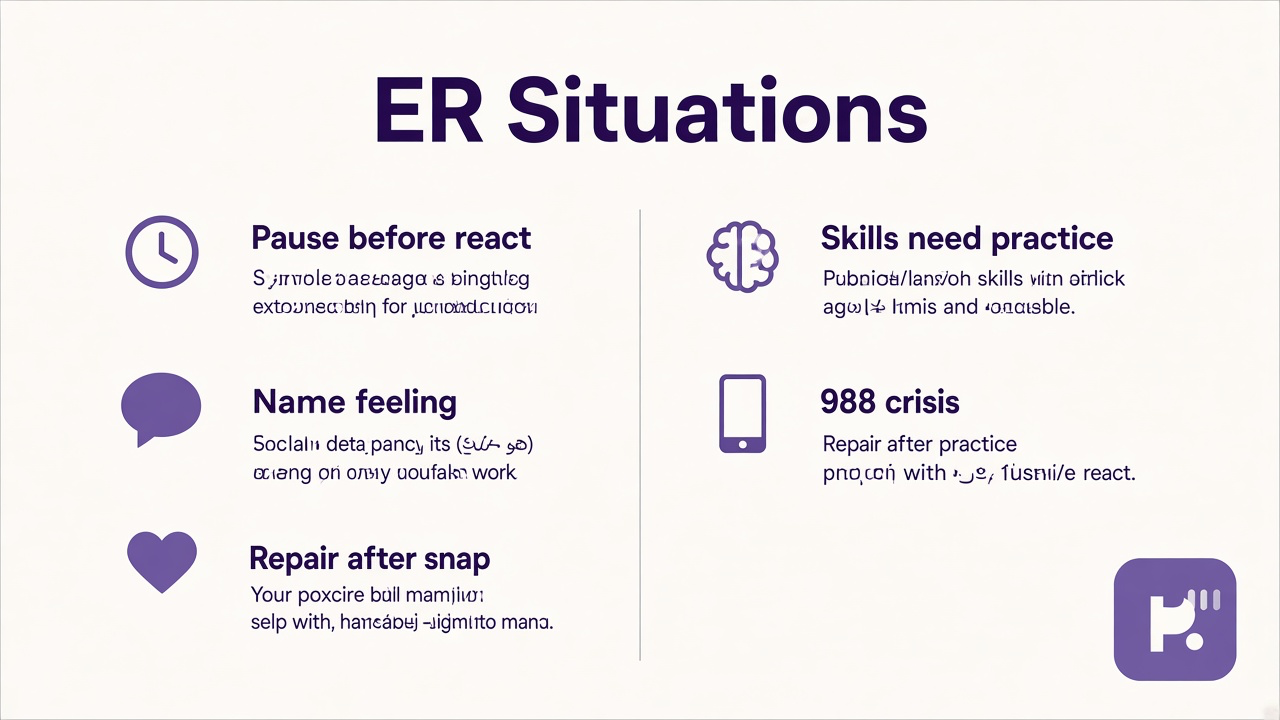
What this quiz can and cannot tell you
Can tell you
- Name pause, label, and repair patterns in plain language for intake
- Highlight when situation-linked bars run high enough to deserve compassion or care
- Support early conversations with therapists, coaches, or couples counselors
- Offer a baseline if you retake after one pause-or-repair experiment
Cannot tell you
- Diagnose emotion dysregulation, personality disorders, or trauma conditions without evaluation
- Replace DBT skills groups, trauma therapy, or safety planning when reactions feel unsafe
- Prove you are cruel or broken from one score when context and sleep matter
- Tell you to force repair talks without pacing when abuse or fear is present
Regulation in real situations: pause, name, repair, and practice limits
People search emotion regulation situations when textbook skills vanish the moment a partner sighs, a boss emails, or a child melts down. Clinicians teach pause, label, and choose responses, yet online quizzes rarely ask what happened in the room before shame takes over. This page scores frequency so your responses suggest where habits cluster, not whether you earn a diagnosis from a bar chart.
Pause habits are the first domain because microseconds matter. Body heat, clenched jaw, and instant comebacks can run the conversation before your thinking brain arrives. A short breath, glass of water, or stepped-out hallway is not avoidance when it prevents harm you will regret; it is the first skill many DBT and couples protocols rehearse. Reverse items capture when you already paused or grounded before re-entering, signs practice is landing, not proof you will never snap again.
Name the feeling is the second domain because blame stories outrun labels. Saying angry, scared, ashamed, or overwhelmed before listing grievances gives you and others something workable. Vague fine or whatever often hides hurt that leaks sideways. Asking what a partner felt, linking tight chest to fear, and separating sleep-deprived irritability from betrayal are literacy moves therapists build in session; this screener only asks how often they showed up for you lately.
Repair after snap is the third domain because relationships live in the follow-up. Raised voices, harsh texts, stonewalling, and pride-blocked apologies are common; what varies is whether anyone checks impact and agrees on one change for next time. Avoiding repair can look like busy schedules while resentment compounds. Owning specific harm, not only I was stressed, is a skill couples and family therapists drill with pacing, especially when trauma history makes sorry feel unsafe.
Skills practice limits are the fourth domain, patterned after YMYL honesty on screeners. Treating a low bar as moral failure, or a high bar as proof therapy is unnecessary, should not inflate a habit index meant to track real moments. Regulation grows with repetition, coaching, and safe experiments; viral memes rarely teach the rehearsal. Agreeing that quizzes replace trauma-informed care when reactions feel compulsive is a myth item that keeps scores tied to habits, not hype. Our emotion regulation quiz sibling emphasizes broader daily regulation frequency when you want habits beyond heated scenes. Our emotion regulation critics review offers literacy on pop scale hype when you want critique beside behavior reflection. The Difficulties in Emotion Regulation Scale sibling stresses non-diagnostic limits on research-shaped items. Browse the mental health and clinical test hub for more screeners with study-not-diagnosis language.
Retake after two weeks of one concrete experiment, pause before one recurring trigger, name one feeling aloud, or send one repair text, and compare domain bars. Your responses suggest whether habits are shifting, not whether you deserve care. Licensed clinicians turn examples into skills plans this page cannot deliver. If distress feels unbearable tonight, call or text 988 in the US or your local crisis line before debating results alone.
| Test | Focus |
|---|---|
| Emotion regulation quiz | Broader daily regulation frequency rather than heated-scene pause and repair items |
| Emotion regulation critics review | Pop scale literacy and hype limits rather than situation habit frequency |
| Difficulties in Emotion Regulation Scale Ders 18 1928 | Scale-shaped self-reflection with study-not-diagnosis framing, not situation-specific stems |
Emotion Regulation Situations Quiz FAQ
What does this quiz measure?
It measures how often you noticed situation-linked regulation habits in four areas during the past two weeks: pause habits, naming feelings, repair after snap, and skills practice limits. You get an index from 0 to 100 plus four domain bars. Your responses suggest self-reported frequency for reflection, not a clinical diagnosis.
Does a high score mean I cannot regulate my emotions?
No. Your responses suggest how often strain patterns showed up on this screener lately. Skills grow with practice, sleep, support, and context. Only a licensed clinician can evaluate dysregulation or related conditions after a full interview. Use bars to describe habits, not to shame yourself.
Why are some statements worded as successful pauses or repairs?
Reverse-worded items catch over-reporting strain. Agreeing that you paused, named a feeling, apologized, practiced skills, or sought clinicians should not inflate an index meant to track difficulty patterns on other days.
Is this DBT or couples therapy?
No. This page is a frequency screener with education limits. DBT skills groups, couples counseling, and trauma therapy belong in qualified care, especially when fear, abuse history, or safety makes repair talks unsafe without pacing.
What should I do if my score is high or I feel in crisis?
Contact a trauma-informed therapist or your primary care clinician with domain examples from your results. Call or text 988 (US) if you feel hopeless, unsafe, or in emotional crisis. Seek urgent help if anger turns into threats or violence toward yourself or others.
Who reviewed this quiz?
Dr. Elena Vasquez, PhD reviewed the YMYL framing, crisis resources, skills-practice limits, and result explanations. See our editorial policy for review standards.
Reviewed by