What the Emotional Tension ET screener measures
This quiz does not administer a validated clinical Emotional Tension ET research battery and cannot diagnose anxiety, trauma, mood disorders, or any other condition. Only a licensed clinician using interview methods, safety screening, and history can do that. It measures how often you noticed tension-linked habits grouped four ways: tension waves when strain rose in phases before you could name triggers, patterns, or overload; body signals when jaw, gut, breath, or restlessness tracked emotional pressure; pause and recovery when react-first messages, skipped sleep, skipped meals, or protected rest showed up during stress; and study limits when you treated this screener as unofficial literacy, considered clinicians when loops disrupted life, and rejected myths that web ET bars replace evaluation or justify ranking others. You answer 22 how-often statements about the past two weeks, with reverse-worded items so one calm day cannot hide frequent strain across other days. Your responses also feed a second chart on closeness and trust habits, because some people chase certainty about partners or peers when internal pressure feels unsafe to name. The total becomes an index from 0 to 100 where higher means more frequent reported tension-strain patterns on this screener. Your responses suggest intensity and habits to discuss with support; they do not mean you failed an emotional control exam.
Tension waves
How often strain rose in phases before you could name triggers, timing, or overload.
Body signals
How often physical tightness, gut churn, or shallow breath tracked emotional pressure.
Pause and recovery
How often breath-before-react, sleep, and basic care showed up or slipped during stress.
Study limits
How often you keep unofficial ET literacy separate from diagnosis, therapy, and public ranking.
How it works
Answer 22 frequency items
Rate each statement from Never to Very often for the past two weeks. Tap Next after each answer.
Answers sort into four domains
Each answer feeds one of four tension habit groups, and every item also feeds a closeness and trust layer.
See your index and charts
You get a 0 to 100 index, a band, and two bar charts you can bring to a clinician.
Take the Emotional Tension ET
Answer 22 short statements to see your emotional tension habit index, four domain bars, and a closeness and trust chart.
What your result means
Your index is the average of all 22 answers, scaled from 0 to 100, with reverse-worded items flipped first. Higher means more frequent reported tension-strain patterns on this screener. Read body signal and pause-and-recovery bars together before the total, because physical alarms and sleep loss often rise as a pair.
| Band | Index range | Typical reading |
|---|---|---|
| Lower reported tension strain | 0 to 35 | Fewer frequent unnamed waves, body alarm loops, react-first habits, or ET-as-diagnosis myths in the past two weeks. |
| Mixed reported tension strain | 36 to 65 | Some named waves alongside body strain, sleep loss, react-first spikes, or quiz-rank habits on others. |
| Higher reported tension strain | 66 to 100 | Frequent unnamed waves, body alarm loops, react-first habits, or blocked clinician outreach; care may help. |
Tips at a glance
A quick takeaway graphic with topic tips (not your personal quiz scores). Start the quiz for your index, bands, and charts.
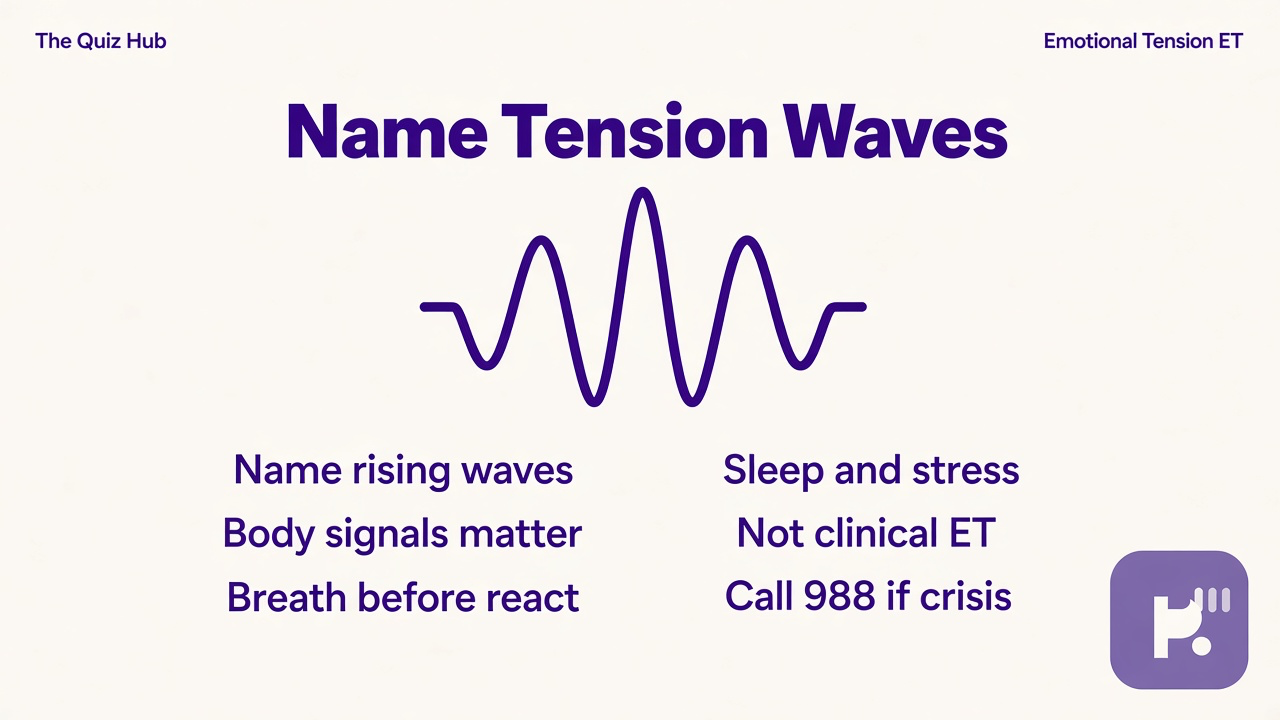
What this quiz can and cannot tell you
Can tell you
- Name tension waves, body alarms, and react-first patterns in plain language for intake
- Highlight when tension bars run high enough to deserve compassion or care
- Support early conversations with therapists about stress, sleep, and conflict loops
- Offer a baseline if you retake after one pause ritual or sleep protection experiment
Cannot tell you
- Replace a validated clinical Emotional Tension ET battery or formal anxiety assessment
- Prove you are more tense than friends from one frequency total
- Replace trauma therapy, couples work, or crisis care with ET-style web trivia
- Tell you to confront or rank children, coworkers, or partners from quiz scores alone
Tension literacy without clinical ET hype: waves, body, pause, limits
People search emotional tension ET when strain posts tempt them to treat web bars as destiny. Real relief grows when you name waves early, read body alarms, pause before react, and protect sleep, not when trivia scores become ranking weapons. This page scores frequency so your responses suggest where habits cluster, not whether you earn a disorder label from a bar chart.
Tension waves are the first domain because pressure rarely arrives as one flat line. Morning calm can flip by afternoon when deadlines, caregiving, or conflict stack. Naming that build out loud, mapping time-of-day patterns, and refusing broken-person myths keeps strain tied to context instead of shame. Random bad-luck stories hide loops that clinicians and therapists can help untangle when life cost piles up.
Body signals are the second domain because emotional pressure often shows up in jaw clench, shallow breath, gut knots, or restless legs before words arrive. Noticing those cues is skill; ignoring them until snap or shutdown is strain. One stretch or glass of water will not fix systemic overload, yet small body checks can buy time for a pause ritual when messages feel loaded.
Pause and recovery is the third domain because react-first texts, skipped sleep, skipped meals, and all-nighter worry loops amplify tension fast. Breath counts, short walks, and protected rest are practice, not weakness when hard seasons return. Stress that piles until small requests feel like attacks is a signal to seek support, not proof you are overly sensitive forever.
Study limits are the fourth domain because web totals cannot replace clinicians. Months of stuck loops deserve therapy pacing, not only retakes. High bars do not cancel professional support; low bars do not license shaming kids or coworkers in public threads. Agreeing that online ET posts diagnose or rank people should not inflate a literacy screener meant to track real habits. Our Emotional State Scale sibling emphasizes broader mood weather beside tension naming. Our emotion regulation quiz adds daily regulation frequency when heated scenes need skills beyond wave vocabulary. The Emotional Regulation Questionnaire ERQ sibling stresses reappraisal versus suppression habits when tension lives in conflict style. Browse the mental health and clinical test hub for more non-diagnostic screeners.
Retake after two weeks of one concrete experiment: one breath pause before reactive messages, one mapped tension wave, one protected sleep night, or one clinician outreach step, and compare domain bars. Your responses suggest whether habits are easing, not whether you deserve care. Licensed clinicians turn examples into treatment plans this page cannot deliver. If distress feels unbearable tonight, call or text 988 in the US or your local crisis line before debating ET scores alone.
| Test | Focus |
|---|---|
| Emotional State Scale | Broader mood weather reflection rather than tension wave and body-signal literacy items |
| Emotion regulation quiz | Daily regulation frequency when tension needs heat-of-moment skills too |
| Emotional Regulation Questionnaire ERQ | Reappraisal versus suppression habits rather than ET-style tension naming |
Emotional Tension ET FAQ
What does this quiz measure?
It measures how often you noticed tension-linked habits in four areas during the past two weeks: tension waves, body signals, pause and recovery, and study limits. You get an index from 0 to 100 plus four domain bars. Your responses suggest self-reported frequency for reflection, not a clinical diagnosis or validated ET score.
Is this the validated clinical Emotional Tension ET scale?
No. This is an unofficial tension literacy screener inspired by ET-style language online. It is not the validated clinical Emotional Tension ET research instrument, and it was not scored against published ET norms. Use it for habit reflection only.
How is this different from the Emotional State Scale?
Both are YMYL frequency screeners with separate 22-item banks. This ET screener emphasizes naming tension waves, body alarms, breath-before-react, and unofficial-not-clinical-ET limits. The Emotional State Scale sibling emphasizes positive mood, low mood, energy regulation, and state-not-diagnosis themes without reusing these stems.
Does a high score mean I have an anxiety disorder?
No. Your responses suggest how often strain patterns, body alarm loops, react-first habits, or ET hype showed up on this screener. Only a licensed clinician can evaluate anxiety, trauma, mood disorders, or safety after interviews and history. Use bars to describe habits, not to shame yourself or others.
What should I do if my score is high or I feel in crisis?
Contact a mental health clinician with domain examples from your results, especially if tension loops disrupt sleep, work, or relationships for months. Call or text 988 (US) if you feel hopeless, unsafe, or in emotional crisis. Pause public ET ranking posts until you can name strain in your own words with support.
Who reviewed this quiz?
Dr. Elena Vasquez, PhD reviewed the YMYL framing, crisis resources, unofficial ET limits, sibling-bank separation, and result explanations. See our editorial policy for review standards.
Reviewed by