What the Emotional Eating Quiz measures
This quiz does not diagnose binge eating disorder, bulimia, anorexia, OSFED, or any other condition. Only a licensed clinician using interview methods, medical screening, and history can do that. It measures how often you noticed mood-linked eating habits grouped four ways: hunger versus mood when body cues, head hunger, fullness, and brief pauses mattered; mood-driven eating when stress, boredom, loneliness, anger, or celebration steered bites; compassion without diet shame when guilt, good-or-bad food rules, punishment plans, or comparison spirals followed meals; and study not diagnosis when you treat screeners as reflection, reach NEDA or clinicians when patterns scare you, and reject myths that quiz bars replace evaluation or that you must be sick enough to deserve help. You answer 22 how-often statements about the past two weeks, with reverse-worded items so one kinder day cannot hide frequent strain across other days. Your responses also feed a second chart on closeness and trust habits, because some people eat to avoid vulnerability or conflict talks. The total becomes an index from 0 to 100 where higher means more frequent reported emotional-eating-linked patterns on this screener. Your responses suggest intensity and habits to discuss with support; they do not mean you are addicted to food or unworthy of care as a formal label.
Hunger vs mood
How often you checked body hunger and fullness before assuming food was the only answer.
Mood-driven eating
How often stress, boredom, loneliness, or celebration steered eating past appetite.
Compassion, no diet shame
How often guilt and food morality followed meals versus curiosity and kindness.
Study not diagnosis
How often you keep screeners separate from clinical labels, NEDA, and therapy.
How it works
Answer 22 frequency items
Rate each statement from Never to Very often for the past two weeks. Tap Next after each answer.
Answers sort into four domains
Each answer feeds one of four emotional-eating groups, and every item also feeds a closeness and trust layer.
See your index and charts
You get a 0 to 100 index, a band, and two bar charts you can bring to a clinician or dietitian.
Take the Emotional Eating Quiz
Answer 22 short statements to see your emotional eating pattern index, four domain bars, and a closeness and trust chart.
What your result means
Your index is the average of all 22 answers, scaled from 0 to 100, with reverse-worded items flipped first. Higher means more frequent reported mood-linked eating patterns on this screener. Read hunger versus mood and compassion bars together before the total, because shame and head hunger often rise as a pair.
| Band | Index range | Typical reading |
|---|---|---|
| Lower reported emotional eating strain | 0 to 35 | Fewer frequent mood-driven eating, shame loops, or hunger-confusion spikes in the past two weeks. |
| Mixed reported emotional eating strain | 36 to 65 | Some hunger-aware days alongside mood-driven eating or shame spikes on others. |
| Higher reported emotional eating strain | 66 to 100 | Frequent mood-driven eating, shame, or help-avoidance strain; compassionate professional review may help. |
Tips at a glance
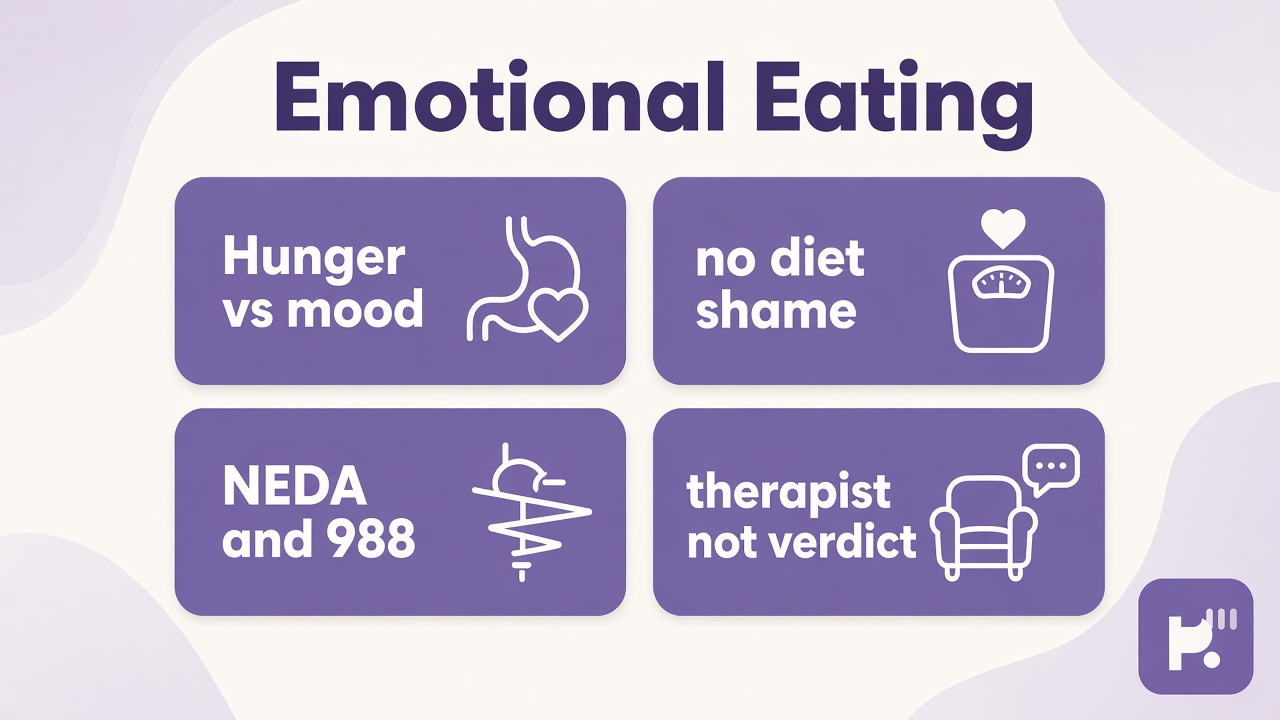
A quick takeaway graphic with topic tips (not your personal quiz scores). Start the quiz for your index, bands, and charts.
What this quiz can and cannot tell you
Can tell you
- Name hunger-versus-mood and shame-loop patterns in plain language for intake
- Highlight when emotional-eating bars run high enough to deserve compassion or care
- Support early conversations with therapists, dietitians, or NEDA-informed resources
- Offer a baseline if you retake after one pause practice or one outreach step
Cannot tell you
- Diagnose binge eating disorder, bulimia, anorexia, or OSFED without evaluation
- Replace medical care, nutrition therapy, or eating-disorder treatment when risk is present
- Prove you lack willpower from one score when trauma, sleep, and meds matter
- Tell you to restrict or punish exercise without qualified clinicians when patterns feel unsafe
Beyond diet shame: hunger cues, mood food, and care limits
People search emotional eating quizzes when the pantry feels like the fastest therapist in the house. Clinicians hear stress, loneliness, trauma, and sleep debt in the same stories as celebration plates and midnight snacks, yet online tools often skip compassion and jump straight to weak-will labels. This page scores frequency so your responses suggest where habits cluster, not whether you earn a diagnosis from a bar chart.
Hunger versus mood is the first domain because body literacy comes before rules. Growling emptiness, neutral stomach, and comfortable fullness are different signals than head hunger that arrives after a harsh email. Confusing thirst, fatigue, or boredom with hunger is common, not a character flaw. Pausing to ask what your body needs, even when the answer is rest, water, or a conversation, keeps YMYL pages honest: not every urge is stomach-driven.
Mood-driven eating is the second domain because emotions steer behavior when regulation tools are thin. Stress acceleration, boredom grazing, loneliness snacks, and reward eating after hard days can look like lack of discipline while the real story is overload. Secret eating often hides shame more than hunger. Naming the feeling underneath before opening the fridge is a skill many therapists and dietitians coach without demanding perfection.
Compassion without diet shame is the third domain because moralizing food prolongs loops. Calling yourself disgusting, labeling foods as bad, or planning punitive make-up exercise teaches your nervous system that eating is dangerous even when you need fuel. Comparison to strangers online adds a hidden test no one can pass. Replacing one shame sentence with a neutral observation is practice, not excuse-making, when you are building a kinder relationship with meals.
Study not diagnosis is the fourth domain, patterned after teaching screeners that separate literacy from credentials. Agreeing that a high score proves binge eating disorder without evaluation, or that web results replace NEDA and therapy because you are not sick enough, should not inflate a habit index meant to track real strain. Treating screeners as mirrors, and reaching clinicians when secrecy, purging, or dangerous restriction appears, keeps emotional eating quizzes from skipping limits. Our Eating Attitudes Test (EAT-26) inspired sibling emphasizes dieting drive and bulimia preoccupation frequency with its own unofficial limits. Our Dutch Eating Behavior Questionnaire (DEBQ) sibling offers restraint and external eating reflection when label familiarity helps intake talks. Our why am I overeating quiz emphasizes overeating triggers with a separate question bank. Browse the mental health and clinical test hub for more non-diagnostic screeners.
Retake after two weeks of one concrete experiment, such as one hunger pause before snacks or one honest call to NEDA or a clinician, and compare domain bars. Your responses suggest whether habits are easing, not whether you deserve care. Licensed professionals turn examples into treatment plans this page cannot deliver. If distress feels unbearable tonight, call or text 988 in the US, contact NEDA at 800-931-2237 for eating concerns, or use your local crisis line before debating results alone.
| Test | Focus |
|---|---|
| Eating Attitudes Test (EAT-26) | Dieting drive and bulimia preoccupation frequency rather than hunger-versus-mood pauses |
| Dutch Eating Behavior Questionnaire (DEBQ) | Restraint and external eating traits rather than shame-free compassion items |
| Why am I overeating quiz | Overeating trigger reflection with a separate unofficial question bank |
Emotional Eating Quiz FAQ
What does this quiz measure?
It measures how often you noticed mood-linked eating habits in four areas during the past two weeks: hunger versus mood, mood-driven eating, compassion without diet shame, and study-not-diagnosis limits. You get an index from 0 to 100 plus four domain bars. Your responses suggest self-reported frequency for reflection, not a clinical diagnosis.
Is emotional eating the same as binge eating disorder?
No. Comfort or stress eating describes a habit pattern on this screener. Binge eating disorder is a clinical diagnosis that requires professional evaluation of frequency, distress, and medical context. Your responses suggest habits to discuss with support, not a disorder label from one online total.
Does a high score mean I should feel ashamed of my eating?
This page rejects diet shame as a treatment plan. Your responses suggest how often mood-linked patterns showed up, not moral rank. Shame often keeps people isolated; curiosity and qualified help tend to work better for lasting change.
Why are some statements worded as hunger checks or kindness?
Reverse-worded items catch overconfidence. Agreeing that you paused for hunger cues, named feelings before eating, used self-kindness, reached NEDA or clinicians, or kept screeners separate from formal labels should not inflate an emotional eating index meant to track strain.
When should I contact NEDA or call 988?
Contact the NEDA Helpline at 800-931-2237 (US) if eating secrecy, purging, dangerous restriction, or out-of-control binges worry you. Call or text 988 (US) if hopelessness, self-harm thoughts, or emotional crisis feels immediate. Seek urgent medical care for physical symptoms, not quiz scores alone.
Who reviewed this quiz?
Dr. Elena Vasquez, PhD reviewed the YMYL framing, crisis resources, study-not-diagnosis limits, and result explanations. See our editorial policy for review standards.
Reviewed by