What this DEBQ-inspired questionnaire measures
This quiz does not administer the copyrighted, validated Dutch Eating Behavior Questionnaire used in research clinics, and it cannot diagnose binge eating disorder, anorexia nervosa, bulimia nervosa, or other eating disorders. Only a qualified clinician using interview methods, history, and sometimes medical labs can do that. It measures how often you have noticed eating habits specialists discuss when DEBQ literature separates mood-driven eating, environment-driven eating, cognitive restraint, and the shame or awareness layer that often surrounds both, grouped four ways: emotional eating when feelings drive intake more than hunger; external eating when sight, smell, social pressure, or availability pulls you in; restrained eating when rules, guilt, or compensation dominate; and pattern awareness when you notice triggers with curiosity, secrecy, or professional help instead of self-attack. You answer 22 how-often statements about the past month, with reverse-worded items so one mindful meal cannot hide frequent strain across other days. Your responses also feed a second chart on closeness and trust habits, because some people restrict or eat alone when vulnerability feels dangerous. The total becomes an index from 0 to 100 where higher means more frequent reported concern on this unofficial screener, not proof of an eating disorder.
Emotional eating
How often mood, stress, boredom, or loneliness drove eating more than physical hunger.
External eating
How often visible food, smells, social cues, or convenience pulled you to eat.
Restrained eating
How often strict rules, guilt, or make-up skipping shaped meals.
Pattern awareness
How often shame or secrecy ran the story, or curiosity and care guided next steps.
How it works
Answer 22 frequency items
Rate each statement from Never to Very often for the past month. Tap Next after each answer.
Answers sort into four domains
Each answer feeds one of four eating-pattern groups, and every item also feeds a closeness and trust layer.
See your index and charts
You get a 0 to 100 index, a band, and two bar charts you can bring to a clinician.
Take the Dutch Eating Behavior Questionnaire (DEBQ)
Answer 22 short statements to see your eating behavior pattern index, four domain bars, and a closeness and trust chart.
What your result means
Your index is the average of all 22 answers, scaled from 0 to 100, with reverse-worded items flipped first. Higher means more frequent reported strain on this unofficial screener. Read emotional and restrained bars together before the total, since restriction sometimes precedes rebound emotional eating.
| Band | Index range | Typical reading |
|---|---|---|
| Lower reported eating-pattern strain | 0 to 35 | Fewer frequent emotional, external, or rigid restraint loops in the past month. |
| Mixed reported eating-pattern strain | 36 to 65 | Some domains spike while pattern awareness or restraint looks healthier on other days. |
| Higher reported eating-pattern strain | 66 to 100 | Frequent triggers or shame loops; eating-disorder-informed care may help. |
Tips at a glance
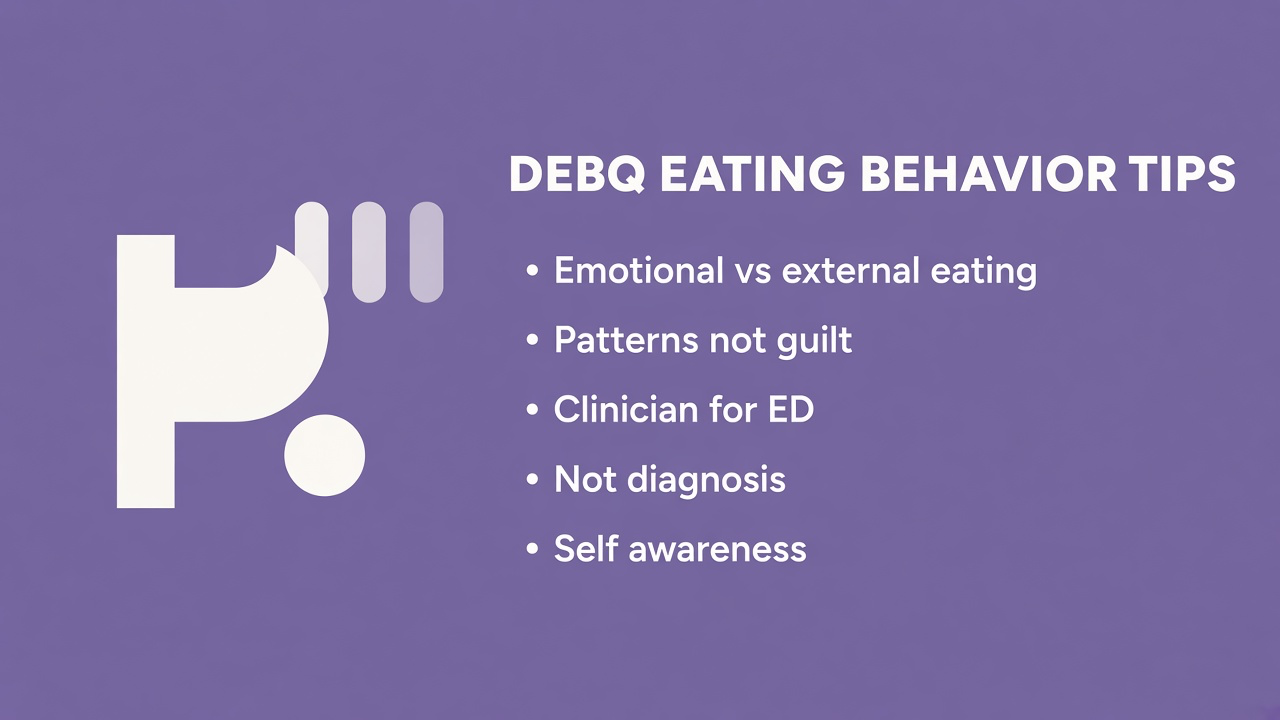
A quick takeaway graphic with topic tips (not your personal quiz scores). Start the quiz for your index, bands, and charts.
What this quiz can and cannot tell you
Can tell you
- Separate emotional, external, and restraint habits in plain language
- Highlight shame loops that deserve compassion or professional support
- Give you vocabulary for therapist, dietitian, or primary care intake
- Offer a baseline if you retake after one awareness experiment
Cannot tell you
- Replace the validated Dutch Eating Behavior Questionnaire or research norms
- Diagnose eating disorders or prescribe meal plans without evaluation
- Tell you whether you should lose or gain weight from one score
- Prove you lack willpower or that you must eliminate food groups
DEBQ-inspired patterns: emotional, external, restrained, and awareness without shame
The Dutch Eating Behavior Questionnaire researchers use in clinics is a validated tool with published norms. This page borrows the familiar DEBQ language, emotional eating, external eating, and restrained eating, so you can describe habits in words therapists already know, but it is not that official instrument and your score cannot be compared to journal cutoffs. Treat the result as a map for reflection and intake conversations, not as homework from a research study.
Emotional eating shows up when food regulates feelings faster than sleep, conversation, or tears. External eating shows up when bakeries, break rooms, ads, and everyone else eating make portions grow even though hunger was quiet five minutes earlier. Restrained eating shows up when moral labels about good and bad foods, skipped meals, or secret make-up plans run the week. Those three patterns often intertwine: strict daytime rules can fuel nighttime emotional eating when cues and loneliness stack up.
Pattern awareness is the fourth bar because habits stick longer when shame narrates them. Calling yourself disgusting after one plate rarely prevents the next urge; it often drives secrecy. Curiosity questions, Was that hunger, habit, mood, or a room full of snacks?, create space for different choices without pretending willpower alone fixes biology and stress. When cycles include fasting, bingeing, purging, or fear of weight gain that disrupts daily life, pattern awareness includes booking licensed help rather than retaking quizzes.
If emotional and external bars run high while restraint stays moderate, environment and mood skills may help first: regular meals, fewer eating-in-front-of-screens nights, and one offline coping list for hard evenings. If restraint and shame bars run high, be cautious with new diets from social media; eating-disorder-informed therapists and registered dietitians specialize in untangling rules from nourishment. Our brief eating disorder questionnaire (EDE-QS) emphasizes clinical shape and restraint signals for adults reflecting on disorder-level worry; use it for YMYL reflection alongside this habit-pattern screener, not instead of care when safety is at risk.
Retake after four weeks of one measurable kindness practice, such as eating breakfast before caffeine or texting a friend before a stress snack, and compare domain bars, not only the total. Food is supposed to be pleasurable and social; the goal is flexibility and support when patterns hurt, not a perfect score. Licensed clinicians turn your examples into treatment plans this page cannot deliver.
| Test | Focus |
|---|---|
| Brief eating disorder questionnaire (EDE-QS) | Clinical shape, restraint, and binge-purge worry rather than DEBQ-style habit domains alone |
| Assessment of clinical deterioration in eating disorders | Deterioration warning signals when symptoms feel escalating or unsafe |
Dutch Eating Behavior Questionnaire (DEBQ) FAQ
Is this the official Dutch Eating Behavior Questionnaire?
No. This is an unofficial, DEBQ-inspired habit screener written for self-reflection on our site. It does not use the validated DEBQ item set or published norms and cannot be scored like a research clinic form.
What does this quiz measure?
It measures how often you noticed emotional eating, external cue eating, restrained or rule-heavy eating, and shame versus awareness patterns in the past month. You get an index from 0 to 100 plus four domain bars. It reports self-reported frequency, not a clinical diagnosis.
What is the difference between emotional and external eating?
Emotional eating here means eating mainly to manage feelings such as stress, boredom, or loneliness. External eating means eating because food is visible, offered, or socially normalized even when hunger is mild. Many people see both on the same day.
Can this quiz diagnose an eating disorder?
No. Only a licensed clinician can diagnose eating disorders after full evaluation. Use this tool to describe habits and decide whether to seek eating-disorder-informed care, especially if you purge, fast dangerously, or feel out of control.
What should I do if my score is high?
Avoid new extreme diets, try one kindness-based awareness skill, and contact a therapist, doctor, or dietitian with eating-disorder training if patterns persist. Call NEDA at 800-931-2237 (US) for support options.
Who reviewed this quiz?
Dr. Elena Vasquez, PhD reviewed the YMYL framing, unofficial DEBQ limits, and eating-disorder resource guidance. See our editorial policy for review standards.
Reviewed by