What this EAT-26-inspired questionnaire measures
This quiz does not administer the copyrighted, validated Eating Attitudes Test used in research clinics, and it cannot diagnose binge eating disorder, anorexia nervosa, bulimia nervosa, or other eating disorders. Only a qualified clinician using interview methods, history, and sometimes medical labs can do that. It measures how often you have noticed eating attitudes specialists discuss when EAT-26 literature separates dieting drive, bulimia and food preoccupation, oral control strain, and whether you seek help or treat food as fuel, grouped four ways: dieting drive when fear of fat, calorie rules, or thinness goals steer meals; bulimia preoccupation when binge worry, vomiting thoughts, or food obsession repeat; oral control when impulse, skipped meals, or emotional eating feel hard to manage; and support seeking when you reach for clinicians, honesty, or fuel mindset instead of hiding. You answer 22 how-often statements about the past month, with reverse-worded items so one mindful day cannot hide frequent strain across other days. Your responses also feed a second chart on closeness and trust habits, because some people restrict or binge alone when vulnerability feels dangerous. The total becomes an index from 0 to 100 where higher means more frequent reported concern on this unofficial screener, not proof of an eating disorder.
Dieting drive
How often fear of fat, calorie rules, or thinness preoccupation shaped meals.
Bulimia preoccupation
How often binge worry, vomiting thoughts, or food dominating your day showed up.
Oral control
How often impulse around food, skipped meals, or emotional eating felt hard to manage.
Support seeking
How often you asked for help, ate with others, or treated food as fuel not proof of worth.
How it works
Answer 22 frequency items
Rate each statement from Never to Very often for the past month. Tap Next after each answer.
Answers sort into four domains
Each answer feeds one of four eating-attitude groups, and every item also feeds a closeness and trust layer.
See your index and charts
You get a 0 to 100 index, a band, and two bar charts you can bring to a clinician.
Take the Eating Attitudes Test (EAT-26)
Answer 22 short statements to see your eating attitudes index, four domain bars, and a closeness and trust chart.
What your result means
Your index is the average of all 22 answers, scaled from 0 to 100, with reverse-worded items flipped first. Higher means more frequent reported strain on this unofficial screener. Read dieting and bulimia bars together before the total, since strict daytime rules sometimes precede loss-of-control evenings.
| Band | Index range | Typical reading |
|---|---|---|
| Lower reported eating attitude strain | 0 to 35 | Fewer frequent dieting drive, bulimia preoccupation, or oral control loops in the past month. |
| Mixed reported eating attitude strain | 36 to 65 | Some domains spike while support seeking or fuel mindset looks healthier on other days. |
| Higher reported eating attitude strain | 66 to 100 | Frequent dieting, binge, or control loops; eating-disorder-informed care may help. |
Tips at a glance
A quick takeaway graphic with topic tips (not your personal quiz scores). Start the quiz for your index, bands, and charts.
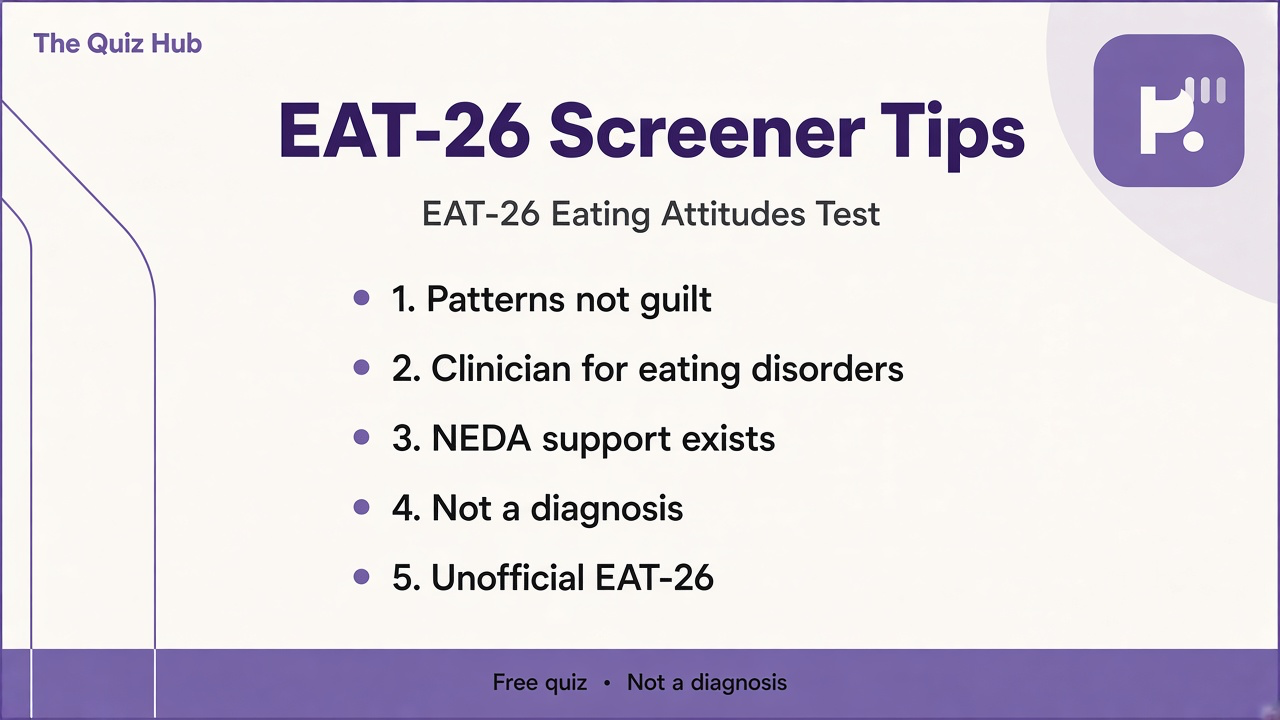
What this quiz can and cannot tell you
Can tell you
- Separate dieting drive, bulimia preoccupation, oral control, and help avoidance in plain language
- Highlight loops that deserve compassion or professional support
- Give you vocabulary for therapist, dietitian, or primary care intake
- Offer a baseline if you retake after one support experiment
Cannot tell you
- Replace the validated Eating Attitudes Test or published EAT-26 norms
- Diagnose eating disorders or prescribe meal plans without evaluation
- Tell you whether you should lose or gain weight from one score
- Prove you lack willpower or that you must eliminate food groups
EAT-26-inspired attitudes: dieting, preoccupation, control, and support without guilt
The Eating Attitudes Test researchers use in clinics is a validated tool with published norms and cutoffs. This page borrows familiar EAT-26 language around dieting drive, bulimia preoccupation, oral control, and help seeking so you can describe attitudes in words therapists already know, but it is not that official instrument and your score cannot be compared to journal thresholds. Treat the result as a map for reflection and intake conversations, not as homework from a research study.
Dieting drive shows up when fear of fat, calorie counting, or thinness goals steer meals more than hunger and satisfaction. Skipped foods, guilt after eating, and exercise used mainly to burn off calories often arrive with self-attack that makes the next binge or secret snack more likely. Bulimia preoccupation shows up when loss of control eating, vomiting thoughts, or food dominating your day stack with shame and secrecy. Those two bars often intertwine: harsh daytime rules can fuel nighttime eating when oral control feels exhausted.
Oral control is the third bar because impulse around snacks, long gaps without eating, and eating to numb moods can look like willpower problems when they are often deprivation or stress signals. Stopping when comfortably full differs from fighting every craving until you snap. When control strain drives shame, support seeking is the fourth bar: booking a clinician, eating with a friend, or asking curiosity questions instead of punishment sentences. Cycles that include purging, dangerous fasting, or fear of weight gain that disrupts daily life mean professional help, not retaking quizzes alone.
If dieting drive runs high while bulimia stays moderate, rules and fear of fat may need compassion skills first: regular meals, fewer calorie apps, and one offline coping list for hard evenings. If bulimia and dieting both run high, be cautious with new diets from social media; eating-disorder-informed therapists and registered dietitians specialize in untangling punishment from fuel. Our brief eating disorder questionnaire (EDE-QS) emphasizes clinical shape and restraint signals for adults reflecting on disorder-level worry; use it for YMYL reflection alongside this attitude screener, not instead of care when safety is at risk.
Retake after four weeks of one measurable kindness practice, such as eating breakfast before caffeine or texting a friend before a secret binge, and compare domain bars, not only the total. Food is supposed to be pleasurable and social; the goal is flexibility and support when attitudes hurt, not a perfect score. Licensed clinicians turn your examples into treatment plans this page cannot deliver.
| Test | Focus |
|---|---|
| Brief eating disorder questionnaire (EDE-QS) | Clinical shape, restraint, and binge-purge worry rather than EAT-style attitude domains alone |
| Dysfunctional eating attitude scale (DEAS) | Restriction shame and body checking emphasis rather than classic EAT dieting and oral control framing here |
Eating Attitudes Test (EAT-26) FAQ
Is this the official Eating Attitudes Test (EAT-26)?
No. This is an unofficial, EAT-26-inspired attitude screener written for self-reflection on our site. It does not use the validated EAT-26 item set or published norms and cannot be scored like a research clinic form.
What does this quiz measure?
It measures how often you noticed dieting drive, bulimia preoccupation, oral control strain, and support seeking or help avoidance in the past month. You get an index from 0 to 100 plus four domain bars. It reports self-reported frequency, not a clinical diagnosis.
What is the difference between dieting drive and bulimia preoccupation?
Dieting drive here means fear of fat, calorie rules, thinness preoccupation, or guilt after eating. Bulimia preoccupation means loss of control eating, vomiting thoughts, or food dominating your thinking. Many people see both when strict rules rebound into larger eating episodes.
Can this quiz diagnose an eating disorder?
No. Only a licensed clinician can diagnose eating disorders after full evaluation. Use this tool to describe attitudes and decide whether to seek eating-disorder-informed care, especially if you purge, fast dangerously, or feel out of control.
What should I do if my score is high?
Avoid new extreme diets, try one kindness-based support skill, and contact a therapist, doctor, or dietitian with eating-disorder training if patterns persist. Call NEDA at 800-931-2237 (US) for support options.
Who reviewed this quiz?
Dr. Elena Vasquez, PhD reviewed the YMYL framing, unofficial EAT-26 limits, and eating-disorder resource guidance. See our editorial policy for review standards.
Reviewed by