What Emotion Regulation Critics Review measures
This quiz does not diagnose borderline personality disorder, PTSD, mood disorders, or any other condition, does not review films or TV shows about feelings, and does not certify you as a clinician or wellness coach. It measures how much you agree with critical literacy about pop emotion regulation tests grouped four ways: skills take practice about repetition, coaching, wobble under stress, and rejecting one-shot incapacity myths; not a moral score about shame cycles, self-compassion, kids who melt down, and accountability without contempt; trauma-aware limits about window of tolerance, flooding risks on body-focused tips, neurodiversity and pain context, and pacing with qualified support; and pro care and scale limits about therapists when patterns stay stuck, validated instruments versus meme clones, rejecting web diagnosis, and keeping this page separate from entertainment review sites. You answer 22 statements from strongly disagree to strongly agree, with reverse-worded hype myths so one lucky streak cannot inflate every bar. Your answers also feed a second chart on closeness and trust habits, because some people chase certainty about partners or peers when vulnerability feels unsafe. The total becomes an index from 0 to 100 where higher means more reported agreement with limits and criticism on this screener, not proof you regulate perfectly in every conflict.
Skills take practice
Regulation as learnable steps that wobble under stress, not fixed quiz labels.
Not a moral score
Low bars describe strain, not bad character or permission for shame spirals.
Trauma-aware limits
Pacing, consent, and clinician help when pop coping lists flood real bodies.
Pro care and scale limits
Therapists and validated tools when stuck, not web totals or movie-review confusion.
How it works
Answer 22 agreement items
Rate each statement from Strongly disagree to Strongly agree. Tap Next after each answer.
Answers sort into four domains
Each answer feeds one of four literacy groups, and every item also feeds a closeness and trust layer.
See your index and charts
You get a 0 to 100 index, a band, and two bar charts you can discuss with a clinician or curious friend.
Take the Emotion Regulation Critics Review
Answer 22 short statements to see your pop regulation literacy index, four domain bars, and a closeness and trust chart.
What your result means
Your index is the average of all 22 answers, scaled from 0 to 100, with reverse-worded items flipped first. Higher means more reported agreement with criticism and limit statements on this screener. Read trauma-aware and moral-score bars together before you treat the total as permission to shame yourself or skip care.
| Band | Index range | Typical reading |
|---|---|---|
| Building pop regulation literacy | 0 to 35 | Fewer agreed facts on practice, non-moral scores, trauma limits, or pro-care boundaries on this screener. |
| Mixed pop regulation literacy | 36 to 65 | Solid recall in some domains with hype myths or care gaps in others. |
| Strong pop regulation literacy | 66 to 100 | Frequent agreement with criticism, trauma-aware limits, and pro-care statements. |
Tips at a glance
A quick takeaway graphic with topic tips (not your personal quiz scores). Start the quiz for your index, bands, and charts.
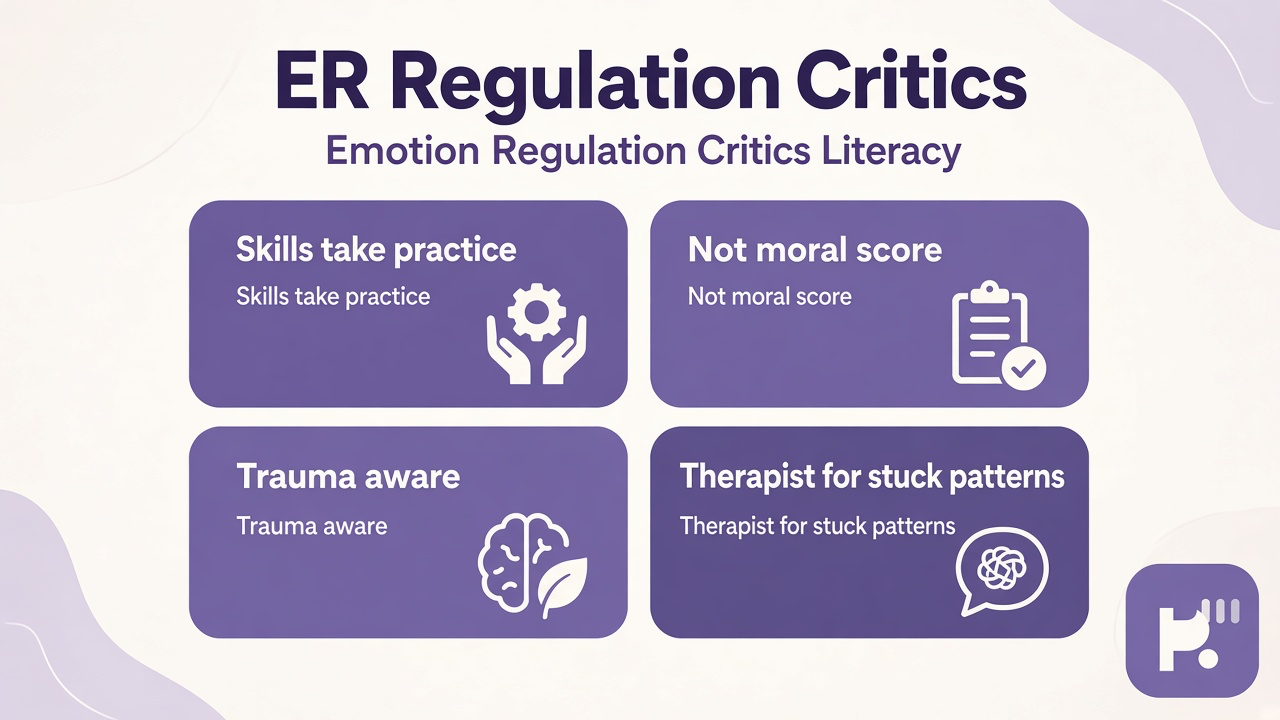
What this quiz can and cannot tell you
Can tell you
- Name oversold claims in viral emotion regulation and DERS-style quizzes in plain language
- Separate meme coping lists from trauma-informed pacing and clinician collaboration
- Highlight when moral-score dunk culture makes dysregulation worse instead of better
- Support conversations about professional help when regulation patterns stay stuck for months
Cannot tell you
- Diagnose personality, trauma, or mood disorders from agree statements here
- Prove you regulate perfectly or that partners are toxic from one screenshot total
- Replace trauma-informed therapy, safety planning, or crisis care with literacy trivia
- Score films, shows, or games; this critics review targets pop regulation scales only
Why pop emotion regulation scales need critics, not hype
Search traffic around emotion regulation often wants a simple verdict: calm people score high, messy people score low, and sharing the bar proves who is toxic in a relationship thread. Pop quizzes and DERS clones feed that wish with difficulty totals while skipping practice timelines, shame cycles, and trauma pacing. Critics literacy does not kill hope for skill-building; it adds brakes before web scores become moral failures. This page is about scale and app hype, not reviewing a film whose title happens to mention self-control.
Skills take practice is the first domain because regulation is learned behavior under real constraints. Sleep loss, grief, chronic pain, and conflict shrink anyone's window for pause-and-choose moments. Research-backed training repeats small experiments with feedback; a viral five-minute screener rarely teaches that arc. Treating one low bar as permanent incapacity is a hype myth this quiz reverses on purpose.
Not a moral score is the second domain because difficulty items describe strain patterns, not character. Shame after a low total often amplifies the very spikes screeners measure. Self-compassion and accurate language beat dunk culture that treats mood swings as proof someone is selfish or lazy. Literacy still leaves room for accountability when dysregulated behavior hurts others; compassion and responsibility are partners, not opposites.
Trauma-aware limits are the third domain because universal coping memes ignore dissociation, freeze, and panic when bodies feel unsafe. Window-of-tolerance framing belongs in trauma-informed therapy, not in captions that urge everyone to sit with the same intensity on day one. Neurodiversity, abuse history, and medical pain change which tips help. Literacy means slower experiments and clinician collaboration, not abandoning regulation goals entirely.
Pro care and scale limits are the fourth domain because months of disrupted sleep, work, or safety deserve licensed help, not infinite retakes of the same pop quiz chasing a greener bar. Validated DERS versions sit inside structured assessment with history; unreviewed web clones are critique fodder, not destiny. Pair literacy with siblings on this hub: our emotion regulation quiz emphasizes frequency humility on daily regulation habits when you want behavior reflection beside criticism. Our Difficulties in Emotion Regulation Scale sibling stresses non-diagnostic limits when you want scale-shaped items with study-not-verdict framing. Browse the mental health and clinical test hub for more YMYL screeners with study-not-diagnosis language.
Retake after you notice one regulation ad or meme and write three limits it skipped. Compare bars instead of chasing a single number. If crisis thoughts appear while debating scores online, call or text 988 in the US or your local crisis line before treating quiz culture as therapy.
| Test | Focus |
|---|---|
| Emotion regulation quiz | Frequency humility on daily regulation habits rather than critics literacy items |
| Difficulties in Emotion Regulation Scale Ders 18 1928 | Scale-shaped self-reflection with study-not-diagnosis limits, not pop hype literacy bars |
Emotion Regulation Critics Review FAQ
Is this a movie review or entertainment score?
No. This critics review measures literacy about limits and hype in popular emotion regulation tests and DERS-style screeners. It does not rate films, TV shows, or games, even if search results mix review words with psychology topics.
What does this quiz measure?
It measures how much you agree with statements about practice, non-moral scores, trauma-aware limits, and pro-care boundaries around pop regulation content. You get an index from 0 to 100 plus four bars. It describes self-reported literacy on this screener, not clinical skill or diagnosis.
Does a high score mean I regulate emotions well?
No. High scores mean you agreed with many criticism and limit statements here. Real skill shows up in repeated practice, relationships, and sometimes therapy. Literacy bars are not proof you never dysregulate.
Does a low score on a DERS-style quiz mean I am a bad person?
No. Difficulty screeners describe patterns of strain, not moral worth. Shame often worsens dysregulation. Use literacy results to question hype, then seek support if patterns disrupt life for months.
Why include trauma-aware items beside general coping trivia?
Pop regulation marketing sells one-size tips while hiding flooding risks for trauma survivors and neurodivergent bodies. Those bars keep pacing visible beside practice facts so users pause before push-through captions.
Who reviewed this quiz?
Dr. Elena Vasquez, PhD reviewed the YMYL framing, crisis resources, not-a-film-review disambiguation, trauma and non-moral-score notes, and educational tone. See our editorial policy for review standards.
Reviewed by