What the Emotional Distress Scale for Preschool Children measures
This quiz does not diagnose depression, anxiety, oppositional defiant disorder, trauma, or any other condition in your preschooler. It is not a validated published emotional distress scale for young children reproduced item-for-item. Only a pediatrician, child psychologist, or other licensed clinician using observation, caregiver history, and appropriate tools can evaluate clinical concerns in ages three to five. It measures how often you noticed distress-linked patterns grouped four ways: sadness and withdrawal when tearfulness, lost play interest, harsh self-talk, or low energy outran brief bad moods; irritability and dysregulation when tantrums, aggression, or long recovery times felt unusually intense; sleep, appetite, and stress when rest, food, regression, or somatic complaints tracked emotional load; and observe, not diagnose when you logged patterns without blame, asked pediatricians instead of treating web bars as verdicts, and rejected myths that screeners replace evaluation. You answer 22 how-often statements about the past two weeks from your observation, with reverse-worded items so one good afternoon cannot hide frequent strain across other days. Your responses also feed a second chart on closeness and trust habits, because some caregivers hide worry when vulnerability feels unsafe. The total becomes an index from 0 to 100 where higher means more frequent reported distress signals on this screener. Your responses suggest intensity and patterns to discuss with care; they do not mean your child is broken or that you failed as a parent.
Sadness and withdrawal
How often tearfulness, flat mood, lost play interest, or harsh self-talk persisted.
Irritability and dysregulation
How often meltdowns, aggression, or long recovery outran typical frustration.
Sleep, appetite, and stress
How often rest, food, regression, or body complaints tracked emotional strain.
Observe, not diagnose
How often you tracked patterns, sought pediatric guidance, and kept quiz limits clear.
How it works
Answer 22 frequency items
Rate each parent-report statement from Never to Very often for the past two weeks. Tap Next after each answer.
Answers sort into four domains
Each answer feeds one of four distress-signal groups, and every item also feeds a closeness and trust layer.
See your index and charts
You get a 0 to 100 index, a band, and two bar charts you can bring to a pediatric visit.
Take the Emotional Distress Scale for Preschool Children
Answer 22 short caregiver observations to see your preschool distress index, four domain bars, and a closeness and trust chart.
What your result means
Your index is the average of all 22 answers, scaled from 0 to 100, with reverse-worded items flipped first. Higher means more frequent reported distress signals on this screener. Read sadness and irritability bars together before the total, because internalizing and explosive cues often rise as a pair in young children.
| Band | Index range | Typical reading |
|---|---|---|
| Lower reported distress signals | 0 to 35 | Fewer frequent sadness, irritability, sleep-appetite, or quiz-as-verdict patterns in the past two weeks. |
| Mixed reported distress signals | 36 to 65 | Some typical preschool ups and downs alongside recurring mood, sleep, or dysregulation spikes. |
| Higher reported distress signals | 66 to 100 | Frequent mood, dysregulation, or sleep-appetite strain; pediatric or child psychology follow-up may help. |
Tips at a glance
A quick takeaway graphic with topic tips (not your personal quiz scores). Start the quiz for your index, bands, and charts.
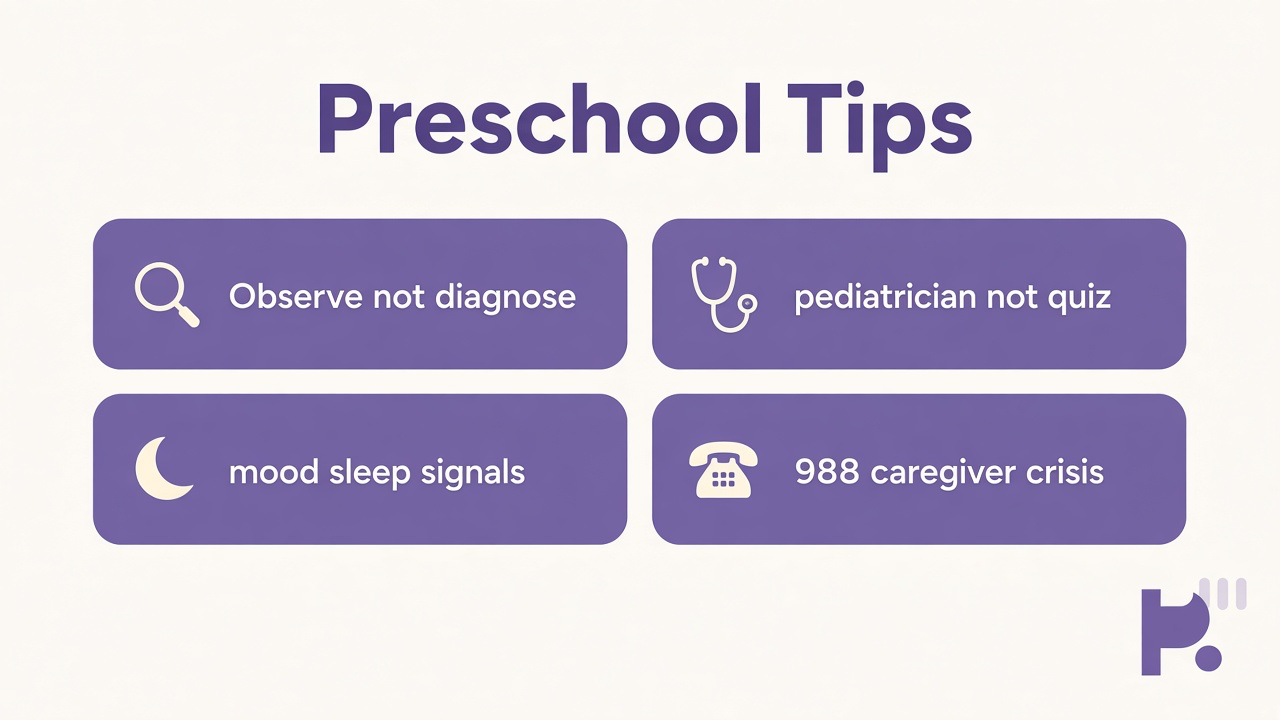
What this quiz can and cannot tell you
Can tell you
- Name mood, dysregulation, and sleep-appetite patterns in plain language for pediatric intake
- Highlight when caregiver-observed bars run high enough to deserve clinical conversation
- Support early talks with pediatricians, child psychologists, or daycare partners with examples
- Offer a baseline if you retake after a sleep, routine, or support experiment
Cannot tell you
- Diagnose your preschooler with any mental health condition from caregiver report alone
- Replace pediatric exams, child psychology evaluation, early intervention, or crisis services
- Prove your child is manipulative or that teachers see the same pattern you observe at home
- Turn temperament differences into blame or a permanent label from one score
Preschool distress beyond blame posts: observe patterns, pediatric care, and quiz limits
Caregivers search emotional distress scales when a three- to five-year-old swings from sunny play to collapse and nobody agrees whether it is normal preschool drama or something worth professional eyes. Published tools exist for structured research and clinician-led assessment; this page is an original frequency screener for caregiver observation, not a copy of those validated forms. Your responses suggest where patterns cluster so you can describe them at a pediatric visit, not so a bar chart replaces play-based evaluation.
Sadness and withdrawal are the first domain because distress is not always loud. Tearfulness over small setbacks, lost interest in beloved toys, corner hiding, or harsh "I am bad" self-talk can show internalizing strain even when tantrums stay rare. Bouncing back after setbacks is a reverse signal that resilience still shows up some days. Naming low mood without calling your child defective is caregiver literacy that pairs well with actual sleep, connection, and clinical follow-up when patterns persist.
Irritability and dysregulation are the second domain because preschool brains still build brakes. Long tantrums, hitting when words exist, morning-long dysregulation, or screaming over minor changes can reflect overload, sensory stress, or mood disruption, not moral failure. Using known calming moves on several days is a reverse signal that skills still land sometimes. Comparing frequency across home and daycare matters because children often hold it together in one setting and melt in the safer one.
Sleep, appetite, and stress are the third domain because young bodies speak early. Bedtime battles, night waking, food refusal during tense weeks, potty regression, or tummy complaints before transitions can track emotional load even when you cannot see a clear trigger. Steady sleep and appetite on most nights belong in the same story as limits: one good week does not erase a fortnight of strain if other bars stay high.
Observe, not diagnose is the fourth domain because YMYL child content must resist verdict culture. Journaling patterns, asking pediatricians with examples, and refusing to treat unofficial screeners as child psychology diplomas keeps honesty intact. Labeling disorders from web bars alone or equating high charts with formal evaluation should not inflate a distress index meant to track real caregiver observation. Our anxiety scale for preschool children (SACS-inspired) sibling focuses on worry domains such as separation and social fear rather than broader mood and dysregulation framing. Our emotion regulation in parents Peri2 inspired screener reflects perinatal caregiver regulation when your child is still in the fourth trimester. Our parental burnout assessment offers caregiver load reflection when your distress bar mirrors your own depletion. Browse the mental health and clinical test hub for more non-diagnostic screeners.
Retake after two weeks of one measurable experiment, earlier bedtime, predictable visual schedule, pediatric check-in, or child psychology intake, and compare domain bars. Your responses suggest whether patterns are easing, not whether your child deserves care. Licensed clinicians turn examples into treatment plans this page cannot deliver. If caregiver distress feels unbearable tonight, call or text 988 in the US or your local crisis line before debating results alone.
| Test | Focus |
|---|---|
| Anxiety scale for preschool children (SACS-inspired) | Separation, social fear, somatic worry, and routine rigidity rather than broad mood and dysregulation items |
| Emotion regulation in parents Peri2 | Caregiver regulation and perinatal load rather than child mood observation |
| Parental burnout questionnaire | Caregiver exhaustion and support gaps when your worry mirrors your own burnout |
Emotional Distress Scale for Preschool Children FAQ
What does this quiz measure?
It measures how often you noticed preschool distress-linked patterns in four areas during the past two weeks: sadness and withdrawal, irritability and dysregulation, sleep and appetite strain, and observe-not-diagnose limits. You get an index from 0 to 100 plus four domain bars. Your responses suggest caregiver-observed frequency for reflection, not a clinical diagnosis of your child.
Can this quiz diagnose emotional disorders in my preschooler?
No. Young children need in-person observation, caregiver history, and clinician judgment. This parent-report screener cannot diagnose depression, anxiety, trauma, or behavioral disorders. Use bars to describe patterns to your pediatrician or child psychologist, not as a web verdict.
Who should answer, the child or the caregiver?
A caregiver who knows the child's daily routines should answer. Preschoolers cannot reliably self-report frequency items like these. Answer based on what you observed at home and, when relevant, what teachers or daycare providers described.
Does a high score mean my child is bad or I am a bad parent?
No. Your responses suggest how often distress signals appeared on this screener. High frequency can reflect real strain worth support, not moral failure. Bring domain examples to your pediatrician if patterns disrupt sleep, eating, safety, or joy across weeks.
Why are some statements about journaling, pediatric visits, or quiz limits?
Reverse-worded items catch overconfidence. Agreeing that you logged patterns without blame, asked your pediatrician, or kept screeners separate from clinical labels should not inflate a distress index meant to track difficulty observing in your child.
What should I do if scores are high or I feel overwhelmed as a caregiver?
Schedule a pediatric visit with domain examples and ask about child psychology or early intervention referral if patterns persist. Call or text 988 (US) if caregiver distress feels hopeless or unsafe. Seek emergency care if your child's physical safety is at immediate risk, not quiz scores alone.
Who reviewed this quiz?
Dr. Elena Vasquez, PhD reviewed the YMYL framing, crisis resources, observe-not-diagnose limits, and result explanations. See our editorial policy for review standards.
Reviewed by