What this preschool anxiety scale measures
This anxiety scale for preschool children (SACS-inspired) estimates how often worry patterns appear in children ages 3 to 5 based on parent observation. Twenty-two original frequency items group into separation distress, social fear, somatic complaints, and routine rigidity following themes from preschool anxiety screening research including the Spence Preschool Anxiety Scale. Each item also maps to a fear-of-intimacy stack layer for caregiver reflection. A second results chart inspired by FOIS-style intimacy avoidance themes from Descutner and Thelen (1991), adapted to this topic. Your preschool anxiety signal index averages parent-reported patterns into a 0 to 100 score. This is not a reproduction of the published SACS instrument.
Separation distress
Clinging at drop-off, caregiver proximity needs, and fear when parents leave.
Social fear
Hiding from adults, peer play refusal, group freeze, and party avoidance.
Somatic complaints
Stomachaches, headaches, and sick claims before school or transitions.
Routine rigidity
Meltdowns when plans change, ritual insistence, and new caregiver resistance.
How it works
Answer 22 frequency items
Rate each parent-report frequency statement from Never to Very often based on your preschool child. You click Next after each answer.
Items map to domains and intimacy stack
Answers accumulate percentages for four primary domains plus four fear-of-intimacy stack layers.
View index, band, and charts
Results show Lower, Mixed, or Higher signal bands with domain bars and stack chart.
Take the anxiety scale for preschool children sacs
Complete 22 parent-report items to receive your preschool anxiety signal index, four domain bars, fear-of-intimacy stack chart, and band label for pediatric conversations.
What your result means
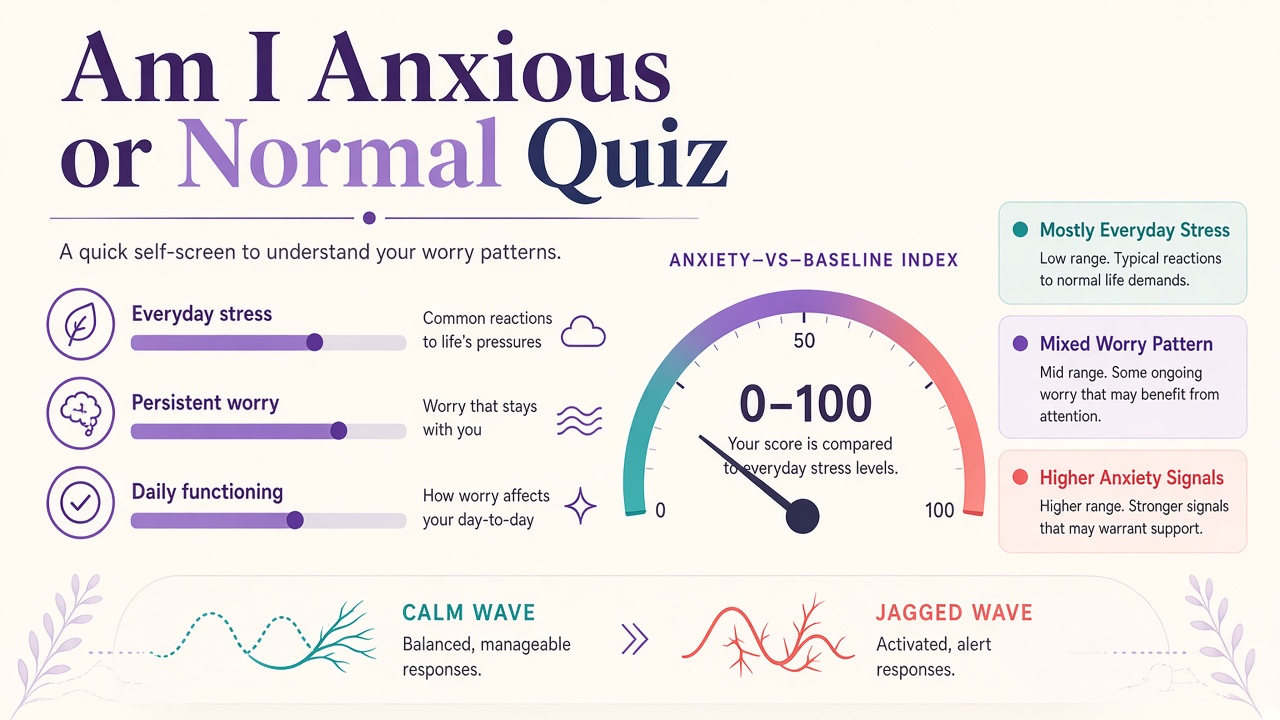
Your preschool anxiety signal index is the normalized total across all 22 parent-report items on a 0 to 100 scale. Higher scores mean more frequent worry endorsement on this screener. Domain bars show which pattern drives your result most.
| Band | Index range | Typical reading |
|---|---|---|
| Lower Preschool Anxiety Signals | 0 to 35 | Fewer parent-reported worry patterns; temperament variation is normal at this age |
| Mixed Preschool Anxiety Signals | 36 to 65 | Blend of typical preschool caution and recurring worry patterns worth discussing with a pediatrician |
| Higher Preschool Anxiety Signals | 66 to 100 | Frequent parent-reported worry signals; schedule pediatric or child psychology evaluation |
What your report looks like
What this quiz can and cannot tell you
Can tell you
- How often you report preschool worry patterns on this parent screener
- A preschool anxiety signal index and four domain bars plus fear-of-intimacy stack
- Which domain (separation, social, somatic, routine) feels strongest in your observations
- A baseline before pediatric visits or after daycare transitions
Cannot tell you
- Diagnose anxiety disorders in preschoolers or any child mental health condition
- Replace pediatric examination, developmental screening, or play-based assessment
- Predict school readiness or long-term outcomes from parent report alone
- Provide emergency care for child safety concerns
SACS themes vs this parent screener
Researchers developed preschool anxiety scales such as the Spence Preschool Anxiety Scale (SACS) for clinician-guided assessment of young children. Parent-report online tools rarely show domain bars or caregiver intimacy-stack patterns. This quiz adds a 0 to 100 index with four domains inspired by SACS themes, not a reproduction of the published instrument.
Sample items ask how often drop-off tantrums, peer play refusal, or stomachaches before school appear over two weeks. Pair results with our anxiety questionnaire for adult symptom comparison if family worry feels shared. Browse the mental health and clinical hub for related screeners.
| Test | Focus |
|---|---|
| Anxiety questionnaire | Adult anxiety symptom frequency screener with four domains |
| Am I anxious or normal quiz | Adult baseline worry comparison |
| Fear of intimacy quiz | When parental worry affects closeness with partners |
Anxiety Scale For Preschool Children (SACS) FAQ
What does this preschool anxiety scale measure?
22 parent-report frequency items map to four preschool anxiety domains plus a fear-of-intimacy stack. You receive a preschool anxiety signal index from 0 to 100. Not a diagnosis.
Can this quiz diagnose anxiety in my preschooler?
No. Your responses describe parent-observed patterns for self-reflection only. Child psychologists and pediatricians evaluate young children through observation, history, and structured tools.
What age range is this screener for?
Items target caregivers of children roughly ages 3 to 5 in preschool or daycare settings. Older children may need different screeners.
What is the fear-of-intimacy stack on a child screener?
The stack chart reflects caregiver closeness-guarding patterns that sometimes pair with parental worry, such as hiding concerns from partners or minimizing symptoms to doctors.
When should I see a pediatrician?
Consider evaluation if separation distress, social fear, or sleep disruption persists beyond typical transition periods or blocks daily function.
Who reviewed this content?
Dr. Elena Vasquez, PhD, reviewed the test framing and result explanations. See our editorial policy for review standards.
Reviewed by