What Dolphin Quiz measures
This quiz does not certify you as a marine biologist or score your moral worth as an ocean advocate. It measures how much you agree with beginner-friendly dolphin trivia grouped four ways: marine biology about mammals, blowholes, echolocation, and species diversity; ocean ecology about habitats, prey, pollution, and migration; dolphin behavior about pods, communication, play, and distress cues; and welfare ethics about respectful wild viewing and honest limits on touch tourism without turning into a protest checklist. You answer 22 statements from strongly disagree to strongly agree, with reverse-worded myths so one lucky guess cannot inflate every bar. Your answers also feed a second chart on closeness and trust habits, because nature fandom sometimes chases feel-good certainty over messy science. The total becomes an index from 0 to 100 where higher means more reported trivia literacy on this screener, not proof you should approach wild animals or skip expert help at a stranding.
Marine biology
Mammals versus fish, blowholes, echolocation, body shape, and orca family ties.
Ocean ecology
Food webs, habitat health, migration, plastic, and gear entanglement basics.
Dolphin behavior
Pods, mother-calf bonds, play leaps, whistles, and when to call authorities.
Welfare ethics
Boat distance, habituation risks, facility quality limits, and science-minded curiosity.
How it works
Answer 22 agreement items
Rate each statement from Strongly disagree to Strongly agree. Tap Next after each answer.
Answers sort into four domains
Each answer feeds one of four trivia groups, and every item also feeds a closeness and trust layer.
See your index and charts
You get a 0 to 100 index, a band, and two bar charts you can use to pick what to study next.
Take the Dolphin Quiz
Answer 22 short statements to see your marine dolphin trivia index, four domain bars, and a closeness and trust chart.
What your result means
Your index is the average of all 22 answers, scaled from 0 to 100, with reverse-worded items flipped first. Higher means more reported trivia literacy on this screener. Read welfare ethics and dolphin behavior bars together before you treat the total as expertise.
| Band | Index range | Typical reading |
|---|---|---|
| Building dolphin trivia literacy | 0 to 35 | Fewer agreed facts on biology, ecology, behavior, or welfare basics on this screener. |
| Mixed dolphin trivia literacy | 36 to 65 | Solid facts in some domains with myths or overconfidence in others. |
| Strong dolphin trivia literacy | 66 to 100 | Frequent agreement with accurate trivia and healthy learning limits. |
Tips at a glance
A quick takeaway graphic with topic tips (not your personal quiz scores). Start the quiz for your index, bands, and charts.
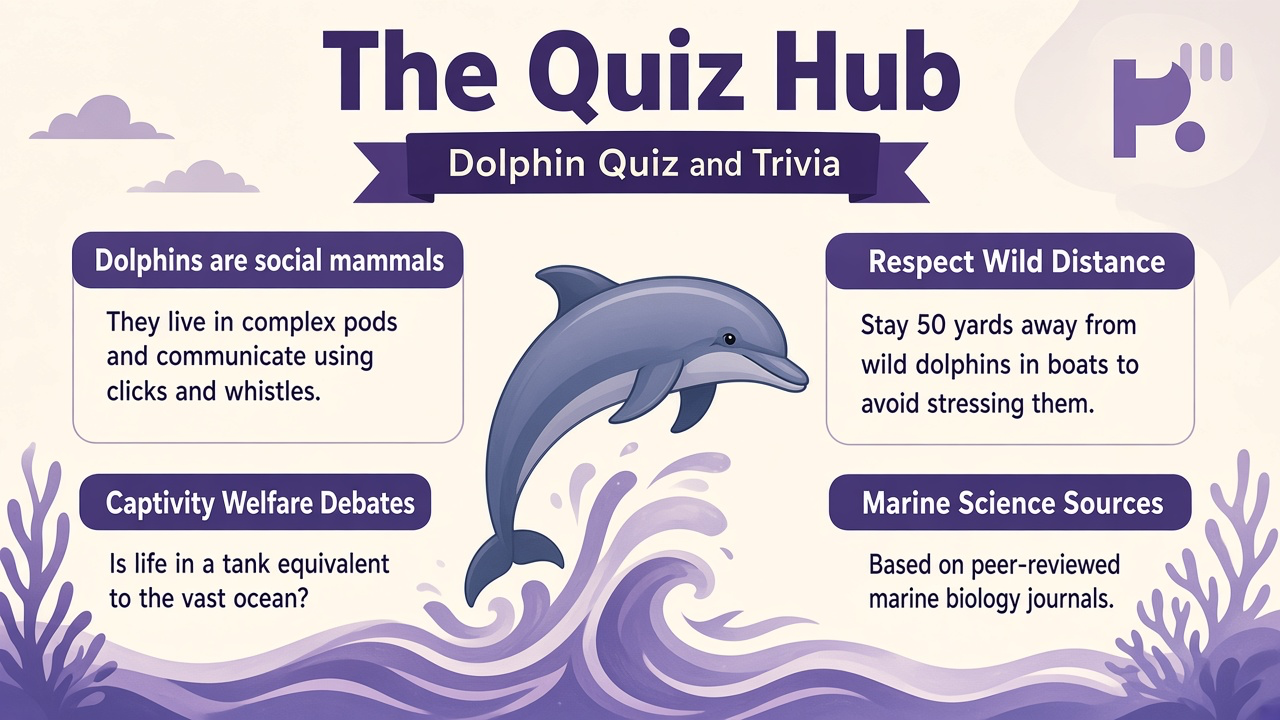
What this quiz can and cannot tell you
Can tell you
- Highlight biology and ecology facts worth revisiting
- Separate smiling-meme myths from distress and viewing etiquette
- Encourage study-and-retake habits without shame
- Spark better questions for educators, guides, and rescue hotlines
Cannot tell you
- Certify you for marine biology fieldwork or veterinary care
- Replace trained responders for strandings, entanglements, or injured wildlife
- Rank every aquarium or tour operator as good or bad from one score
- Prove it is safe to touch wild dolphins because trivia felt easy
Why dolphin trivia pairs science with a light welfare touch
People open a dolphin quiz for the same reason they replay slow-motion leap clips: they want language for animals that feel familiar and mysterious at once. Dolphins are mammals with hair follicles in youth, warm blood, and air-breathing blowholes, not gilled fish with permanent grins. Echolocation lets many species click and listen their way through murky water. Orcas sit in the same family tree despite blockbuster whale branding. Those facts are trivia until they explain why a dolphin cannot stay underwater forever like a cartoon sidekick.
Ocean ecology grounds the cute pod videos. Coastal seagrass, reefs, and managed fisheries support prey dolphins hunt. Plastic and lost fishing line injure animals that never met your snack wrapper. Migration stories remind you that one bay snapshot is not the whole species. Reverse items about deleting every shark catch the old myth that simpler oceans are always safer. Healthy seas are messy food webs, not swimming pools.
Behavior items add empathy without anthropomorphizing every splash. Pods coordinate travel and hunting. Mothers invest long months teaching calves. Leaps and bow riding can be play or efficient travel, not a universal invite to grab a dorsal fin. A curved rostrum is anatomy, not a reliable happiness meter. When animals strand, swim listlessly near shore, or isolate oddly, wildlife hotlines exist because amateurs cannot safely diagnose dehydration, toxins, or acoustic trauma from a dock photo.
Welfare ethics stays light on purpose. Many learners first meet dolphins on boat tours or education centers. Distance, slow approaches, and no chase rules protect wild animals from habituation and boat strikes. Touch-and-feed fantasies can harm dolphins and swimmers when animals learn to beg near propellers. Not every captive facility meets the same standards; trivia is not a boycott scorecard, but agreeing that tank size and care matter keeps literacy honest. Pair curiosity with documentaries, university outreach, and regional stranding numbers saved on your phone.
Save your lowest bar as one study topic this week. Name one mammal fact, one ecology link, and one viewing rule. Retake, and notice which myths no longer trick you. Trivia literacy is a snorkel mask on knowledge, not a license to crowd a wild pod because you feel ocean-positive today.
| Test | Focus |
|---|---|
| Dog anatomy quiz | Land mammal body-part trivia, not marine ecology or wild viewing rules |
| Dog quiz questions | Everyday pet trivia habits when you want another fun-novelty screener |
Dolphin Quiz FAQ
What does this quiz measure?
It measures how much you agree with beginner dolphin trivia across marine biology, ocean ecology, behavior, and light welfare ethics. You get an index from 0 to 100 and four bars. It reflects self-reported knowledge on this screener, not a marine biology degree or moral report card.
Is this quiz enough to interact with wild dolphins?
No. It is fun trivia and literacy. Local laws, tour rules, and wildlife agencies set safe distances. Strandings and entanglements need trained responders, not a high score here.
Why are some statements worded as myths?
Reverse-worded myths catch overconfidence. Agreeing that dolphins are gilled fish, that smiles always mean happiness, or that small tanks need no ethical scrutiny should not inflate your literacy index.
Does a high score mean I should boycott all aquariums?
No. Welfare items encourage honest questions about standards and wild viewing; they do not assign a protest score. Research facilities and regulations if captivity debates matter to you.
Who reviewed this quiz?
Dr. Rachel Kim, PhD reviewed the fun-only framing, light welfare notes, and limits on DIY wildlife response. See our editorial policy for review standards.
Reviewed by