What the Does My Cat Have Separation Anxiety Quiz measures
This quiz does not replace veterinary or behavior professional care. It measures how often you have noticed separation-linked behaviors in four groups: panic when you prepare to leave, distress signs while you are gone, intense greetings when you return, and day-to-day tethering to your location. You answer 22 how-often statements about a typical week, with reverse-worded items so one dramatic goodbye cannot dominate. Your answers also feed a second chart on closeness and trust habits, because human guilt about leaving can color how owners read cat behavior. The total becomes an index from 0 to 100 where higher means more reported separation strain on this screener, not a formal anxiety diagnosis.
Departure panic
How often leaving cues trigger crying, blocking, or frantic pacing at the door.
Alone distress
How often they vocalize, scratch, or wreck items when no one is home, per reports or cameras.
Reunion intensity
How often your return brings extreme clinginess, tripping you, or nonstop meowing.
Routine tether
How often they follow room to room and panic if a door closes between you.
How it works
Answer 22 frequency items
Rate each statement from Never to Very often for a typical week. Tap Next after each answer.
Answers sort into four domains
Each answer feeds one of four behavior groups, and every item also feeds a closeness and trust layer.
See your index and charts
You get a 0 to 100 index, a band, and two bar charts you can share with a vet or trainer.
Take the Does My Cat Have Separation Anxiety Quiz
Answer 22 short statements to see your feline separation index, four behavior bars, and a closeness and trust chart.
What your result means
Your index is the average of all 22 answers, scaled from 0 to 100, with reverse-worded items flipped first. Higher means more reported strain. Pair alone-distress answers with a camera clip when you can.
| Band | Index range | Typical reading |
|---|---|---|
| Lower separation strain | 0 to 35 | Little panic at departures or destructive alone-time behavior. |
| Mixed separation strain | 36 to 65 | Some vocal or clingy habits without constant destruction. |
| Higher separation strain | 66 to 100 | Frequent panic at leaving, solo distress, or intense reunions. |
Tips at a glance
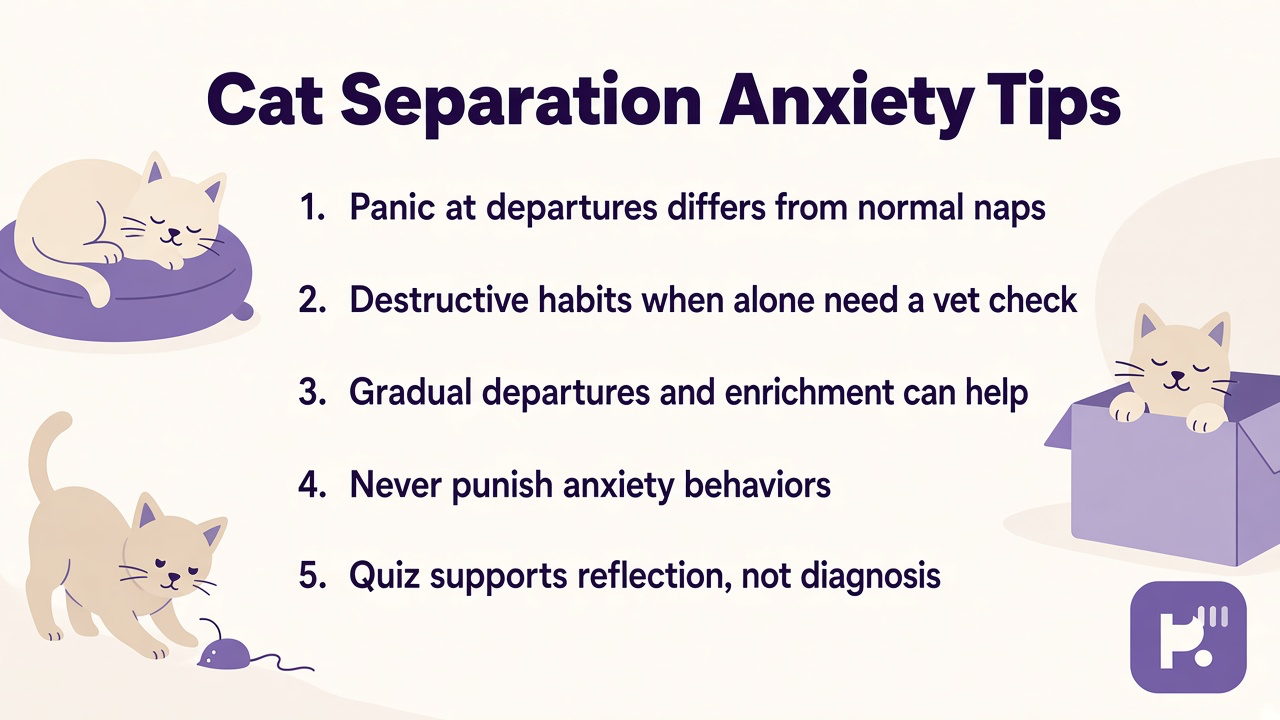
A quick takeaway graphic with topic tips (not your personal quiz scores). Start the quiz for your index, bands, and charts.
What this quiz can and cannot tell you
Can tell you
- Sort door panic from solo destruction and reunion clinginess
- Give you vocabulary for a vet or behavior consult
- Highlight when appetite or grooming changes need medical rule-out
- Track whether short-absence practice helps over a few weeks
Cannot tell you
- Diagnose separation anxiety or any medical problem
- Choose medications or supplements for your cat
- Replace environmental enrichment or professional training plans
- Predict whether your cat will damage property next week
Cats alone: panic, boredom, and what actually helps
Dogs own the separation anxiety headlines, yet cats feel absence too. Some yowl at the door the second a laptop bag zips. Others are silent destroyers who shred carpet only on workdays. Owners feel guilty, annoyed, and confused because the cat seems fine the moment they step back inside. That whiplash is common, and it is why a structured checklist beats guessing from one bad Monday.
True separation distress is more than liking you. It is a pattern: predictable panic at departures, signs of stress while you are gone, and often frantic reunions. Boredom, outdoor cats frustrated by closed windows, and pain can mimic anxiety. Urinating on your bed when alone may be urinary disease, not spite. The four bars in this quiz separate leaving cues, solo-time damage, return intensity, and all-day shadowing so you can see which phase hurts most.
Cats are creatures of routine. When the routine is you always being there and then suddenly gone for ten hours, stress spikes. Pandemic adoptees sometimes hit this wall when offices reopen. Kittens raised with constant contact may never learn solo rest. Enrichment helps many households: vertical space, prey-style play before leaving, and food puzzles that reward calm sniffing. Short practice absences teach the brain that you return.
If your score is high, start with a vet visit, not punishment. Film departures. Note whether over-grooming, vomiting, or litter-box changes appeared alongside clinginess. Behavior professionals can design graduated absence plans; some cats also need medical support once pain is ruled out. Our does my cat have dementia quiz is a better fit if confusion and soiling dominate more than door panic. The does my cat love me quiz looks at attachment warmth when you wonder whether clinginess is love or fear.
Retake after four weeks of a boring goodbye ritual and one new solo enrichment toy. Compare reunion and alone-distress bars. Progress is often uneven. Celebrate a shorter yowl, not only a silent house. Your cat is not manipulative; they are communicating with the tools they have.
| Test | Focus |
|---|---|
| Does my cat have dementia quiz | Targets senior confusion and soiling, not departure panic |
| Does my cat love me quiz | Measures attachment warmth, not alone-time destruction |
Does My Cat Have Separation Anxiety Quiz FAQ
What does this quiz measure?
It measures how often you notice separation-linked behaviors in four areas: departure panic, alone-time distress, reunion intensity, and shadowing you at home. You get an index from 0 to 100 and four bars.
Can cats really have separation anxiety?
Many behavior professionals describe feline separation distress with patterns similar to dogs, though cats express it differently. A vet should rule out medical causes first.
Should I get another cat for company?
Not automatically. Some cats want a friend; others want space. Forced pairing can add stress. Ask a vet or behavior consultant about your specific cat.
Will crating or locking my cat help?
Crating is rarely appropriate for cats and can increase panic. Safer rooms with enrichment, hiding spots, and cameras usually work better.
Who reviewed this quiz?
Dr. Elena Vasquez, PhD reviewed the framing, the veterinary referral notes, and the limits on diagnosis. See our editorial policy for review standards.
Reviewed by