What this Diane Poole Heller attachment quiz measures
Diane Poole Heller, PhD, is a clinical psychologist known for DARe (Attachment Repatterning Experience) and somatic approaches to adult bonding. Her work extends Bowlby and Ainsworth's attachment theory into repair language: how nervous systems learn safety, distance, vigilance, or push-pull closeness in intimate relationships. This quiz is not the official DARe instrument; it is a shortened self-report inspired by her four-style framing for casual insight.
-
Secure Attachment
You can lean on a partner and still feel like yourself when apart.
-
Avoidant Attachment
You value autonomy and may pull back when closeness feels like pressure.
-
Anxious Attachment
You care deeply and scan for signs that the bond might slip away.
-
Disorganized Attachment
You want connection and fear it at the same time, especially after hurt or chaos.
How scoring works
-
Rate 24 frequency items
Each statement uses a five-point scale from Never to Almost always. Six items map to each attachment style. Reverse-scored items catch social-desirability fluff.
-
We sum per style
Raw totals convert to match percentages (0 to 100). Your highest score becomes the primary style; the runner-up is your secondary influence.
-
Read blend warnings
Neutral-heavy or straight-line responding triggers quality warnings. If top two styles tie within one raw point, both profiles deserve a read.
Take the Diane Poole Heller attachment quiz
Answer every item from recent relationship moments. Progress autosaves in your browser and opens in a focused modal.
What your attachment style report looks like
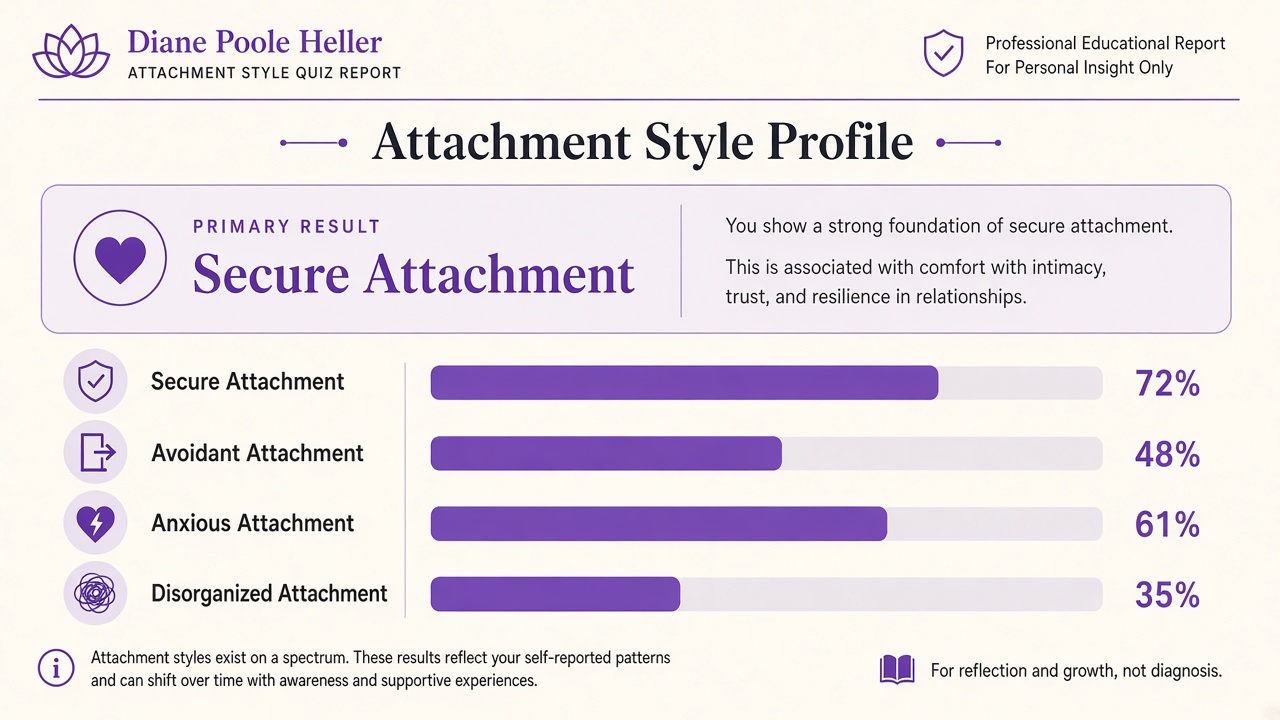
After all 24 items, you see a primary attachment style, secondary influence, match percentage, and four horizontal bars for secure, avoidant, anxious, and disorganized scores. Percentages reflect frequency endorsement in each domain, not clinical severity.
What this quiz can and cannot tell you
Can
- Highlight which attachment pattern you endorsed most on these items
- Show when two styles blend closely on your answers
- Flag cautious answering that may flatten style differences
Cannot
- Replace the ECR-R, AAI, or any validated clinical attachment measure
- Diagnose attachment disorders or personality disorders
- Prove you will always bond the same way with every partner
Poole Heller framework vs ECR attachment test and fear of intimacy quiz
Search results often mix Diane Poole Heller's name with generic attachment quizzes that never cite her repair model. Her contribution is practical: naming how bodies respond to closeness (regulated connection, protective distance, reassurance hunger, or fearful push-pull) and building skills to earn safer bonding over time. This page scores those four patterns with original items so you get a profile snapshot, not a copy of the Experiences in Close Relationships scale.
If you want anxiety-avoidance quadrant scoring with ECR-inspired dimensions, try our attachment style test. For closeness avoidance behaviors (vulnerability pull-back, trust hesitation, limited self-disclosure), use our fear of intimacy quiz. For relationship worry separate from style typing, see our relationship anxiety quiz. This Diane Poole Heller quiz sits between those tools: four named styles with repair-oriented copy rather than a single avoidance index.
Sample items include secure bonding ("ask a partner for comfort when you are stressed without feeling weak"), avoidant distance ("prefer to handle emotional problems on your own instead of talking them through"), anxious vigilance ("worry that you care about the relationship more than your partner does"), and disorganized push-pull ("want closeness but freeze or pull away when someone gets emotionally near"). Your highest domain becomes the headline result; read the secondary profile when scores sit close.
| Quiz | Best for |
|---|---|
| This Diane Poole Heller quiz | Secure vs avoidant vs anxious vs disorganized style profiles |
| Attachment style test | ECR-inspired anxiety and avoidance quadrants |
| Fear of intimacy quiz | Intimacy avoidance index across four closeness domains |
| Relationship anxiety quiz | Worry and reassurance patterns with severity bands |
For background on Poole Heller's attachment repair work, see her overview at dianepooleheller.com and Bowlby's foundational attachment theory via the American Psychological Association. Treat any online quiz as a conversation starter with a therapist or trusted partner, not a permanent label.
Diane Poole Heller attachment quiz FAQ
What is the Diane Poole Heller attachment quiz?
This free quiz uses 24 original frequency items inspired by Diane Poole Heller's attachment repair work and adult attachment research. Six items map to each style: secure, avoidant, anxious, and disorganized. You receive a primary style, secondary influence, match percentages, and a four-bar chart. It is educational self-report, not her official DARe assessment.
How is this different from the attachment style test on The Quiz Hub?
Our attachment style test follows ECR-inspired anxiety and avoidance dimensions with quadrant mapping. This Diane Poole Heller quiz uses relationship frequency wording ("how often do you...") and profiles framed around her repair-oriented language for secure, avoidant, anxious, and disorganized bonding patterns.
Can I have more than one attachment style?
Yes. Most adults blend patterns. Your result shows a primary style, secondary influence, and percentage bars for all four. Close scores trigger a blend warning on the results screen.
Does a high disorganized score mean I have an attachment disorder?
No. Disorganized attachment here describes push-pull closeness patterns on self-report items, not a clinical diagnosis. Only a licensed mental health professional can evaluate attachment concerns through structured interviews.
How long does the Diane Poole Heller attachment quiz take?
Most people finish in about 5 minutes. There are 24 five-point frequency statements about close relationships. You must answer every item before results appear.
Who reviewed this attachment quiz?
Dr. Priya Sharma, PhD, reviewed framing and disclaimers. See our editorial policy for review standards.
Reviewed by