What this quiz measures
This analysis of the family myth quiz screens hero narrative, scapegoat story, achievement pressure, and loyalty silence themes drawn from Murray Bowen family systems language and popular family-of-origin workbook framing. Twenty-two frequency items ask how often these patterns appear when you think about your family story. Each item also maps to a fear-of-intimacy stack layer.
Hero narrative
Golden-child comparisons, rescue roles, and guilt when you fall short of the family success story.
Scapegoat story
Repeated blame, problem-child labels, and absorbing tension so others stay comfortable.
Achievement pressure
Never-quit rules, status holidays, and hiding struggle because wins prove worth.
Loyalty silence
Dirty-laundry norms, secret-keeping, and disloyalty guilt when you speak honestly.
How it works
Three steps from first question to your report with domain bars and fear-of-intimacy stack.
Answer 22 frequency items
Rate how often each pattern appears from Never to Very often. You click Next after each answer.
Items map to myth domains
Your answers accumulate percentages for hero, scapegoat, achievement, and silence domains plus intimacy stack layers.
View index and dual charts
Results show your family myth pattern index, band label, domain bars, and intimacy stack chart.
Take the family myth quiz
Answer 22 original items about family narrative patterns. Your responses produce an index from 0 to 100, four domain scores, and a fear-of-intimacy stack chart.
Opens in a focused modal. No account required. Results stay on screen.
What your result means
Your family myth pattern index is the normalized total across all items on a 0 to 100 scale. Higher scores mean more frequent endorsement on this screener. Domain bars show whether hero, scapegoat, achievement, or silence themes drive your result most.
| Band | Index range | Typical reading |
|---|---|---|
| Lower Family Myth Pattern Signals | 0 to 35 | Fewer endorsed patterns on these self-report items |
| Mixed Family Myth Pattern Signals | 36 to 65 | Blend of stronger and moderate domain scores |
| Higher Family Myth Pattern Signals | 66 to 100 | Frequent endorsement worth reflection and practice |
What your family myth quiz report looks like
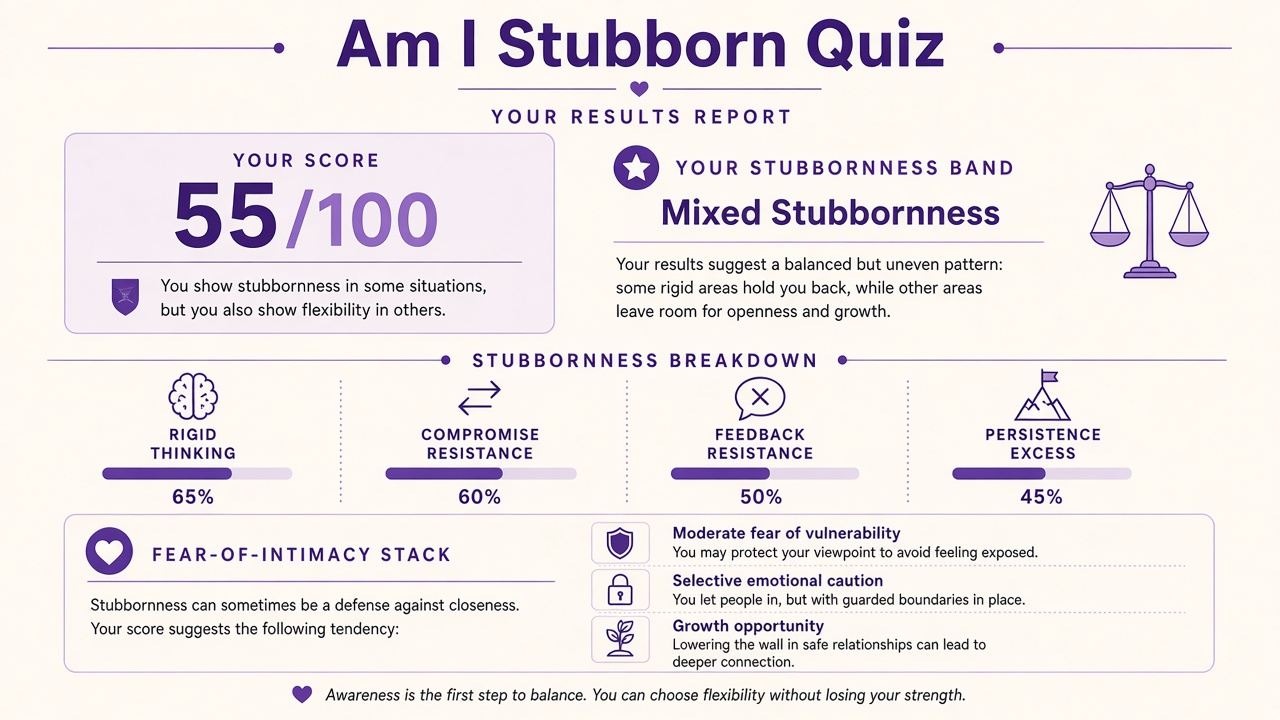
After all 22 items, you get a family myth pattern index, band label, four domain bars, and a fear-of-intimacy stack chart.
What this quiz can and cannot tell you
Can tell you
- How often family myth themes showed up in this self-report screener
- An index from 0 to 100 plus fear-of-intimacy stack index with domain bars
- Which myth domain feels strongest in your current answers
- A starting point for therapy or family-of-origin workbook conversation
Cannot tell you
- Clinical diagnosis of family dysfunction or personality disorders in relatives
- Proof about who is the villain or hero in your family history
- Prediction of reconciliation, estrangement, or holiday outcomes
- Replacement for licensed family systems therapy
Why people search family myth quizzes
People search analysis of the family myth when hero stories, scapegoat labels, or loyalty rules still shape adult choices. Family systems thinkers such as Murray Bowen described how multigenerational myths stabilize identity and conflict roles. This screener translates those themes into frequency items with honest limits.
Unlike BuzzFeed personality fluff, this quiz names four myth domains, scores an index from 0 to 100, and adds a fear-of-intimacy stack when closeness threatens the family story. Compare with our are my parents strict quiz for rule-focused parenting rather than narrative myth patterns.
| The Quiz Hub test | What it adds |
|---|---|
| Are my parents strict quiz | Rule enforcement and warmth frequency screener |
| Am I the family scapegoat quiz | Scapegoat role signal index with domain bars |
| Fear of intimacy quiz | Closeness avoidance across vulnerability and trust |
| This quiz | Hero, scapegoat, achievement, and silence myth domains with intimacy stack, not parenting rule counts alone. |
Bring domain bars to a licensed therapist if patterns feel stuck or harmful. Retake after counseling milestones if you want to track self-report shifts without treating score as family verdict.
Analysis Of The Family Myth FAQ
What does the analysis of the family myth quiz measure?
Twenty-two frequency items ask how often you notice hero narrative, scapegoat story, achievement pressure, and loyalty silence themes when you think about your family story. Each item also maps to a fear-of-intimacy stack layer. You receive a family myth pattern index from 0 to 100 where higher scores mean more frequent endorsement on this screener.
Does this quiz prove my family is toxic?
No. Higher scores mean you endorsed more frequent myth-pattern items on this self-report screener. Many families mix healthy loyalty with painful myths. This quiz cannot label your family good or bad or diagnose relatives.
What is the fear-of-intimacy stack on this quiz?
The stack chart shows vulnerability pull-back, trust hesitation, self-disclosure limits, and closeness anxiety layers that may pair with loyalty silence or hero roles, such as hiding struggle to protect the family image.
How is this different from the are my parents strict quiz?
The are my parents strict quiz screens rule enforcement, warmth, autonomy, and consistency in parenting behavior. This family myth quiz focuses on multigenerational stories such as hero, scapegoat, achievement, and silence narratives.
Should I confront my family based on this result?
Use results for private reflection or therapy planning rather than instant confrontation. A licensed clinician can help you decide whether and how to address family myths safely.
Who reviewed this content?
Dr. Elena Vasquez, reviewed the test framing and result explanations. See our editorial policy for review standards.
Reviewed by