What this am I the family scapegoat quiz measures
This am I the family scapegoat quiz estimates how often scapegoat-style family patterns show up in your memory and current contact. Twenty-two original frequency items group into blame assignment, family exclusion, reputation damage, and emotional outcast domains. Each item maps to a fear-of-intimacy stack layer inspired by family systems ideas from Bowen (1978) and adapted FOIS-style closeness themes. Your family scapegoat signal index averages these patterns into a 0 to 100 score.
Blame assignment
Being first blamed when things go wrong, fixing tension you did not start, and carrying fault for group problems.
Family exclusion
Left out of plans, hearing news secondhand, and treated as the odd one at gatherings.
Reputation damage
Embarrassing stories, sticky labels, and warnings to partners that you are the difficult one.
Emotional outcast
Your pain minimized, others comforted first, and boundaries treated as rebellion.
How it works
Answer 22 frequency items
Rate each item from Never to Almost always. You click Next after each answer.
Items map to domains and intimacy stack
Answers accumulate percentages for four primary domains plus four fear-of-intimacy stack layers.
View index, band, and charts
Results show Lower, Mixed, or Higher signal bands with domain bars and stack chart.
Take the am i the family scapegoat quiz
Complete 22 items to receive your family scapegoat signal index, domain bars, fear-of-intimacy stack chart, and band label.
What your result means
Your family scapegoat signal index is the normalized total across all 22 items on a 0 to 100 scale. Higher scores mean more frequent endorsement on this screener. Domain bars show which area drives your result most.
| Band | Index range | Typical reading |
|---|---|---|
| Lower Family Scapegoat Signals | 0 to 35 | Fewer blame or exclusion patterns; occasional friction still possible |
| Mixed Family Scapegoat Signals | 36 to 65 | Blend of fair stretches and recurring scapegoat habits worth tracking |
| Higher Family Scapegoat Signals | 66 to 100 | Frequent blame or exclusion patterns; professional support may help |
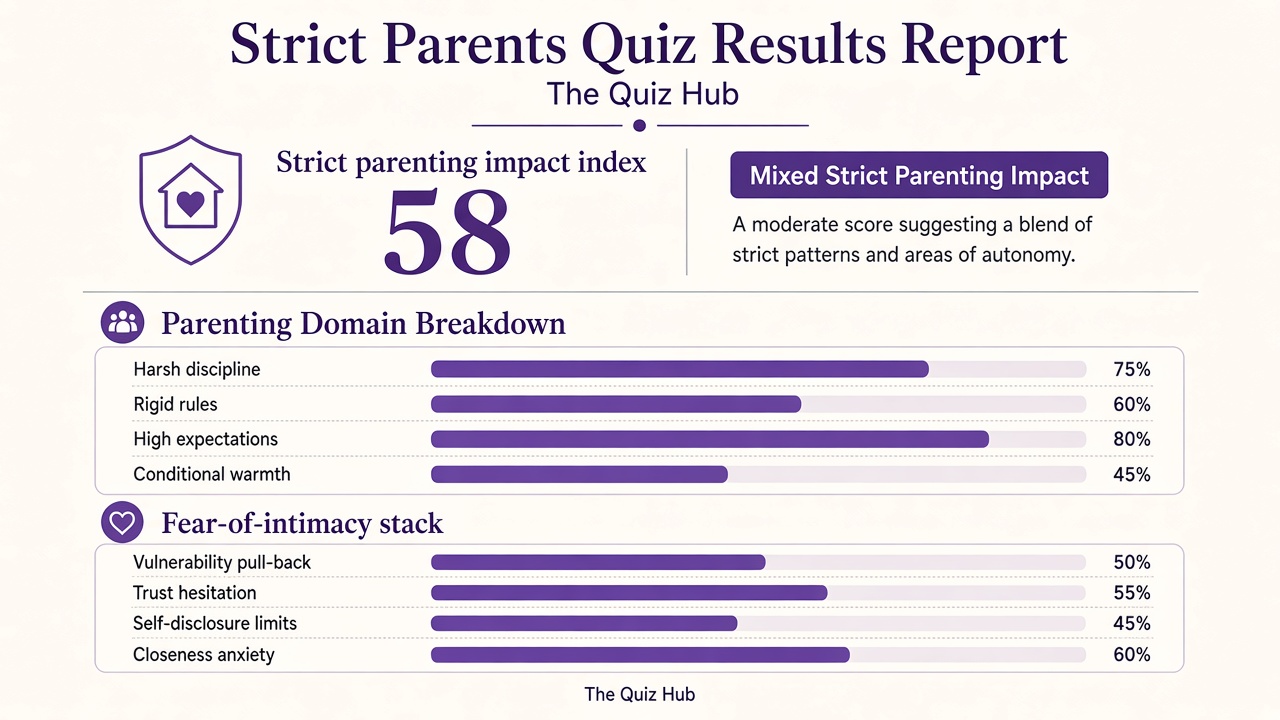
What your report looks like
What this quiz can and cannot tell you
Can tell you
- How often scapegoat-style patterns showed up in this self-report screener
- A family scapegoat signal index with four domain bars plus fear-of-intimacy stack
- A starting point before therapy or boundary conversations
Cannot tell you
- Proof of abuse, trauma diagnosis, or what relatives intended
- Which sibling was objectively right in past conflicts
- Permanent family role labels
Why people search family scapegoat quizzes
People search am I the family scapegoat when holidays, group chats, or partner meetings replay old blame loops. The Quiz Hub built this as an original frequency screener with a parallel fear-of-intimacy stack, inspired by family systems language from Murray Bowen (1978), not a published clinical scapegoat scale.
Sample items ask how often relatives blamed you first, excluded you from plans, damaged your reputation, or treated your feelings as the problem.
| Test | Focus |
|---|---|
| Am I the favorite child quiz | Golden-child perks and parental favoritism instead of blame patterns |
| Are my parents strict quiz | Harsh discipline and rigid rules rather than scapegoat roles |
| Fear of intimacy quiz | Closeness avoidance after hurt without family role framing |
Am I The Family Scapegoat Quiz FAQ
What is a family scapegoat?
In family systems language, a scapegoat is the member who gets blamed, excluded, or labeled as the problem when tension rises. This quiz measures how often you report those patterns in your family of origin. It is not a clinical diagnosis.
What does this quiz measure?
Twenty-two frequency items on blame assignment, exclusion, reputation damage, and emotional outcast treatment, plus a fear-of-intimacy stack chart. You receive a family scapegoat signal index from 0 to 100.
Can this quiz prove my family abused me?
No. The index describes self-reported pattern frequency on this screener. Licensed clinicians evaluate trauma and abuse through interviews and history, not online quizzes.
How is this different from the favorite child quiz?
The favorite child quiz screens golden-child perks, double standards, and parental favoritism. This quiz focuses on blame, exclusion, and damaged reputation among relatives.
What should I do with a higher scapegoat band?
Consider licensed family or trauma therapy, especially if patterns continue in adult relationships. If you feel unsafe, call or text 988 (US) or your local crisis line.
Who reviewed this content?
Dr. Elena Vasquez, PhD, reviewed the test framing and result explanations. See our editorial policy for review standards.
Reviewed by