What this am I too sick to go to work quiz measures
This am I too sick to go to work quiz estimates how often symptom and function patterns in the past 48 hours suggest rest before work. Twenty-two frequency items group into physical symptom burden, energy depletion, contagious risk, and functional limits. Each item maps to a fear-of-intimacy stack layer. Your sick-day legitimacy index averages these patterns into a 0 to 100 score where higher numbers mean more frequent endorsement on this screener. It is not medical advice or sick-leave approval.
Physical symptom burden
Pain, fever feelings, nausea, congestion, and symptoms that break focus during tasks.
Energy depletion
Exhaustion, dizziness, brain fog, and needing rest after basic routines.
Contagious risk
Cough, sore throat, fever signs, and worry about spreading illness to coworkers.
Functional limits
Difficulty sitting, driving, or performing job tasks safely for a full shift.
How it works
Answer 22 frequency items
Rate each item from Never to Almost always for the past 48 hours. You click Next after each answer.
Items map to domains and intimacy stack
Answers accumulate percentages for four primary domains plus four fear-of-intimacy stack layers.
View index, band, and charts
Results show Lower, Mixed, or Higher signal bands with domain bars and stack chart.
Take the am i too sick to go to work quiz
Complete 22 items to receive your sick-day legitimacy index, domain bars, fear-of-intimacy stack chart, and band label.
What your result means
Your sick-day legitimacy index is the normalized total across all 22 items on a 0 to 100 scale. Higher scores mean more frequent symptom or function signals on this screener. This does not approve absence or diagnose illness.
| Band | Index range | Typical reading |
|---|---|---|
| Lower Sick-Day Legitimacy Signals | 0 to 35 | Fewer symptom signals in past 48 hours; still follow clinician advice |
| Mixed Sick-Day Legitimacy Signals | 36 to 65 | Blend of manageable symptoms and signs a lighter day may help |
| Higher Sick-Day Legitimacy Signals | 66 to 100 | Frequent symptom or function signals; medical guidance and rest may be warranted |
What your report looks like
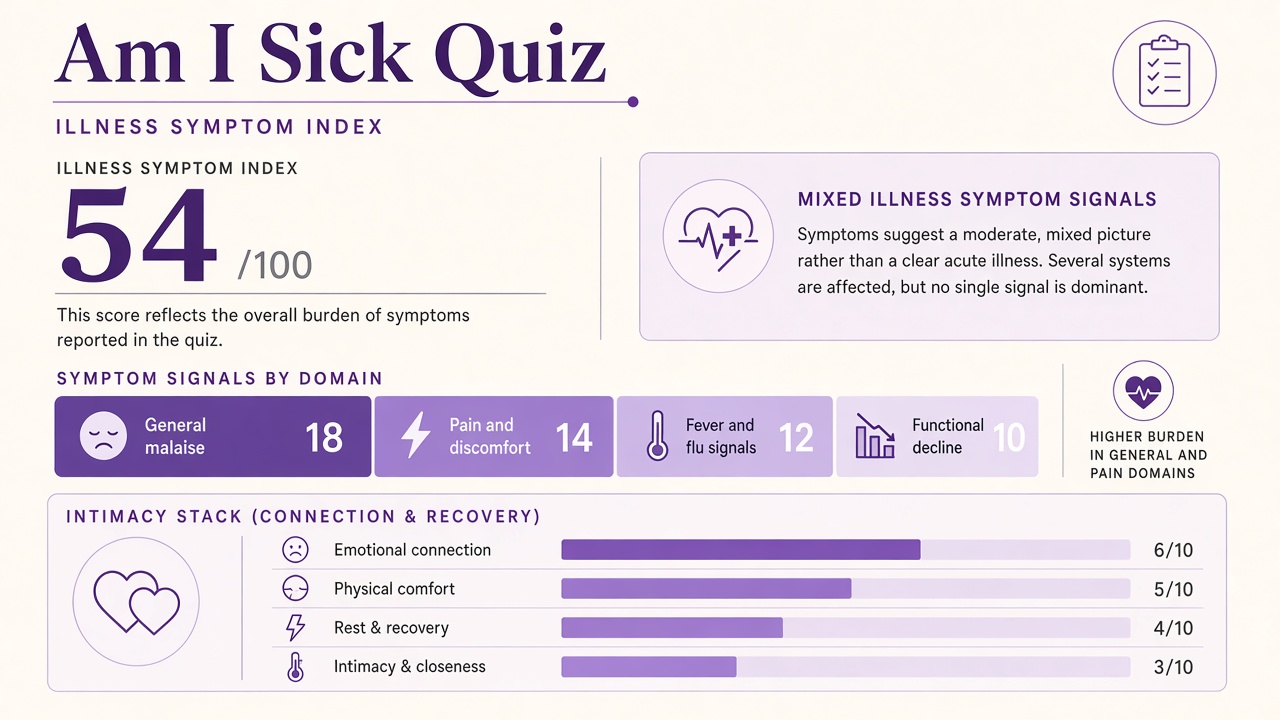
What this quiz can and cannot tell you
Can tell you
- How often symptom and function patterns showed up in the past 48 hours on this screener
- A sick-day legitimacy index with four domain bars plus fear-of-intimacy stack
- A starting point before calling a clinician or manager according to policy
Cannot tell you
- Medical diagnosis, COVID or flu confirmation, or employment decisions
- Sick-leave approval or what HR must grant
- Replacement for workplace attendance policies
Why people search sick day quizzes
People search am I too sick to go to work when guilt, deadlines, or remote-work blur makes rest feel optional. The Quiz Hub built this as an original 48-hour frequency screener with a parallel fear-of-intimacy stack, not workplace policy or a clinical instrument from CDC or OSHA.
Sample items ask about pain, energy crashes, contagious signs, and whether you could perform core tasks safely. Compare with our am I sick quiz for a two-week symptom frame on the mental health hub.
| Test | Focus |
|---|---|
| Am I sick quiz | Two-week illness symptom frequency rather than 48-hour work decision |
| Am I burnt out quiz | Weeks of exhaustion and cynicism rather than acute contagious illness |
| Why am I so tired quiz | Fatigue causes across sleep and stress, not same-day sick-leave framing |
Am I Too Sick To Go To Work Quiz FAQ
Can this quiz tell me whether to call in sick?
No. The sick-day legitimacy index describes self-reported symptom frequency in the past 48 hours on this screener. Follow clinician guidance and your employer sick-leave policy for actual absence decisions.
Is this medical advice?
No. This quiz is for education and self-reflection only. It cannot diagnose COVID, flu, or any illness. Seek urgent care for chest pain, trouble breathing, confusion, or high fever with stiff neck.
What does the sick-day legitimacy index mean?
A 0 to 100 score where higher numbers mean more frequent endorsement of physical symptoms, low energy, contagious signs, or functional limits in the past 48 hours on this screener.
Why include a fear-of-intimacy stack on a sick-day quiz?
Some workers hide illness to avoid disappointing managers or coworkers. The stack chart shows parallel closeness-guarding layers that may pair with pushing through symptoms.
How is this different from the am I sick quiz?
The am I sick quiz uses a two-week symptom frame for general illness concern. This quiz focuses on the past 48 hours and work-function limits, still without medical or HR advice.
Who reviewed this content?
Dr. Elena Vasquez, PhD, reviewed the test framing and result explanations. See our editorial policy for review standards.
Reviewed by