What this rudeness tendency quiz measures
This am I rude quiz estimates how strongly you agree with statements about blunt communication, dismissive tone, boundary aggression toward others, and impatience with interrupting. Twenty-two original agreement items group into four domains inspired by communication researcher Deborah Tannen on direct vs indirect style clashes and conflict habits studied in workplace civility training from the U.S. Equal Employment Opportunity Commission guidance on respectful conduct. Each item also maps to a fear-of-intimacy stack layer. Your rudeness tendency index averages these patterns into a 0 to 100 score where higher numbers mean more frequent rude habit signals on this screener.
Blunt communication
Saying harsh truths without softening, skipping greetings, and using tone that lands colder than you intend
Dismissive tone
Eye rolls, sarcasm that stings, minimizing others' feelings, and acting bored when people share news
Boundary aggression
Snapping when inconvenienced, punishing small mistakes, and treating service workers as obstacles
Impatience and interrupting
Cutting people off, finishing their sentences, rushing them, and showing visible irritation in lines
How it works
Three steps from first question to your rudeness tendency report with domain bars and fear-of-intimacy stack.
Answer 22 agreement items
Rate how much you agree with each statement about tone and impatience habits, from Strongly disagree to Strongly agree.
Items map to rudeness domains and intimacy stack
Your answers accumulate percentages for blunt communication, dismissive tone, boundary aggression, and impatience interrupting, plus four fear-of-intimacy stack layers.
View band and dual charts
Results show Lower, Mixed, or Higher Rudeness Tendency Signals with domain bars and a fear-of-intimacy stack chart.
Take the am I rude quiz
Rate 22 statements about blunt honesty, dismissive habits, snapping under stress, and interrupting. Your answers produce a rudeness tendency index from 0 to 100, a fear-of-intimacy stack index, four domain scores, and a band label for honest reflection.
Opens in a focused modal. No account required. Results stay on screen.
What your rudeness tendency result means
Your rudeness tendency index is the normalized total across all 22 items on a 0 to 100 scale, with reverse scoring on civility items so higher scores mean more frequent rude habit patterns on this screener.
| Band | Index range | Typical reading |
|---|---|---|
| Lower Rudeness Tendency Signals | 0 to 35 | Fewer blunt and dismissive habits; may still include cultural directness |
| Mixed Rudeness Tendency Signals | 36 to 65 | Blend of directness and harsh moments; domain chart shows primary trigger style |
| Higher Rudeness Tendency Signals | 66 to 100 | Frequent blunt, dismissive, and impatient habits on this screener |
What your rudeness tendency report looks like
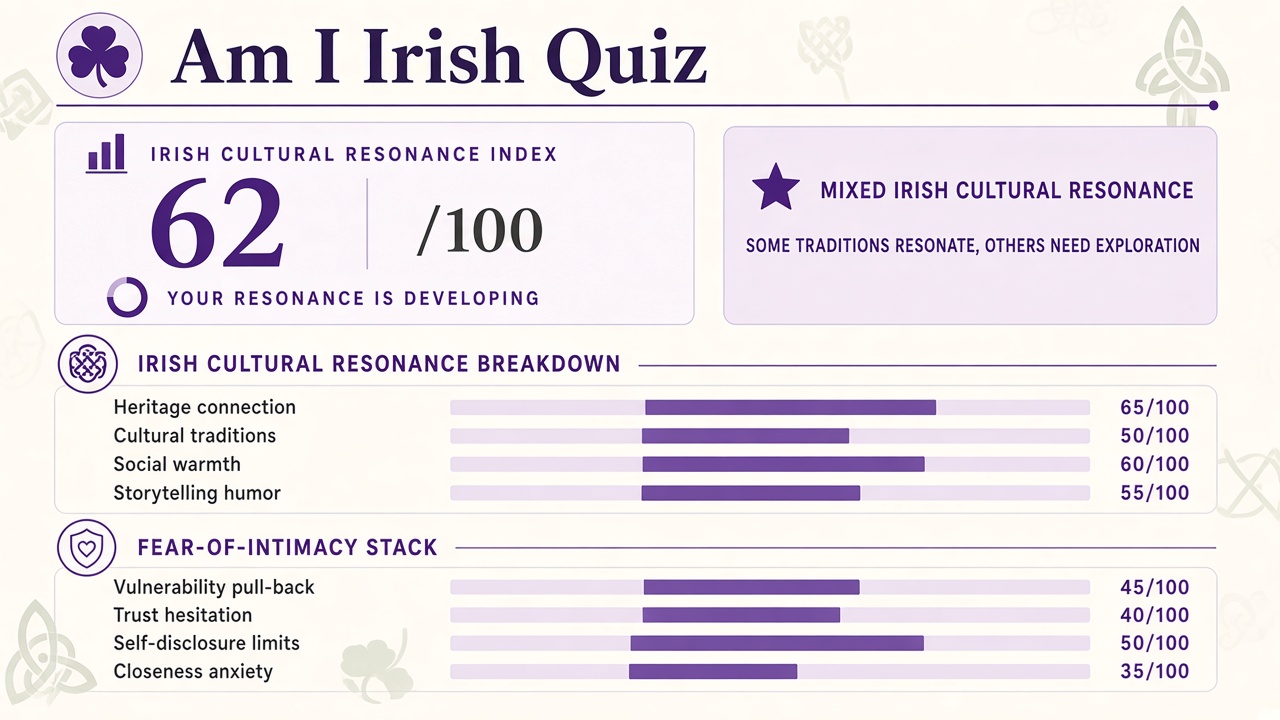
After all 22 items, you get a rudeness tendency index from 0 to 100, a band label, four domain bars, and a fear-of-intimacy stack chart.
What this quiz can and cannot tell you
Can tell you
- How often blunt, dismissive, aggressive, and impatient habits showed up in your self-report
- A rudeness tendency index and fear-of-intimacy stack index with domain bars
- Which domain feels strongest when stress hits your tone
- A starting point for feedback conversations with people you trust
Cannot tell you
- Whether every person experiences you as rude in every context
- A diagnosis of narcissism, ADHD irritability, or any personality disorder
- Whether cultural directness equals rudeness in all communities
- Excuses for harassment, bullying, or discrimination
Directness, dismissive tone, and honest screening limits
Communication researcher Deborah Tannen documented how direct and indirect conversational styles clash across regions and workplaces, so blunt honesty that feels normal to you may read as rude to someone else. Workplace civility guidance from the U.S. Equal Employment Opportunity Commission emphasizes respectful conduct even when disagreement is legitimate.
The Quiz Hub built this am I rude quiz as an original self-report screener plus FOIS-style intimacy avoidance layers. Our am I mean quiz screens hostile intent patterns. The am I nice quiz maps warmth and consideration habits from the opposite angle.
| The Quiz Hub test | What it adds |
|---|---|
| Am I mean quiz | Hostile and retaliatory intent patterns, not etiquette tone alone |
| Am I nice quiz | Warmth and consideration habits, not blunt communication screening |
| Am I judgemental quiz | Critical and moralizing judgment habits, not interrupting focus |
| Fear of intimacy quiz | General closeness avoidance, not impatient tone with strangers |
| This quiz | Rudeness tendency index plus fear-of-intimacy stack for blunt talk, dismissive tone, aggression, and interrupting |
Sample items include whether you correct people in public or snap at service workers when lines move slowly. High blunt communication with high closeness anxiety on the stack often lands in Mixed bands when sharp tone protects vulnerability more than malice. Read our editorial policy or browse the personality and psychology tests hub.
Am I Rude Quiz FAQ
What does the am I rude quiz measure?
Twenty-two original agreement items ask about blunt communication, dismissive tone, boundary aggression, and impatience with interrupting. Each item also maps to a fear-of-intimacy stack layer. You receive a rudeness tendency index from 0 to 100 where higher scores mean more frequent rude habit signals on this screener.
Does being direct mean I am rude?
Not always. Cultural and workplace norms differ. This quiz measures self-reported habits such as public correction, sarcasm that stings, and snapping at service workers, not every form of honest speech.
What is the fear-of-intimacy stack on this quiz?
The fear-of-intimacy stack is a second results chart inspired by FOIS-style intimacy avoidance themes, adapted to sharp tone that may guard vulnerability when closeness feels risky.
How is this different from the am I mean quiz?
The am I mean quiz screens hostile intent, retaliation, and conditional kindness patterns. This am I rude quiz focuses on tone, dismissiveness, and impatience habits that may hurt feelings without hostile goals.
Can this quiz diagnose narcissism or ADHD?
No. This screener cannot diagnose any personality or neurodevelopmental condition. It describes self-reported communication habits for reflection only.
Who reviewed this content?
Dr. James Whitfield, PhD, reviewed the test framing and result explanations. See our editorial policy for review standards.
Who reviewed this content?
Dr. James Whitfield, reviewed the test framing and result explanations. See our editorial policy for review standards.
Reviewed by