What this engagement readiness quiz measures
This am I ready to get engaged quiz estimates how strongly you agree with statements about partner fit, commitment clarity, practical readiness for shared life plans, and family or social alignment before engagement. Twenty-two original agreement items group into four domains inspired by premarital research from John Gottman on conflict repair and financial disagreement risk, plus counselor guidance on timeline and family boundary talks before proposals. Each item also maps to a fear-of-intimacy stack layer. Your engagement readiness index averages these patterns into a 0 to 100 score where higher numbers mean stronger readiness signals on this screener.
Partner fit
Shared values, conflict repair, trust, affection, and daily life compatibility with your current partner
Commitment clarity
Clear desire to marry this person, not vague someday fantasy or pressure from timelines
Practical readiness
Finances, living plans, career stability, and honest talks about money, kids, and location
Family and social alignment
How families, faith communities, and close friends react to engagement and long-term plans
How it works
Three steps from first question to your engagement readiness report with domain bars and fear-of-intimacy stack.
Answer 22 agreement items
Rate how much you agree with each statement about your current partner and marriage plans, from Strongly disagree to Strongly agree. You click Next after each answer; nothing auto-advances.
Items map to engagement domains and intimacy stack
Your answers accumulate percentages for partner fit, commitment clarity, practical readiness, and family social alignment, plus four fear-of-intimacy stack layers.
View band and dual charts
Results show Lower, Mixed, or Higher Engagement Readiness with domain bars and a fear-of-intimacy stack chart.
Take the am I ready to get engaged quiz
Rate 22 statements about trust, commitment clarity, money talks, and family alignment with your current partner. Your answers produce an engagement readiness index from 0 to 100, a fear-of-intimacy stack index, four domain scores, and a band label for honest reflection.
Opens in a focused modal. No account required. Results stay on screen.
What your engagement readiness result means
Your engagement readiness index is the normalized total across all 22 items on a 0 to 100 scale, with reverse scoring on doubt and avoidance items so higher scores mean stronger engagement readiness patterns on this screener. The fear-of-intimacy stack index uses inverted scoring on the same answers so higher stack scores mean more closeness-guarding patterns on these items.
| Band | Index range | Typical reading |
|---|---|---|
| Lower Engagement Readiness | 0 to 35 | Fewer fit, clarity, and planning habits; common during stress or early dating |
| Mixed Engagement Readiness | 36 to 65 | Blend of partnership strength and planning gaps; domain chart shows priority talks |
| Higher Engagement Readiness | 66 to 100 | Frequent fit, clarity, practical, and alignment habits on this screener |
What your engagement readiness report looks like
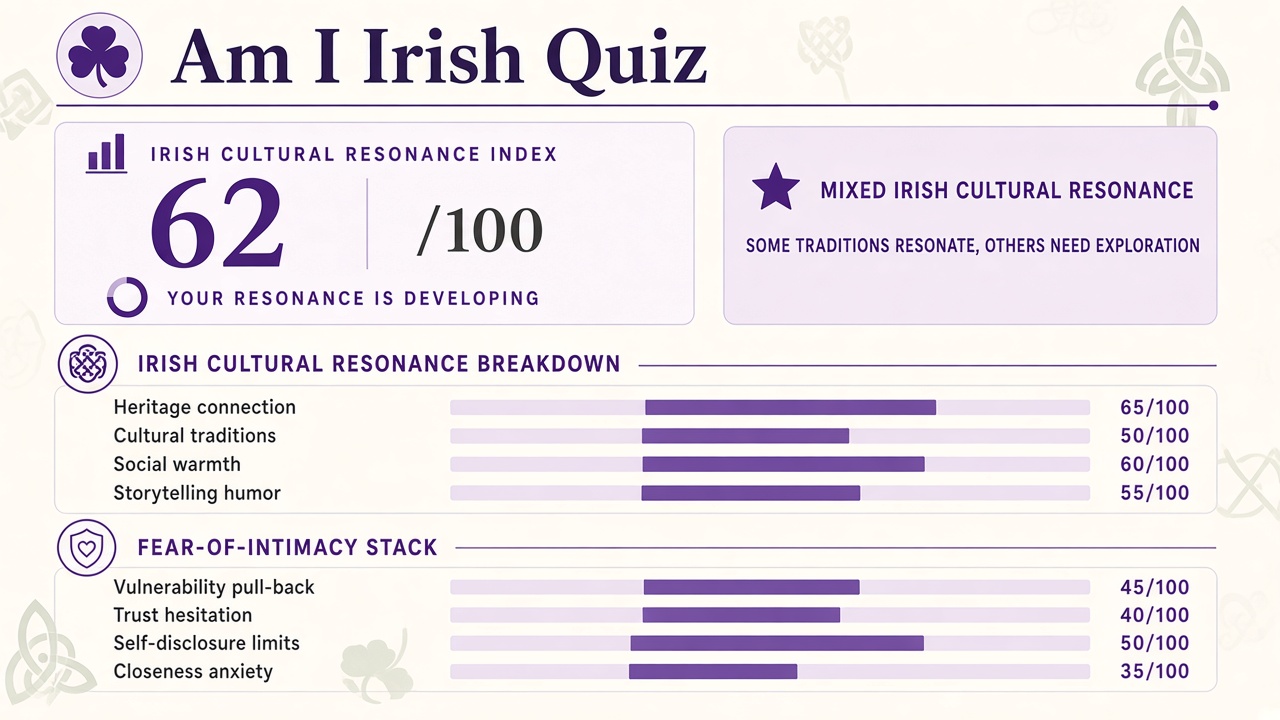
After all 22 items, you get an engagement readiness index from 0 to 100, a band label, four domain bars, and a fear-of-intimacy stack chart with vulnerability pull-back, trust hesitation, self-disclosure limits, and closeness anxiety layers.
What this quiz can and cannot tell you
Can tell you
- How often partner fit, commitment clarity, practical, and alignment habits showed up in your self-report
- An engagement readiness index and fear-of-intimacy stack index with domain bars
- Which readiness domain feels strongest or weakest before proposal conversations
- A starting point for partner talks about timing, not a command to buy a ring
Cannot tell you
- Whether your partner wants to get engaged on your timeline
- Whether families or faith communities will approve or celebrate
- Whether marriage will succeed or divorce risk is low
- A substitute for premarital counseling, financial planning, or abuse screening
Partner fit, proposal timing, and honest readiness limits
Relationship researcher John Gottman found that couples who repair conflict gently and discuss money openly fare better long term than couples who look perfect in public but stonewall at home. Premarital counselors often delay engagement talks when practical readiness gaps hide behind romantic momentum or social timeline pressure.
The Quiz Hub built this am I ready to get engaged quiz as an original self-report screener plus FOIS-style intimacy avoidance layers from Descutner and Thelen (1991). Our am I ready to date again quiz screens post-breakup healing before new romance. The compatibility test maps broader partner fit across multiple domains rather than engagement-specific planning.
| The Quiz Hub test | What it adds |
|---|---|
| Am I ready to date again quiz | Post-breakup healing and openness, not current partner engagement planning |
| Compatibility test | Broad partner fit across domains, not engagement timeline and family alignment |
| Attachment style test | Attachment closeness patterns, not proposal readiness with current partner |
| Fear of intimacy quiz | General closeness avoidance, not marriage-specific practical talks |
| This quiz | Engagement readiness index plus fear-of-intimacy stack for partner fit, clarity, practical plans, and alignment |
Sample items include whether you would accept a proposal mainly from fear of loss, or whether you have discussed budgets and family boundaries honestly. High partner fit with high closeness anxiety on the stack often lands in Mixed bands when daily affection feels easy but marriage talks trigger guarded vulnerability. Read our editorial policy or browse the relationships and dating tests hub.
Am I Ready to Get Engaged Quiz FAQ
What does the am I ready to get engaged quiz measure?
Twenty-two original agreement items ask about partner fit, commitment clarity, practical readiness for shared plans, and family or social alignment before engagement. Each item also maps to a fear-of-intimacy stack layer. You receive an engagement readiness index from 0 to 100 where higher scores mean stronger readiness signals on this screener.
Does a higher engagement readiness index mean I should propose or accept a proposal now?
No. Higher scores mean your responses suggest more frequent readiness habits on this screener. Your partner's timeline, family context, and unresolved conflict still matter. This quiz cannot replace couples counseling or mutual agreement.
What is the fear-of-intimacy stack on this quiz?
The fear-of-intimacy stack is a second results chart inspired by FOIS-style intimacy avoidance themes from Descutner and Thelen (1991), adapted to marriage fear and guarded vulnerability during commitment talks.
How is this different from the compatibility test?
The compatibility test screens broad partner fit across multiple relationship domains for general use. This engagement quiz focuses on marriage-specific clarity, practical planning, and family alignment with your current partner.
Can this quiz tell me if my partner will say yes?
No. Partner responses, surprise preferences, and private doubts are facts this screener cannot measure. Use results to prepare honest conversations, not to predict proposal outcomes.
Who reviewed this content?
Dr. Elena Vasquez, PhD, reviewed the test framing and result explanations. See our editorial policy for review standards.
Who reviewed this content?
Dr. Elena Vasquez, reviewed the test framing and result explanations. See our editorial policy for review standards.
Reviewed by