What this intoxication habit quiz measures
This am I high quiz estimates how often physical sensation cues, mind state shifts, social disclosure habits, and use rhythm patterns show up when you reflect on typical sessions. Twenty original frequency items group into four domains inspired by cannabis intoxication research from Hart and van Gorp (1986) on acute effects and National Institute on Drug Abuse (2024) public education themes on tolerance and ritual use: physical sensation cues, mind state shifts, social disclosure habits, and use rhythm patterns. Each item also maps to a fear-of-intimacy stack layer so you can see whether vulnerability pull-back, trust hesitation, self-disclosure limits, or closeness anxiety pairs with hiding use or numbing social stress. Your intoxication habit index averages these patterns into a 0 to 100 score where higher numbers mean more frequent habit signals on this screener.
Physical sensation cues
Dry mouth, slowed reactions, couch-lock heaviness, munchies cravings, and other body-shift signals.
Mind state shifts
Time drift, thought loops, vivid senses, forgetful room walks, and fuzzy focus patterns.
Social disclosure habits
Harder laughing, oversharing, hiding use, filtered tone slips, and eye-contact avoidance.
Use rhythm patterns
Ritual schedules, rising tolerance, stress-driven use, and one-more-hit loops.
How it works
Three steps from first question to your intoxication habit report with fear-of-intimacy stack. Click Start Quiz to open the interactive quiz in a full-screen modal.
Answer 20 frequency items
Rate how often each habit shows up on a typical session or right now, from Never to Almost always. You click Next after each answer; nothing auto-advances.
Items map to habit domains and intimacy stack
Your answers accumulate percentages for physical cues, mind drift, social spillover, and use rituals, plus four fear-of-intimacy stack layers.
View band and dual charts
Results show Lower, Mixed, or Higher Intoxication Habits with domain bars and a fear-of-intimacy stack chart. Higher index means more frequent habit signals on this screener.
Take the am I high quiz
Rate 20 statements about body cues, mind drift, social spillover, and use rituals. Your answers produce an intoxication habit index from 0 to 100, a fear-of-intimacy stack index, four domain scores, and a band label for meme banter or honest self-checks.
Opens in a focused modal. No account required. Results stay on screen.
What your intoxication habit result means
Your intoxication habit index is the normalized total across all 20 items on a 0 to 100 scale, with reverse scoring on sober-steady items so higher scores mean more frequent habit signals overall. The fear-of-intimacy stack index uses the same answers mapped to vulnerability, trust, disclosure, and closeness anxiety layers where higher stack scores mean more avoidance patterns. Domain bars show endorsement rates so you can see whether physical cues, mind drift, social spillover, or use rituals drives your result most.
| Band | Index range | Typical reading |
|---|---|---|
| Lower Intoxication Habits | 0 to 35 | Fewer body, mind, social, or ritual habit signals; may reflect abstinence or private use not reported |
| Mixed Intoxication Habits | 36 to 65 | Blend of hazy sessions and sober stretches; domain and stack charts show what spikes most |
| Higher Intoxication Habits | 66 to 100 | Frequent cottonmouth, time drift, oversharing, hiding use, or ritual patterns on this screener |
What your intoxication habit report looks like
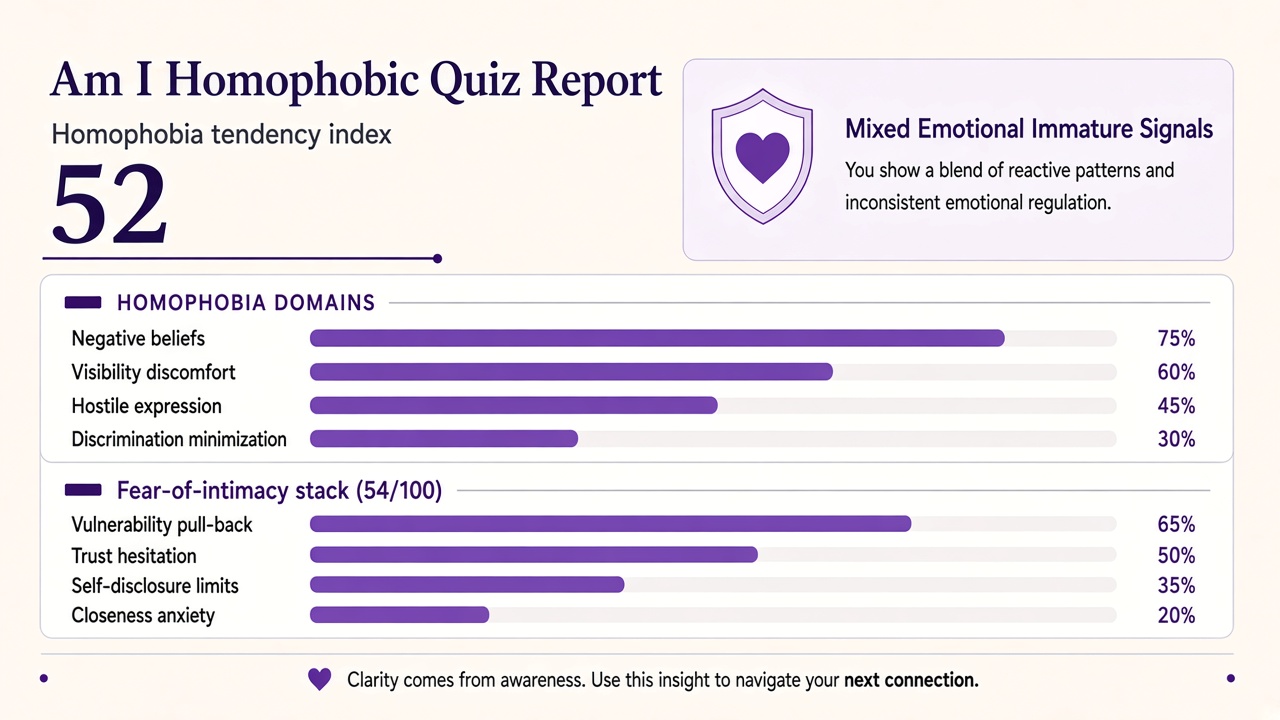
After all 20 items, you get an intoxication habit index from 0 to 100, a band label, four habit domain bars, and a fear-of-intimacy stack chart with vulnerability pull-back, trust hesitation, self-disclosure limits, and closeness anxiety layers. Percentages reflect how you report sessions, not a lab toxicology readout.
What this quiz can and cannot tell you
Can tell you
- How often physical, mental, social, and ritual intoxication habit signals showed up in your self-report
- An intoxication habit index and fear-of-intimacy stack index with domain bars
- Which habit domain or intimacy stack layer feels strongest in your current patterns
- A starting point for honest self-checks before talking to friends or harm-reduction resources
Cannot tell you
- Whether you are legally impaired, DUI-safe, or positive on a workplace drug screen
- Blood THC levels, medication interactions, or clinical substance use disorder diagnosis
- Whether sleep debt, anxiety, or caffeine alone explains your fuzzy feelings
- What dose or product is safe for your body without medical guidance
Body cues, ritual use, and the fear-of-intimacy stack
Researchers Hart and van Gorp (1986) documented how acute cannabis effects can shift time perception, motor coordination, and subjective intoxication within minutes, while public health educators at the National Institute on Drug Abuse (2024) note that tolerance and ritual timing change how people describe their own use over months. In group chats, the meme question am I high right now mixes real body signals with joke answers, and many people hide sessions from coworkers or family while oversharing with close friends.
The Quiz Hub built this am I high quiz as an original self-report screener inspired by those acute-effect themes plus FOIS-style intimacy avoidance layers from Descutner and Thelen (1991), not a reproduction of any single published intoxication scale. Readers often compare it to sibling tools on this site. Our brainrot quiz maps Gen Z meme personas rather than body-cue habits. The am I an NPC quiz screens background-character social habits with a parallel fear-of-intimacy stack rather than intoxication domains. The am I good at basketball quiz uses the same index-plus-stack model for pickup court habits instead of session body cues.
| The Quiz Hub test | What it adds |
|---|---|
| Brainrot quiz | Internet humor personas and meme archetypes, not body cues or use rituals |
| Am I an NPC quiz | Background-character social habits, not intoxication habit domains |
| Am I a baby quiz | Comfort dependency and responsibility dodge, not session body cues |
| Pick me quiz | Dating meme approval seeking, not mind drift or ritual use |
| Fear of intimacy quiz | General intimacy avoidance across vulnerability and trust, not intoxication-specific habits |
| This am I high quiz | Intoxication habit index plus fear-of-intimacy stack for body cues, mind drift, social spillover, and use rituals |
Sample item types include frequency ratings such as whether you lose track of time during a scroll session, or whether you hide use from someone in the room. High mind-drift scores with high closeness anxiety on the stack often land in Mixed Intoxication Habits bands when social settings make you guard eye contact. Strong physical cues with low use-ritual scores can split domain bars when sessions are rare but intense. Read how we review quizzes in our editorial policy or browse more tools on our fun and novelty hub.
Am I high quiz FAQ
What does the am I high quiz measure?
Twenty original frequency items ask how often physical sensation cues, mind state shifts, social disclosure habits, and use rhythm patterns show up on a typical session or right now. Each item also maps to a fear-of-intimacy stack layer: vulnerability pull-back, trust hesitation, self-disclosure limits, and closeness anxiety. You receive an intoxication habit index from 0 to 100 where higher scores mean more frequent habit signals on this screener, plus a parallel stack index.
Does a higher intoxication habit index mean I am high right now?
No. On this screener, a higher index means you endorsed more dry-mouth cues, time drift, oversharing, hiding use, or ritual-use items in your self-report. Sleep debt, anxiety, medication, or a long day can mimic some feelings without any substance involved. This tool cannot measure blood levels or legal impairment.
What is the fear-of-intimacy stack on this quiz?
The fear-of-intimacy stack is a second results chart inspired by FOIS-style intimacy avoidance themes from Descutner and Thelen (1991), adapted to intoxication habit framing. Each of the 20 items maps to one of four stack layers showing how closeness guarding may pair with use habits: hiding vulnerability, testing trust, limiting disclosure, or worrying when bonds feel too close. Higher stack scores mean more avoidance patterns on these items.
How is this different from BuzzFeed-style yes or no high quizzes?
Many viral lists ask one-off meme questions with no scoring model. This quiz uses twenty frequency items, four intoxication habit domains, a 0 to 100 index, domain bars, and a fear-of-intimacy stack chart so you can see which pattern cluster drives your result most.
How is this different from the brainrot quiz?
The brainrot quiz maps Gen Z internet humor personas with scenario choices and meme archetype matches. This am I high quiz uses frequency items about body cues, mind drift, social spillover, and use rituals with an intoxication habit index and parallel fear-of-intimacy stack in one report.
Can this quiz replace a drug test or medical advice?
No. The intoxication habit index describes self-reported patterns on this abbreviated entertainment screener. Lab tests, clinicians, and harm-reduction counselors see tolerance, interactions, and safety risks that self-report misses. Do not drive or operate machinery when impaired.
Who reviewed this content?
Dr. James Whitfield, PhD, reviewed the test framing and result explanations. See our editorial policy for review standards.
Reviewed by