What this haunted experience quiz measures
This am I being haunted quiz estimates how often sensory signs, environmental shifts, emotional dread, and pattern validation events show up in your home or daily life. Twenty original frequency items group into four domains inspired by parapsychologist James Houran on haunted-place phenomenology and environmental psychologist Richard Wiseman on infrasound and suggestion in spooky settings: sensory signs, environmental signs, emotional dread, and pattern validation. Each item also maps to a fear-of-intimacy stack layer so you can see whether vulnerability pull-back, trust hesitation, self-disclosure limits, or closeness anxiety pairs with dread you handle alone. Your haunted experience signal index averages these patterns into a 0 to 100 score where higher numbers mean more haunted signals on this screener.
Sensory signs
Footsteps, whispers, touches, shadow movement, and hearing your name when alone.
Environmental signs
Cold spots, open doors, flickering lights, and objects moved from where you left them.
Emotional dread
Urgent need to leave a room, watched feelings, bed presence, and avoiding areas at night.
Pattern validation
Others hearing odd sounds, repeating timing, private logs, and shared witness moments.
How it works
Three steps from first question to your haunted experience report with fear-of-intimacy stack. Click Start Quiz to open the interactive quiz in a full-screen modal.
Answer 20 frequency items
Rate how often each haunted-pattern event showed up at home, from Never to Almost always. You click Next after each answer; nothing auto-advances.
Items map to haunted domains and intimacy stack
Your answers accumulate percentages for sensory signs, environmental signs, emotional dread, and pattern validation, plus four fear-of-intimacy stack layers.
View band and dual charts
Results show Lower, Mixed, or Higher Haunted Signals with domain bars and a fear-of-intimacy stack chart. Higher index means more haunted signals on this screener.
Take the am I being haunted quiz
Rate 20 statements about strange sounds, cold spots, dread in certain rooms, and repeating patterns. Your answers produce a haunted experience signal index from 0 to 100, a fear-of-intimacy stack index, four domain scores, and a band label for group-chat reflection or honest home talks.
Opens in a focused modal. No account required. Results stay on screen.
What your haunted experience result means
Your haunted experience signal index is the normalized total across all 20 items on a 0 to 100 scale, with reverse scoring on skeptical-check items so higher scores mean more haunted signals overall. The fear-of-intimacy stack index uses the same answers mapped to vulnerability, trust, disclosure, and closeness anxiety layers where higher stack scores mean more avoidance patterns. Domain bars show endorsement rates so you can see whether sensory signs, environmental signs, emotional dread, or pattern validation drives your result most.
| Band | Index range | Typical reading |
|---|---|---|
| Lower Haunted Signals | 0 to 35 | Fewer spooky events on this screener; one-off scares or old-house noises can still spike a few items |
| Mixed Haunted Signals | 36 to 65 | Blend of mundane house quirks and unsettling events; domain and stack charts show where dread feels strongest |
| Higher Haunted Signals | 66 to 100 | Frequent unexplained sounds, cold spots, watched feelings, or repeating logs that can feel like haunting on this screener |
What your haunted experience report looks like
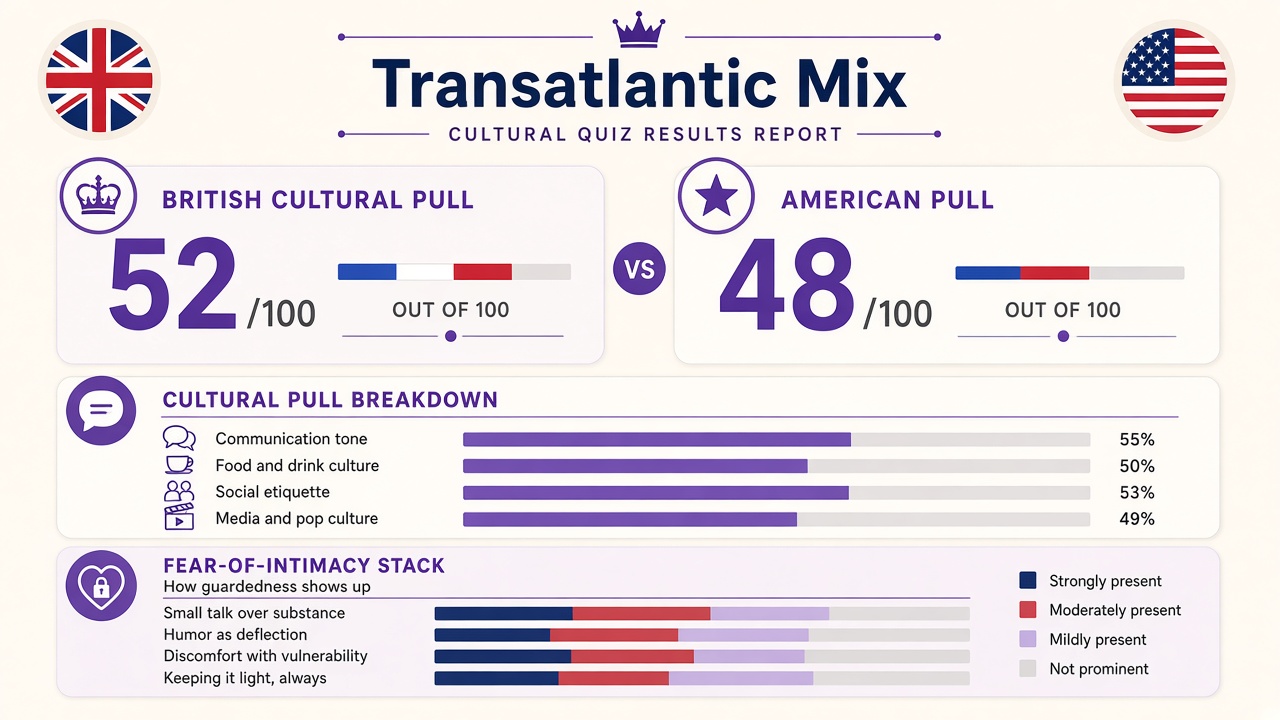
After all 20 items, you get a haunted experience signal index from 0 to 100, a band label, four haunted domain bars, and a fear-of-intimacy stack chart with vulnerability pull-back, trust hesitation, self-disclosure limits, and closeness anxiety layers. Percentages reflect how you report home events, not proof of spirits.
What this quiz can and cannot tell you
Can tell you
- How often sensory, environmental, dread, and pattern validation events showed up in your self-report
- A haunted experience signal index and fear-of-intimacy stack index with domain bars
- Which haunted domain or intimacy stack layer feels strongest in your current home experience
- A starting point for checking wiring, pests, sleep habits, or talking with someone you trust
Cannot tell you
- Whether spirits, ghosts, or paranormal entities share your home
- Whether every bump is mundane without a property inspection
- Whether you need psychiatric care without a licensed clinician who knows your history
- What a paranormal team would find without controlled observation and equipment
Haunted homes, mundane causes, and the fear-of-intimacy stack
Parapsychologist James Houran studied haunted-place reports and found that recurring sensory cues, environmental shifts, and emotional dread often cluster in specific rooms even when investigators disagree about cause. Psychologist Richard Wiseman showed in haunted-house experiments that infrasound, poor lighting, and suggestion can produce watched feelings without any supernatural claim. Sleep loss, carbon monoxide, house settling, and neighbor noise explain many events that feel paranormal at 2 a.m.
The Quiz Hub built this am I being haunted quiz as an original self-report screener inspired by those haunted-place phenomenology themes plus FOIS-style intimacy avoidance layers from Descutner and Thelen (1991), not a reproduction of any single published paranormal scale. Readers often compare it to sibling tools on this site. Our am I a hypochondriac quiz screens body symptom checking rather than home-based spooky events. The am I delusional quiz measures conviction strength around unusual beliefs rather than frequency of footsteps or cold spots. The am I goth quiz covers aesthetic and mood affinity rather than haunted-place signals.
| The Quiz Hub test | What it adds |
|---|---|
| Am I a hypochondriac quiz | Health anxiety and body checking, not footsteps or cold spots at home |
| Am I delusional quiz | Belief conviction across domains, not haunted frequency domains |
| Am I goth quiz | Dark aesthetic pull and mood style, not environmental haunted signals |
| Am I dead inside quiz | Emotional numbness and flat affect, not sensory haunted signs |
| Fear of intimacy quiz | General intimacy avoidance across vulnerability and trust, not haunted habit framing |
| This haunted quiz | Haunted experience signal index plus fear-of-intimacy stack for sensory, environmental, dread, and pattern domains |
Sample item types include frequency ratings such as whether you felt sudden cold spots in rooms that were warm moments earlier, or whether you kept a private log because similar events happened more than once. High emotional dread with high self-disclosure limits on the stack often lands in Mixed or Higher Haunted Signals bands. One roommate hearing the same sound can raise pattern validation without confirming spirits. Read how we review quizzes in our editorial policy or browse more tools on our fun and novelty hub.
Am I being haunted quiz FAQ
What does the am I being haunted quiz measure?
Twenty original frequency items ask how often sensory signs, environmental shifts, emotional dread, and pattern validation events show up in your home or daily life. Each item also maps to a fear-of-intimacy stack layer: vulnerability pull-back, trust hesitation, self-disclosure limits, and closeness anxiety. You receive a haunted experience signal index from 0 to 100 where higher scores mean more haunted signals on this screener, plus a parallel stack index.
Does a higher haunted experience index prove my house is haunted?
No. On this screener, a higher index means you endorsed more unexplained sounds, cold spots, watched feelings, object shifts, or repeating pattern items. Old wiring, pets, carbon monoxide, sleep loss, and stress can mimic many of the same sensations. This quiz cannot confirm spirits, ghosts, or paranormal activity without ruling out mundane causes first.
What is the fear-of-intimacy stack on this quiz?
The fear-of-intimacy stack is a second results chart inspired by FOIS-style intimacy avoidance themes from Descutner and Thelen (1991), adapted to haunted-experience framing. Each of the 20 items maps to one of four stack layers showing how closeness guarding may pair with dread you handle alone: hiding vulnerability, testing trust, limiting disclosure, or worrying about being too close. Higher stack scores mean more avoidance patterns on these items.
How is this different from the am I a hypochondriac quiz?
The am I a hypochondriac quiz uses frequency items about body symptom checking, health anxiety, and medical reassurance seeking from clinical health anxiety themes. This am I being haunted quiz focuses on home-based sensory, environmental, dread, and pattern events with a parallel fear-of-intimacy stack chart in one report.
How is this different from the am I delusional quiz?
The am I delusional quiz screens conviction strength around unusual beliefs across several domains with a delusional thinking index. This haunted quiz focuses on frequency of spooky home events and whether you log, witness, or share them, not on diagnosing belief disorders.
Can this quiz tell me whether I need a paranormal investigation?
No. The haunted experience index describes self-reported patterns on this abbreviated screener. A property inspection for wiring, HVAC, carbon monoxide, and pests should come before any paranormal framing. Only trained investigators with controlled methods can assess claims beyond self-report.
Who reviewed this content?
Dr. James Whitfield, PhD, reviewed the test framing and result explanations. See our editorial policy for review standards.
Reviewed by