
What this drama queen quiz measures
This am I a drama queen quiz estimates how often conflict escalation, spotlight pull, reaction intensity, and narrative broadcast patterns show up when feelings or attention run high in your social life. Twenty original frequency items group into four domains inspired by conflict communication research from psychologist John Gottman on criticism escalation and social psychologist Mark Leary on interpersonal reactivity: conflict escalation, spotlight pull, reaction intensity, and narrative broadcast. Each item also maps to a fear-of-intimacy stack layer so you can see whether vulnerability pull-back, trust hesitation, self-disclosure limits, or closeness anxiety pairs with theatrical reactions. Your drama tendency index averages these patterns into a 0 to 100 score where higher numbers mean more dramatic habits on this screener.
Conflict escalation
Turning mild disagreements into full arguments, dredging old fights, and refusing to drop grievances until everyone hears your side.
Spotlight pull
Hurt when others get praise, steering hangouts back to your storyline, posting for reassurance, and talking over people when ignored.
Reaction intensity
Crying storms, shouting, catastrophizing setbacks, silent treatment, and assuming neutral tone was meant to hurt.
Narrative broadcast
Venting to multiple people before direct talks, sharing private details in group chats, vague drama posts, and recruiting sides.
How it works
Three steps from first question to your drama tendency report with fear-of-intimacy stack. Click Start Quiz to open the interactive quiz in a full-screen modal.
Answer 20 frequency items
Rate how often each pattern shows up when conflicts, attention, or feelings run high, from Never to Almost always. You click Next after each answer; nothing auto-advances.
Items map to drama domains and intimacy stack
Your answers accumulate percentages for conflict escalation, spotlight pull, reaction intensity, and narrative broadcast, plus four fear-of-intimacy stack layers.
View band and dual charts
Results show Lower, Mixed, or Higher Drama Tendency with domain bars and a fear-of-intimacy stack chart. Higher index means more dramatic habits on this screener.
Take the am I a drama queen quiz
Rate 20 statements about theatrical reaction habits in conflicts and social life. Your answers produce a drama tendency index from 0 to 100, a fear-of-intimacy stack index, four domain scores, and a band label for reflection or therapy conversation.
Opens in a focused modal. No account required. Results stay on screen.
What your drama tendency result means
Your drama tendency index is the normalized total across all 20 items on a 0 to 100 scale, with reverse scoring on calm-regulation items so higher scores mean more dramatic habits overall. The fear-of-intimacy stack index uses the same answers mapped to vulnerability, trust, disclosure, and closeness anxiety layers where higher stack scores mean more avoidance patterns. Domain bars show endorsement rates so you can see whether conflict escalation, spotlight pull, reaction intensity, or narrative broadcast drives your result most.
| Band | Index range | Typical reading |
|---|---|---|
| Lower Drama Tendency | 0 to 35 | Fewer theatrical reaction habits; stress or unfair treatment can still spike scores temporarily |
| Mixed Drama Tendency | 36 to 65 | Blend of expressive moments and habits that can feel dramatic; domain and stack charts show where closeness guarding shows up |
| Higher Drama Tendency | 66 to 100 | Frequent fight escalation, attention steering, intense reactions, or public airing on this screener |
What your drama queen report looks like
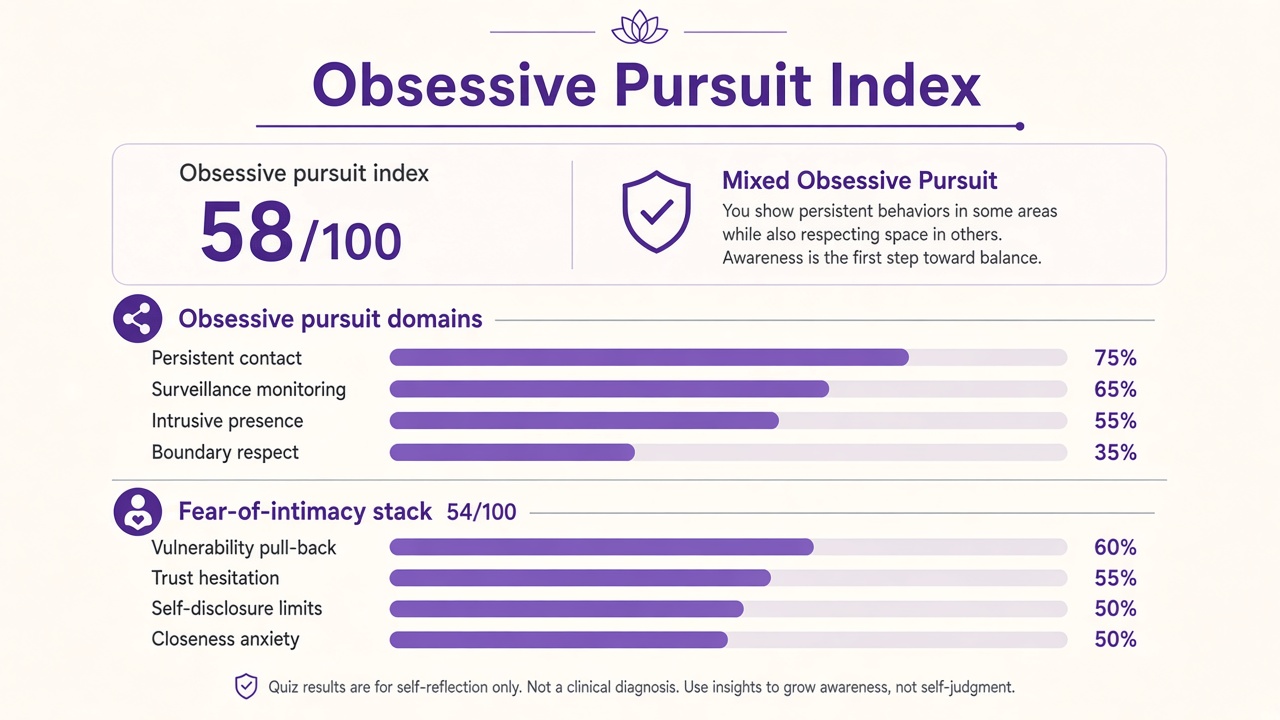
After all 20 items, you get a drama tendency index from 0 to 100, a band label, four drama domain bars, and a fear-of-intimacy stack chart with vulnerability pull-back, trust hesitation, self-disclosure limits, and closeness anxiety layers. Percentages reflect how you report reacting in conflicts, not a verdict on your personality.
What this quiz can and cannot tell you
Can tell you
- How often conflict escalation, spotlight pull, reaction intensity, and narrative broadcast patterns showed up in your self-report
- A drama tendency index and fear-of-intimacy stack index with domain bars
- Which drama domain or intimacy stack layer feels strongest in your current habits
- A starting point for therapy conversation about reactivity, public venting, and closeness guarding
Cannot tell you
- Whether every friend secretly thinks you are dramatic without their side of the story
- Whether you have borderline traits, narcissism, or any clinical diagnosis
- Whether relationships will end without honest dialogue and mutual effort
- What specific changes others want without honest conversation and trusted guidance
Drama queen memes, conflict escalation, and the fear-of-intimacy stack
Pop culture popularized the drama queen label for people who turn small slights into scenes, need the spotlight when others share news, or air private tension to a crowd before talking to the person involved. Psychologist John Gottman showed that criticism escalation and contempt patterns predict relationship strain over time, while social psychologist Mark Leary traced how people monitor rejection and may react loudly when attention feels threatened. In real life, posting for reassurance, storming out, or recruiting friends to pick sides can feel justified in the moment while closeness stays shallow underneath.
The Quiz Hub built this am I a drama queen quiz as an original self-report screener inspired by those conflict communication themes plus FOIS-style intimacy avoidance layers from Descutner and Thelen (1991), not a reproduction of any single published drama scale. Readers often compare it to sibling tools on this site. Our am I an energy vampire quiz screens emotional demand, reciprocity deficit, and drain patterns that wear others down. The pick me quiz maps dating meme self-presentation and approval seeking online. The am I an NPC quiz uses background blend and scripted dialogue items with the same fear-of-intimacy stack format.
| The Quiz Hub test | What it adds |
|---|---|
| Am I an energy vampire quiz | Emotional demand and reciprocity deficit, not fight escalation or spotlight pull |
| Pick me quiz | Dating meme self-presentation and approval seeking, not conflict escalation frequency items |
| Am I an NPC quiz | Background blend and scripted dialogue, not theatrical reaction intensity |
| Fear of intimacy quiz | General intimacy avoidance across vulnerability and trust, not drama meme framing |
| Am I toxic quiz | Broader interpersonal harm patterns, not theatrical reaction domains with stack chart |
| This drama queen quiz | Drama tendency index plus fear-of-intimacy stack for conflict escalation, spotlight pull, reaction intensity, and narrative broadcast |
Sample item types include frequency ratings such as whether you dredge up old fights during a new conflict, or whether you vent about a partner to multiple people before talking to them directly. High conflict escalation with high closeness anxiety on the stack often lands in Mixed or Higher Drama Tendency bands. Passionate advocacy with low narrative broadcast can split domain scores. Read how we review quizzes in our editorial policy or browse more tools on our fun and novelty hub.
Am I a drama queen quiz FAQ
What does the am I a drama queen quiz measure?
Twenty original frequency items ask how often conflict escalation, spotlight pull, reaction intensity, and narrative broadcast patterns show up when feelings or attention run high in your social life. Each item also maps to a fear-of-intimacy stack layer: vulnerability pull-back, trust hesitation, self-disclosure limits, and closeness anxiety. You receive a drama tendency index from 0 to 100 where higher scores mean more dramatic habits on this screener, plus a parallel stack index.
Does a higher drama tendency index mean I am toxic?
No. On this screener, a higher index means you endorsed more fight escalation, attention steering, intense reactions, or public airing items. Many expressive, passionate people score high without harming relationships. This quiz cannot prove how every friend experiences you or replace honest conversation.
What is the fear-of-intimacy stack on this quiz?
The fear-of-intimacy stack is a second results chart inspired by FOIS-style intimacy avoidance themes from Descutner and Thelen (1991), adapted to drama tendency framing. Each of the 20 items maps to one of four stack layers showing how closeness guarding may pair with loud reactions: hiding vulnerability, testing trust, limiting disclosure, or worrying about being too close. Higher stack scores mean more avoidance patterns on these items.
How is this different from the am I an energy vampire quiz?
The am I an energy vampire quiz uses frequency items about emotional demand, reciprocity deficit, and drain patterns that wear others down. This am I a drama queen quiz focuses on conflict escalation, spotlight pull, reaction intensity, and narrative broadcast with a parallel fear-of-intimacy stack chart in one report.
How is this different from the pick me quiz?
The pick me quiz uses agree-disagree items about dating meme self-presentation, approval seeking, and performative vulnerability online. This drama queen quiz uses how-often frequency items about fight escalation, attention steering, and public airing habits, not pick-me meme structure.
Can this quiz tell me if my friends think I am dramatic?
No. The drama tendency index describes self-reported patterns on this abbreviated entertainment screener. Context, mood, and relationship history all shape how habits land. Only people in your life can tell you how your reactions feel, ideally through honest conversation.
Who reviewed this content?
Dr. James Whitfield, PhD, reviewed the test framing and result explanations. See our editorial policy for review standards.
Reviewed by
