What this yandere test measures
This am I a yandere quiz screens six recreational domains associated with the yandere affection archetype in anime fandom. Four items cover obsessive attachment in stories. Four items cover jealousy intensity and rival arcs. Three items cover devotion extremes in dark romance fiction. Four items cover possessive fantasy and metaphorical ownership beats. Four items cover sweet facade versus dark thoughts duality. Five items cover boundary awareness, including heavily reverse-scored consent and healthy communication habits.
Obsessive devotion
All-consuming focus on one person in fiction, where missing someone reshapes the entire plot.
Jealousy and possession
Emotional pull toward jealousy arcs, rivals, and partner-as-mine story beats in anime romance.
Sweet versus dark
Interest in characters who look gentle in public but harbor obsessive inner monologue.
Boundaries and communication
Knowing fiction tropes differ from real consent, space, and healthy communication offline.
How it works
Three steps from first statement to your yandere band. Click Start Quiz to open the interactive yandere test in a full-screen modal.
Answer 24 statements
Rate how much you agree with each item about yandere tropes in fiction on a five-point scale. There is no timer and no auto-advance between questions.
Items map to six domains
Your answers accumulate percentages for obsessive attachment, jealousy intensity, devotion extremes, possessive fantasy, sweet facade versus dark thoughts, and boundary awareness, plus jealousy and obsessive attachment flags.
View trope band and next steps
Results show Low Yandere Energy, Moderate Yandere Vibes, or High Yandere Trope Pull with domain bars and sibling quiz guidance.
Take the yandere test
Rate 24 statements about obsessive devotion, jealousy arcs, possessive fantasy, sweet-versus-dark duality, and boundary awareness in fiction. Your answers produce a yandere trope pull index, six domain bars, and three recreational bands with plain-language next steps.
Opens in a focused modal. No account required. Results stay on screen.
What your result means
Your yandere trope pull index is the average of five trope domain percentages: obsessive attachment in stories, jealousy intensity, devotion extremes, possessive fantasy, and sweet facade versus dark thoughts. The boundary awareness domain appears as its own bar and flag because it measures consent and communication habits rather than trope appetite alone. The band groups that average into three recreational labels.
| Yandere band | Score range | Typical reading |
|---|---|---|
| Low Yandere Energy | 0 to 33% | Limited pull toward classic yandere tropes; other dere archetypes may fit better |
| Moderate Yandere Vibes | 34 to 66% | Mixed domain scores that shift with mood, context, and fiction preferences |
| High Yandere Trope Pull | 67 to 100% | Clear resonance with obsessive devotion, jealousy, and sweet-versus-dark beats |
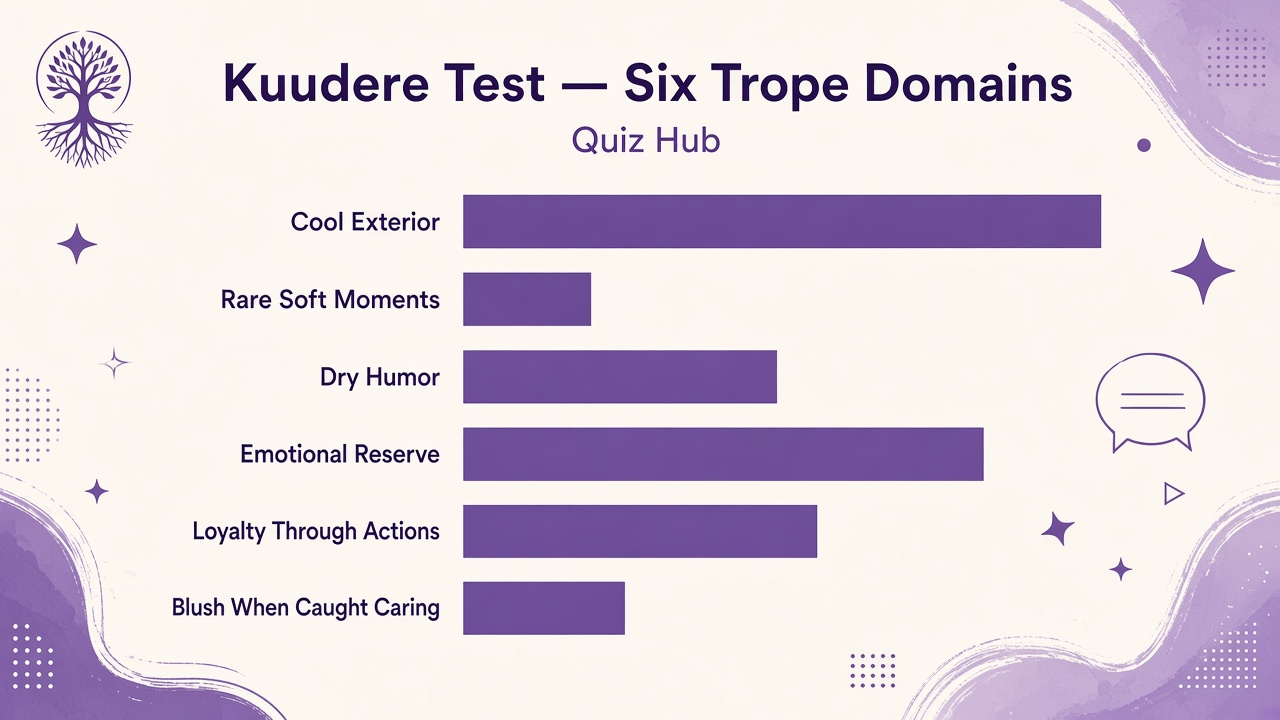
Six yandere trope domains
The diagram below shows how domain scores appear in your results. High possessive fantasy with strong boundary awareness, for example, can coexist when you enjoy yandere intensity in fiction but reject stalking or control offline.
What this quiz can and cannot tell you
Can tell you
- Whether yandere trope beats resonate low, moderately, or strongly on this screener
- Six domain scores for obsessive attachment, jealousy, devotion, possessive fantasy, sweet-versus-dark duality, and boundaries
- Jealousy intensity and obsessive attachment flags for reflection
- A starting point for comparing sibling dere archetype quizzes on The Quiz Hub
Cannot tell you
- Whether obsession in real life is healthy or romantic
- Permission to stalk, monitor, isolate, or control people who trust you
- Clinical attachment style, personality disorder traits, or diagnosis
- Official scores comparable to published psychometric instruments
Yandere tropes, dere archetypes, and how this quiz fits
Anime and manga fans use dere-type labels to describe how fictional characters express affection. Yandere characters often combine sweet presentation with obsessive devotion, jealousy arcs, and unsettling inner monologue. Media psychologists note that recreational identity quizzes work best when they separate trope appetite from offline ethics. The Quiz Hub built this yandere test as a six-domain screener with three bands and explicit reminders that high scores describe playful overlap, not excuses for stalking or control.
Fan communities on databases like TV Tropes document how yandere beats evolved from thriller tension into a recognizable romance trope. That cultural context shaped our boundary awareness items: agreeing that fiction differs from real consent raises your boundary score without lowering possessive fantasy domain bars. Pair results with our dere-type-quiz for a multi-archetype map. Our tsundere-test screens hot denial and blush deflection tropes. Our kuudere-test will explore cool reserve fiction themes separately.
| The Quiz Hub test | What it adds |
|---|---|
| Dere-type quiz | Multi-archetype affection map across tsundere, kuudere, yandere, and related dere labels |
| Tsundere test | Harsh-soft contrast, denial, blush deflection, pride, and gradual warming tropes |
| Kuudere test (planned) | Cool reserve and minimal-expression tropes, not obsessive devotion beats |
| This yandere test | Obsessive attachment, jealousy, devotion extremes, possessive fantasy, sweet-versus-dark duality, and boundary awareness with three bands |
Sample item: agreeing that jealousy arcs feel emotionally satisfying raises your jealousy intensity score. Agreeing that being yandere is not an excuse for stalking raises your boundary awareness score. Browse more quizzes on our fandom and entertainment hub or try the anime personality test for genre vibe reflection. Read how we review entertainment content in our editorial policy.
Yandere test FAQ
What is a yandere test?
A yandere test maps your self-reported fiction preferences to six recreational trope domains from anime fandom: obsessive attachment in stories, jealousy intensity, devotion extremes, possessive fantasy, sweet facade versus dark thoughts, and boundary awareness. Twenty-four agree-disagree items produce a yandere trope pull index, six domain bars, boundary awareness flags, and one of three bands. It is entertainment reflection, not clinical personality typing.
Am I a yandere if I score high?
A high band means your answers overlap with classic yandere trope beats like all-consuming devotion, jealousy arcs, and sweet-versus-dark duality in fiction. That describes playful archetype resonance, not a moral label and not permission for stalking or controlling behavior with real people.
How is this different from a dere-type quiz?
A dere-type quiz compares multiple anime affection archetypes such as tsundere, kuudere, and yandere in one map. This yandere test zooms into one archetype with six domain scores and three bands. Pair it with our dere-type-quiz, tsundere-test, and kuudere-test for sibling trope comparison.
Does enjoying yandere tropes mean obsession is healthy in real life?
No. This quiz includes a boundary awareness domain with heavily reverse-scored items so consent, space, and healthy communication appear as their own bar and flag. Many fans enjoy yandere characters in fiction while rejecting stalking or control offline.
How long does the yandere test take?
Most people finish in about five minutes. There are 24 agree-disagree items on a five-point scale about how yandere tropes resonate with you in fiction. You can pause and return in the same browser session thanks to autosave.
Who reviewed this content?
Dr. Rachel Kim, PhD, reviewed the test framing and result explanations. See our editorial policy for review standards.
Reviewed by