What the Irlen Syndrome Test measures
This screener does not diagnose Irlen syndrome, scotopic sensitivity, dyslexia, or ADHD from one score. It measures how much you agree with unofficial visual comfort literacy grouped four ways: reading strain awareness about glare and fatigue without shame; light and screen habits about breaks and contrast; specialist referral literacy about eye exams and supervised overlay trials; and quiz-not-diagnosis limits about humble captions. You rate 22 statements from strongly disagree to strongly agree, with reverse-worded traps so one bad week cannot inflate every bar. Your answers also feed a second chart on closeness and trust habits.
Reading strain awareness
Notice cues without lazy labels.
Light and screen habits
Breaks and contrast, not hero cosplay.
Specialist referral literacy
Ask eye care pros, not influencers.
Quiz not diagnosis
Mirror not Irlen label.
How it works
Answer 22 agreement items
Rate each statement from Strongly disagree to Strongly agree. Tap Next after each answer.
Answers sort into four domains
Each answer feeds one of four visual comfort literacy groups, and every item also feeds a closeness and trust layer.
See your index and charts
You get a 0 to 100 index, a band, four domain bars, and a second chart for intimacy habits.
Take the Irlen Syndrome Test
Answer 22 short statements to see your visual comfort literacy index, four domain bars, and a closeness and trust chart.
What your result means
Your index is the average of all 22 answers, scaled from 0 to 100, with reverse-worded items flipped first. Read quiz-not-diagnosis bars together with referral literacy before you treat a high score as medical proof. Optometrists and clinicians still own exams and treatment when symptoms persist.
| Band | Index range | Typical reading |
|---|---|---|
| Building visual comfort literacy | 0 to 35 | Fewer agreed habits on reading strain awareness, screen habits, referral literacy or unofficial limit items. |
| Mixed visual comfort habits | 36 to 65 | Solid habits in some domains with softer bars on limits or humility items. |
| Strong visual comfort literacy | 66 to 100 | Frequent agreement with habits and limits; still unofficial reflection only. |
Tips at a glance
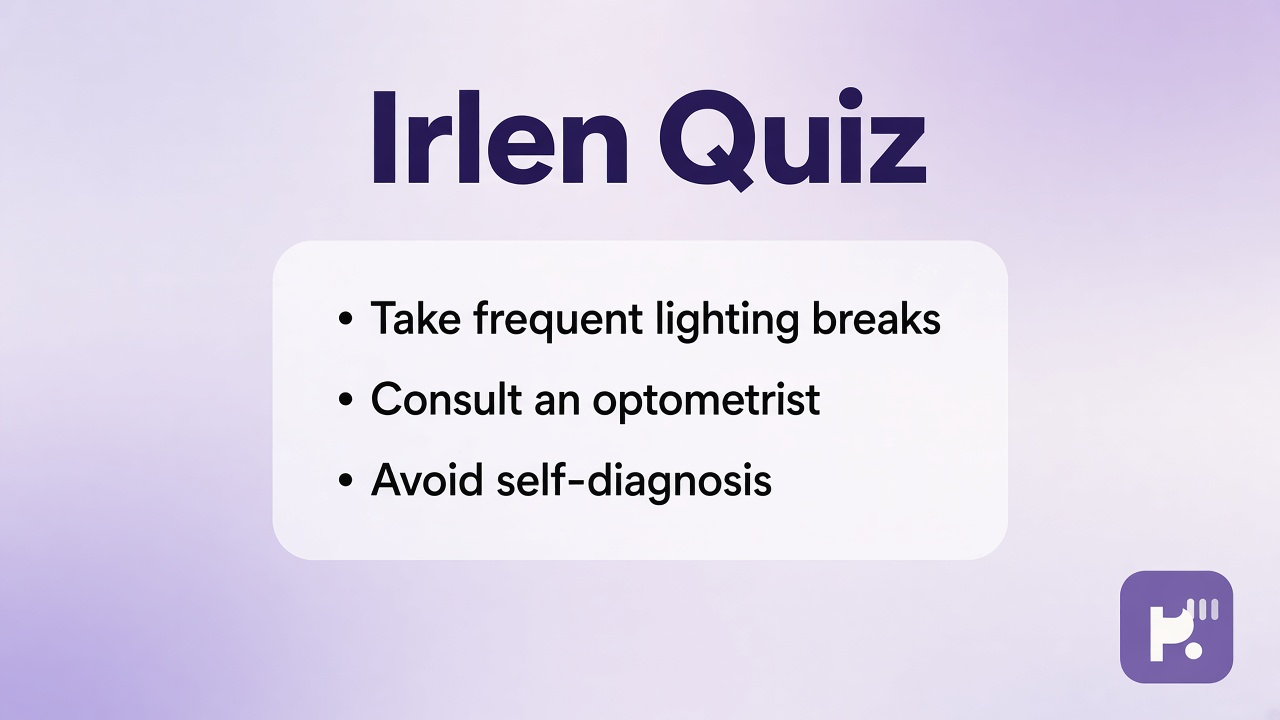
A quick takeaway graphic with topic tips (not your personal quiz scores). Start the quiz for your index, bands, and charts.
What this quiz can and cannot tell you
Can tell you
- Highlight reading strain and screen habits worth discussing with eye care providers
- Separate comfort vocabulary from diagnosis cosplay and lazy reader dunk myths
- Encourage supervised overlay conversations without public labeling threads
- Spark kinder accommodation questions at school or work with consent
Cannot tell you
- Diagnose Irlen syndrome, dyslexia, or learning disorders from couch scores
- Replace comprehensive eye exams, prescriptions, or vision therapy plans
- License public reading pace dunk or lens sales pitches from bar height
- Prove someone should skip professional evaluation because bars looked high
Why visual strain talk needs awareness, screen habits, referrals, and diagnosis limits
Search traffic around Irlen syndrome often follows reading fatigue posts and colored overlay ads, not clinics offering couch diagnoses. Those goals help when readers name strain cues, screen habits, and quiz-not-label caps together. They hurt when literacy bars become lazy reader dunk licenses or DIY prescription cosplay.
Dr. Elena Vasquez reviews YMYL comfort screeners with a split between honest symptom vocabulary and refusal of diagnosis cosplay. Strain items track notice habits without shame. Screen items track breaks without influencer hero myths. Referral items track professional exams. Limit items keep screeners separate from lens sales and public labeling.
Real readers mix bars. You might score high on strain awareness while referral literacy stays moderate before a first eye exam. Reverse items catch influencer overlay orders, public child diagnosis, and bar-height medical proof.
Pair results with siblings instead of forcing one reading story. Our dyslexia test for kids explores parent-reported reading strain with separate diagnosis limits. Our intro to psychology quiz widens psych study literacy rather than visual comfort caps here. Browse the mental health and clinical hub for more screeners.
| Test | Focus |
|---|---|
| Dyslexia test for kids | Parent reading strain frequency rather than Irlen comfort literacy stems here |
| Intro to psychology quiz | Psych study literacy rather than visual overlay referral caps on this page |
| Mental health and clinical hub | More YMYL screeners when comfort topics need clinical humility |
Irlen Syndrome Test FAQ
What does the Irlen Syndrome Test measure?
It measures self-reported visual comfort literacy across reading strain awareness, screen habits, specialist referral habits, and unofficial not-diagnosis limit items, plus a parallel fear-of-intimacy stack chart.
Does this diagnose Irlen syndrome?
No. Limit items reject diagnosis cosplay. Formal assessment requires qualified eye care and clinical evaluation outside this page.
Should I buy colored overlays based on my score?
Talk with an optometrist or clinician about supervised trials. This quiz cannot prescribe lenses or tints from bar height.
How is this different from dyslexia screeners?
This page centers visual comfort and perceptual strain vocabulary. Dyslexia siblings use separate stems focused on reading accuracy and school evaluation paths.
Who reviewed this quiz?
Dr. Elena Vasquez reviewed the YMYL framing, limit language, and result explanations. See our editorial policy for review standards.
Reviewed by