What the Ineffective Conflict Resolution Questionnaire IAI measures
This quiz does not administer the published CRSI inventory, provide couples therapy, or certify you to diagnose partners from bar height. It measures how much you agree with unofficial ineffective conflict habit awareness grouped four ways: stonewall and withdrawal about pause-not-disappear habits; blame and scorekeeping about curiosity not ledgers; contempt and mockery about respect not ridicule; and quiz-not-couples-therapy limits about humble captions. You rate 22 statements from strongly disagree to strongly agree, with reverse-worded traps so one fight week cannot inflate every bar. Your answers also feed a second chart on closeness and trust habits.
Stonewall and withdrawal
Pause not disappear.
Blame and scorekeeping
Curiosity not ledger.
Contempt and mockery
Respect not ridicule.
Quiz not couples therapy
Mirror not CRSI proof.
How it works
Answer 22 agreement items
Rate each statement from Strongly disagree to Strongly agree. Tap Next after each answer.
Answers sort into four domains
Each answer feeds one of four conflict habit groups, and every item also feeds a closeness and trust layer.
See your index and charts
You get a 0 to 100 index, a band, four domain bars, and a second chart for intimacy habits.
Take the Ineffective Conflict Resolution Questionnaire IAI
Answer 22 short statements to see your ineffective conflict habit awareness index, four domain bars, and a closeness and trust chart.
What your result means
Your index is the average of all 22 answers, scaled from 0 to 100, with reverse-worded items flipped first. Read therapy limit bars together with contempt awareness before you treat a high score as relationship authority. Licensed clinicians still own formal care when abuse or safety stakes are real.
| Band | Index range | Typical reading |
|---|---|---|
| Building conflict habit awareness | 0 to 35 | Fewer agreed habits on stonewall awareness, blame loops, contempt slips, repair tries, or unofficial limit items. |
| Mixed conflict habit awareness | 36 to 65 | Solid awareness in some domains with softer bars on contempt, repair, or humility items. |
| Strong conflict habit awareness | 66 to 100 | Frequent agreement with awareness and limits; still unofficial reflection only. |
Tips at a glance
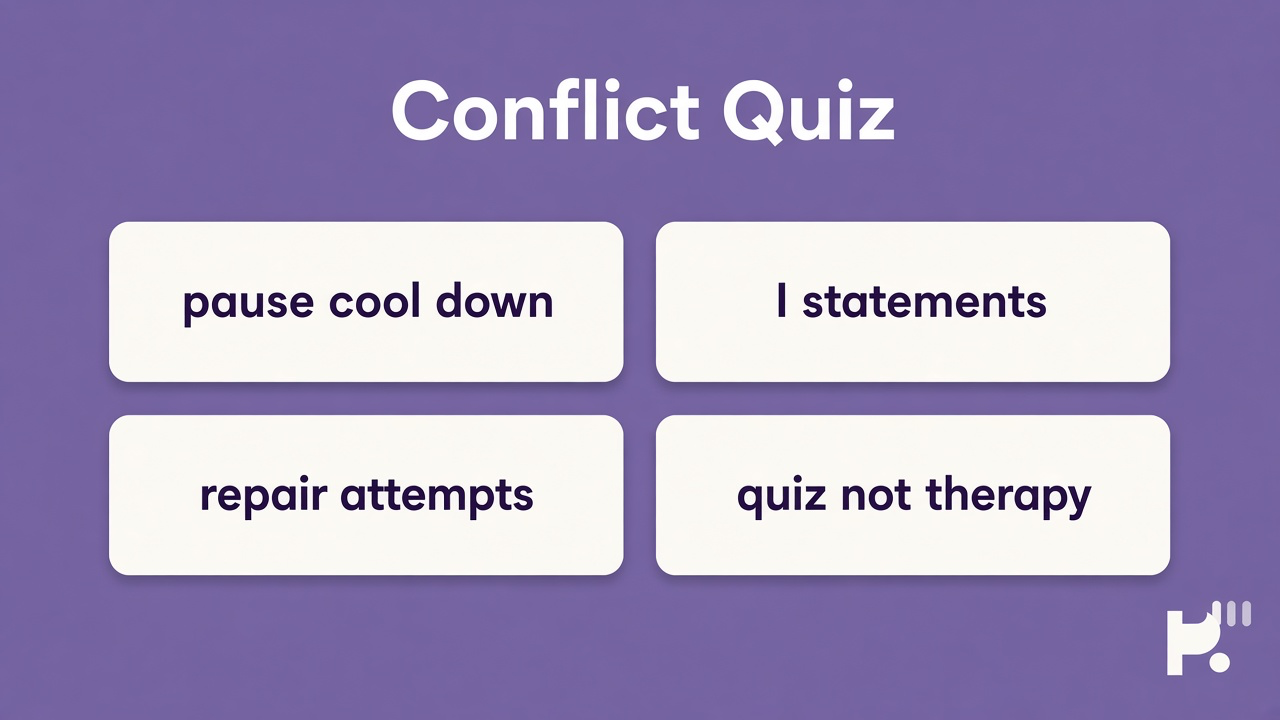
A quick takeaway graphic with topic tips (not your personal quiz scores). Start the quiz for your index, bands, and charts.
What this quiz can and cannot tell you
Can tell you
- Highlight stonewall, blame, and contempt habits worth revisiting before the next argument
- Separate habit reflection from CRSI cosplay and partner dunk threads
- Encourage therapist questions without public ranking spirals
- Spark better repair goals without claiming therapy license
Cannot tell you
- Prove CRSI or TKI scores from couch totals
- Replace couples therapy, mediation, or safety planning
- License public partner dunk or toxic-label verdict threads
- Diagnose personality disorders from agree totals alone
Why conflict memes need stonewall awareness, blame loops, contempt limits, and therapy caps
Search traffic around ineffective conflict resolution questionnaires often arrives from couples study groups and influencer animal metaphors, not from clinics offering couch therapy clearance. Those goals help when readers name stonewall slips, blame ledgers, and quiz-not-therapy caps together. They hurt when couch scores become partner dunk licenses.
Dr. Priya Sharma reviews relationship screeners with a split between honest habit reflection and refusal of therapy cosplay. Stonewall items track pause-not-disappear language. Blame items track behavior not character verdicts. Contempt items track mockery as damage not wit.
Real partners mix bars. You might score high on contempt awareness while stonewall habits stay moderate during busy seasons. Reverse items catch scorekeeping tournaments, silent-treatment victory myths, and bar-height CRSI proof.
Pair results with siblings instead of forcing one conflict story. Our conflict resolution style inventory CRSI explores integrate and avoid style labels with separate stems. Our fight language quiz stays on verbal de-escalation habits rather than IAI ineffective-pattern language here. Our Thomas Kilmann test widens TKI-style framing rather than stonewall-blame-contempt caps on this page. Browse the relationships and dating hub for more reflection screeners.
| Test | Focus |
|---|---|
| Conflict resolution style inventory CRSI | Integrate and avoid style labels rather than ineffective-pattern awareness stems here |
| Fight language quiz | Verbal de-escalation habits rather than stonewall-blame-contempt IAI framing on this page |
| Thomas Kilmann test | TKI-style modes rather than unofficial IAI ineffective habit caps here |
Ineffective Conflict Resolution Questionnaire IAI FAQ
What does the Ineffective Conflict Resolution Questionnaire IAI measure?
It measures self-reported awareness of stonewall, blame, contempt, and repair habits plus unofficial therapy-limit items, plus a parallel fear-of-intimacy stack chart.
Is this the official CRSI inventory?
No. Limit items reject inventory cosplay. This page uses original agree stems inspired by ineffective conflict themes, not published CRSI scoring keys.
Is this couples therapy?
No. Consult licensed therapists when relationship distress or safety worries are real. This page stays unofficial habit reflection.
Can high bars prove my partner is toxic?
No. Bars describe habits you endorsed here, not diagnoses or licenses to dunk someone in group chats.
Who reviewed this quiz?
Dr. Priya Sharma reviewed the framing, limit language, and result explanations. See our editorial policy for review standards.
Reviewed by