What the Fight Language Quiz measures
This quiz does not administer Gottman workshops, certify mediators, or tell you whether to stay or leave a relationship. It measures how much you agree with conflict communication statements grouped four ways: pause before sharp words about breath, volume, and resisting humiliation comebacks; listen before reply about paraphrase, clarifying questions, and resisting interrupt scores; repair and ownership about specific apologies, follow-up, and behavior versus contempt labels; and de-escalation not violence about rejecting intimidation, threat language, and harm glorification while valuing cool-downs and outside support when loops feel unsafe. You rate 22 statements from strongly disagree to strongly agree, with reverse-worded traps so fight-bro myths cannot inflate every bar. Your answers also feed a second chart on closeness and trust habits, because argument style and intimacy stress often move together. The total becomes an index from 0 to 100 where higher means more reported de-escalation-friendly verbal habits on this screener, not proof you never hurt anyone with words.
Pause before sharp words
Breath, volume, and skipping humiliation comebacks.
Listen before reply
Paraphrase, clarifying questions, fewer interrupt points.
Repair and ownership
Specific apologies, follow-up, critique without contempt.
De-escalation not violence
No intimidation wins; cool-downs and support when unsafe.
How it works
Answer 22 agreement items
Rate each statement from Strongly disagree to Strongly agree. Tap Next after each answer.
Answers sort into four domains
Each answer feeds one of four conflict communication groups, and every item also feeds a closeness and trust layer.
See your index and charts
You get a 0 to 100 index, a band, four domain bars, and a second chart for intimacy habits.
Take the Fight Language Quiz
Answer 22 short statements to see your conflict communication habit index, four domain bars, and a closeness and trust chart.
What your result means
Your index is the average of all 22 answers, scaled from 0 to 100, with reverse-worded items flipped first. Read de-escalation not violence bars together with repair before you treat a high score as relationship guarantee. Cozy reflection supports kinder arguments; licensed therapists still own treatment plans when harm or fear persists.
| Band | Index range | Typical reading |
|---|---|---|
| Sharper fight language habits | 0 to 35 | More agreement with volume wins, listen-to-lose myths, vague apologies, or intimidation-as-strategy items on this screener. |
| Mixed conflict communication habits | 36 to 65 | Solid pause or repair habits mixed with sarcasm slips, interrupting, vague sorry loops, or threat-language myths. |
| Stronger de-escalation habits | 66 to 100 | Frequent pause, listen, repair, and anti-intimidation agreement; still reflection not therapy. |
Tips at a glance
A quick takeaway graphic with topic tips (not your personal quiz scores). Start the quiz for your index, bands, and charts.
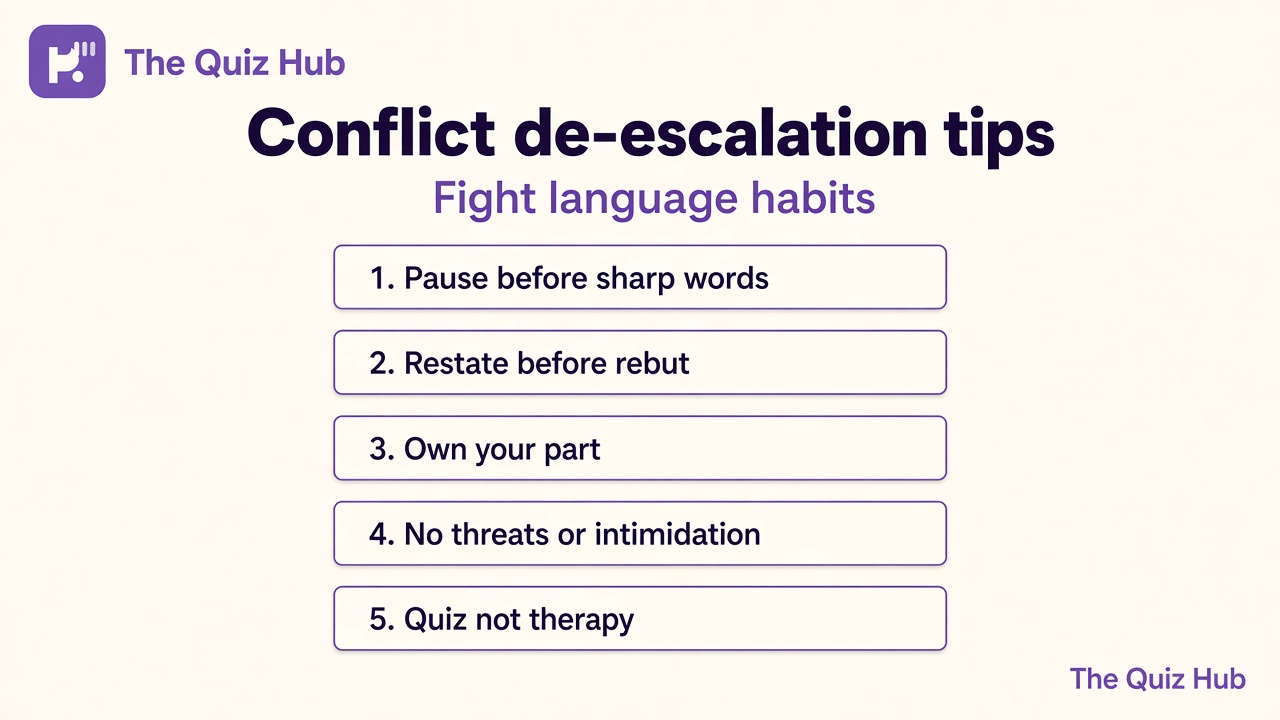
What this quiz can and cannot tell you
Can tell you
- Highlight pause, listen, and repair habits worth practicing before the next recurring fight
- Separate unofficial habit reflection from therapy, legal advice, or violence coaching
- Encourage paraphrase and specific apologies without public score shaming
- Spark better questions about de-escalation without certifying relationship outcomes
Cannot tell you
- Replace couples therapy, abuse assessment, or safety planning
- Prove you are safe to partner with from one couch screener alone
- Give permission to threaten, intimidate, or harm because you felt provoked
- Diagnose personality disorders or predict divorce from verbal habit bars
Fight language habits: de-escalation without glorifying blowups
People search fight language when they want sharper debate skills, calmer partnerships, or a label for how arguments feel. Useful results name pause habits, listening, and repair in the same breath as limits on intimidation. Harmful results treat volume, cruelty, or threat fantasies as winning moves. This screener stays in the de-escalation lane: verbal habits you can practice, not violence you can justify.
Dr. Priya Sharma reviews relationships screeners with a simple split: reward honest pause and listen habits while rejecting myths that loudness equals safety or that mockery equals honesty. Pause before sharp words tracks breath, volume, and resisting humiliation comebacks. Listen before reply tracks paraphrase and curiosity before rebuttal. Repair and ownership tracks specific apologies and follow-up without contempt labels. De-escalation not violence keeps intimidation, threats, and harm glorification in the reverse-item lane where they belong.
Real couples mix bars. You might listen well yet skip repair, which often describes people who hate conflict until contempt leaks out later. You might score high pause with softer de-escalation items, which can mean you go quiet without feeling safe to return. Reverse items catch autopilot: loud winning, mind reading, conditional apologies, cruelty as strategy, or mocking vulnerable topics should not inflate bars meant to track kinder fight language.
Pair results with siblings on this hub instead of forcing one communication story. Our apology language quiz sibling stays on what makes sorry feel complete with stems separate from pause and listen habits here. Our love language test maps care preferences rather than argument tone on this page. Our conflict resolution style inventory explores broader style labels when you want a different framework than verbal de-escalation items here. Browse the relationships and dating hub for more reflection tools. Share results as habit mirrors, not weapons in the next fight.
Stress seasons move habits faster than personality labels. A repair bar might dip after one sleepless week while listen stays high, which is a cue to schedule follow-up, not to declare victory. When you retake, notice whether threat-language reverse items stay low even when you feel righteous. De-escalation is a practice, not a score you cash in to avoid professional help when fear or harm shows up.
| Test | Focus |
|---|---|
| Apology language quiz | What makes apologies feel complete rather than pause and listen stems on this page |
| Love language test | Care preference vocabulary rather than verbal fight de-escalation habits here |
| Conflict resolution style inventory | Broader conflict style labels rather than fight-language de-escalation items on this screener |
Fight Language Quiz FAQ
What does the Fight Language Quiz measure?
It measures how much you agree with statements about pause before sharp words, listen before reply, repair and ownership, and de-escalation not violence. You get an index from 0 to 100 plus four bars. It reflects self-reported verbal conflict habits on this screener, not therapy outcomes.
Is this about physical fighting or boxing?
No. Fight language here means words during disagreements. Items reject glorifying threats or harm. Physical sport or self-defense training is outside this screener.
Is this the same as the love language test?
No. Love languages focus on how you prefer to give and receive care. This quiz focuses on argument tone, listening, repair, and de-escalation limits.
Can a high score mean I should stay in a harmful relationship?
No. Habits on a screener do not override fear, threats, or violence. If you feel unsafe, contact trusted support or local resources before retaking.
Who reviewed this quiz?
Dr. Priya Sharma reviewed the relationships framing, de-escalation ethics, safety notes, and result explanations. See our editorial policy for review standards.
Reviewed by