What the incontinence quiz measures
This quiz does not diagnose incontinence, prescribe pelvic floor plans, or adjust medications from bar height. It measures how much you agree with unofficial health literacy statements grouped four ways: bladder symptom vocabulary literacy about stress, urge, and mixed patterns without label cosplay; lifestyle and pelvic support habits about fluids, pelvic care, and products without shame wars; clinician referral humility about timelines, red flags, and private sharing; and quiz-not-incontinence-diagnosis limits about humble captions. You rate 22 statements from strongly disagree to strongly agree, with reverse-worded items flipped first. Your answers also feed a second chart on closeness and trust habits, because embarrassment sometimes blocks honest clinician questions.
Bladder symptom vocabulary literacy
Plain words without public labels.
Lifestyle and pelvic support habits
Supports without shame threads.
Clinician referral humility
Follow-up when patterns persist.
Quiz not incontinence diagnosis
Reflection not clinic file.
How it works
Answer 22 agreement items
Rate each statement from Strongly disagree to Strongly agree. Tap Next after each answer.
Answers sort into four domains
Each answer feeds one of four incontinence literacy groups, and every item also feeds a closeness and trust layer.
See your index and charts
You get a 0 to 100 index, a band, four domain bars, and a second chart for intimacy habits.
Take the Incontinence Quiz
Answer 22 short statements to see your incontinence health literacy index, four domain bars, and a closeness and trust chart.
What your result means
Your index is the average of all 22 answers, scaled from 0 to 100, with reverse-worded items flipped first. Read symptom and habit bars together with unofficial limit scores before you treat a high total as proof you need no clinician. Educational reflection supports kinder pelvic health talk; urology, gynecology, and emergency teams still own responses when red flags appear.
| Band | Index range | Typical reading |
|---|---|---|
| Building incontinence literacy | 0 to 35 | Fewer agreed habits on symptom vocabulary, pelvic support, clinician humility, or unofficial diagnosis limits on this screener. |
| Mixed incontinence literacy | 36 to 65 | Solid vocabulary in some domains with shame traps, DIY cure memes, or bar-height diagnosis dunk corners. |
| Strong incontinence literacy | 66 to 100 | Frequent agreement with literacy, habits, and humility plus unofficial limits; still not diagnosis or treatment authority. |
Tips at a glance
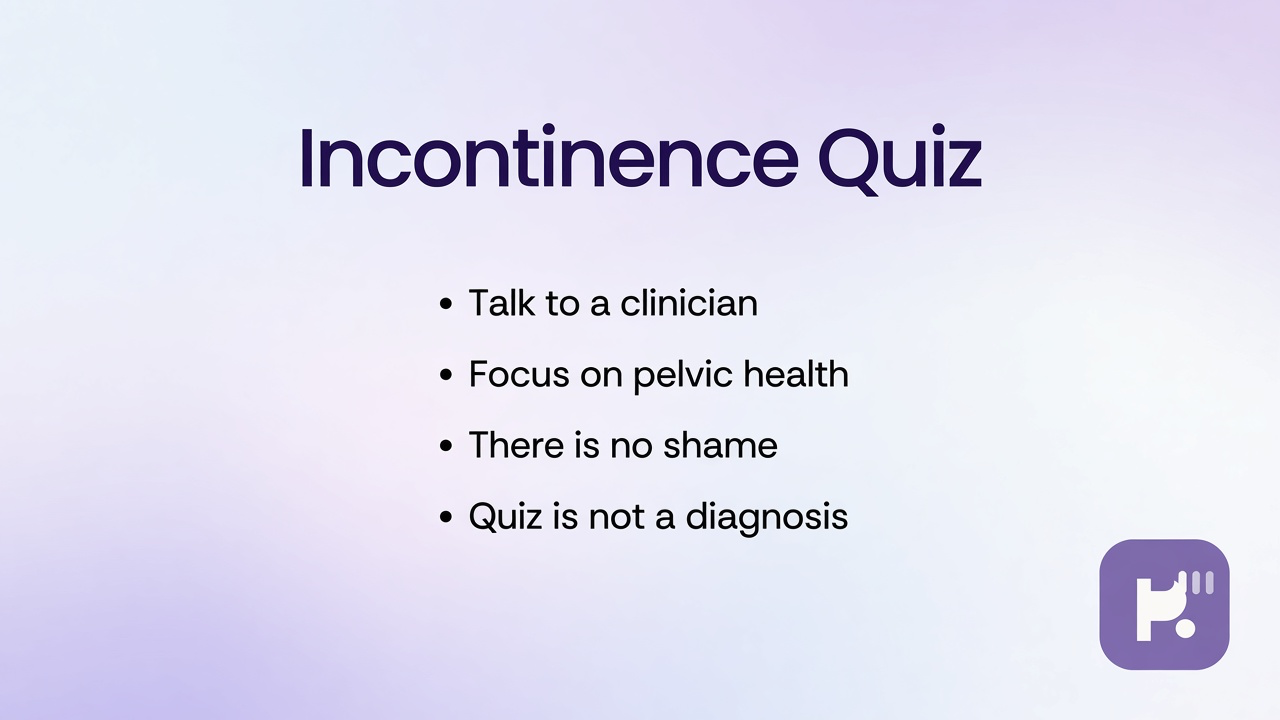
A quick takeaway graphic with topic tips (not your personal quiz scores). Start the quiz for your index, bands, and charts.
What this quiz can and cannot tell you
Can tell you
- Translate bladder vocabulary into one honest clinician or family conversation starter
- Separate this page from do-i-need-diapers frequency siblings on this hub
- Notice shame-versus-data confusion without public leak dunk threads
- Spark better pelvic health questions without claiming prescribing authority
Cannot tell you
- Replace licensed urology, gynecology, or pelvic floor assessment
- Diagnose incontinence or order treatment from one agree screener
- Prove someone is incontinent from couch totals
- Give permission to shame neighbors in public leak ranking threads
Why incontinence literacy needs symptom words, pelvic habits, clinician humility, and diagnosis limits
Search traffic around incontinence quizzes often follows shame posts and product ads while clinic handouts use vocabulary many adults never heard in school. Those goals help when readers name stress versus urge patterns, pelvic supports, and refuse public ranking polls about who lacks discipline. They hurt when literacy bars become proof someone may mock a friend for one leak mention online.
Dr. Elena Vasquez reviews clinical literacy screeners with a simple split: reward honest bladder vocabulary and honest refusal of diagnosis cosplay and screenshot shame threads at the same time. Symptom items track plain language without label mailers. Habit items track supports without dunk orders. Clinician humility tracks follow-up and emergencies without toughness polls.
Real adults mix bars. You might score high on vocabulary while keeping clinician humility moderate when embarrassment blocks appointments. Reverse items catch overconfidence: public leak rankings, skipped follow-up, or bar-height incontinence trials should not inflate scores meant to track layered habits.
Pair results with siblings on this hub instead of forcing one pelvic health story. Our do I need diapers quiz explores separate frequency stems rather than literacy agree lanes here. Our how full is your bladder quiz stays on urgency humor language rather than unofficial diagnosis caps on this page. Our urinary system quiz widens anatomy warm-up themes. Browse the mental health and clinical hub for more reflection screeners.
| Test | Focus |
|---|---|
| Do I need diapers quiz | Leak frequency stems rather than incontinence literacy agree lanes on this page |
| How full is your bladder quiz | Urgency humor language rather than unofficial diagnosis caps here |
| Urinary system quiz | Anatomy warm-up rather than bladder health literacy limits on this screener |
Incontinence Quiz FAQ
What does the incontinence quiz measure?
It measures how much you agree with statements about bladder symptom vocabulary, pelvic support habits, clinician humility, and unofficial quiz-not-diagnosis limits. You get an index from 0 to 100 plus four bars. It reflects self-reported literacy habits on this screener, not a clinical diagnosis.
Can this quiz diagnose urinary incontinence?
No. Only licensed clinicians diagnose incontinence using appropriate history, exam, and testing when needed.
Should I skip the doctor if my literacy bars look high?
No. Persistent leaks, pain, blood in urine, or neurologic changes still deserve professional evaluation regardless of quiz totals.
Can I use bars to shame someone who mentions leaks?
No. Bars describe habits you endorsed here, not moral authority or licenses for public ranking threads.
Who reviewed this quiz?
Dr. Elena Vasquez reviewed the unofficial framing, not-diagnosis separation, limit tone, and result explanations. See our editorial policy for review standards.
Reviewed by