What the How Full Is Your Bladder Quiz measures
This quiz does not measure bladder volume, diagnose urinary conditions, or prescribe treatment. It measures how much you agree with playful urinary habit reflection grouped four ways: hydration and breaks about water and normal restroom needs; holding habit awareness about noticing marathon holding without bravado; kind bathroom humor about laughs without cruel filming; and quiz-not-urology-diagnosis limits about refusing disease cosplay from bar height. You rate 22 statements from strongly disagree to strongly agree, with reverse-worded traps so one snark mood cannot inflate every bar. Your answers also feed a second chart on closeness and trust habits. The total becomes an index from 0 to 100 where higher means more reported kind habit manners on this screener, not proof of bladder health.
Hydration and breaks
Water and normal needs.
Holding habit awareness
Notice marathon holding.
Kind bathroom humor
Laugh without cruelty.
Quiz not urology diagnosis
Play not urodynamics.
How it works
Answer 22 agreement items
Rate each statement from Strongly disagree to Strongly agree. Tap Next after each answer.
Answers sort into four domains
Each answer feeds one of four urinary habit play groups, and every item also feeds a closeness and trust layer.
See your index and charts
You get a 0 to 100 index, a band, four domain bars, and a second chart for intimacy habits.
Take the How Full Is Your Bladder Quiz
Answer 22 short statements to see your urinary habit play index, four domain bars, and a closeness and trust chart.
What your result means
Your index is the average of all 22 answers, scaled from 0 to 100, with reverse-worded items flipped first. Read urology-limit bars together with kindness habits before you treat a high score as medical clearance. Clinicians still own pain, fever, or blood-in-urine symptoms.
| Band | Index range | Typical reading |
|---|---|---|
| Building urinary habit play | 0 to 35 | Fewer agreed habits on core domains or unofficial limit items on this urinary habit screener. |
| Mixed urinary habit play | 36 to 65 | Solid habits with softer slips on limits or reverse-worded traps. |
| Strong urinary habit play | 66 to 100 | Frequent agreement with habits and limits; still unofficial reflection only. |
Tips at a glance
A quick takeaway graphic with topic tips (not your personal quiz scores). Start the quiz for your index, bands, and charts.
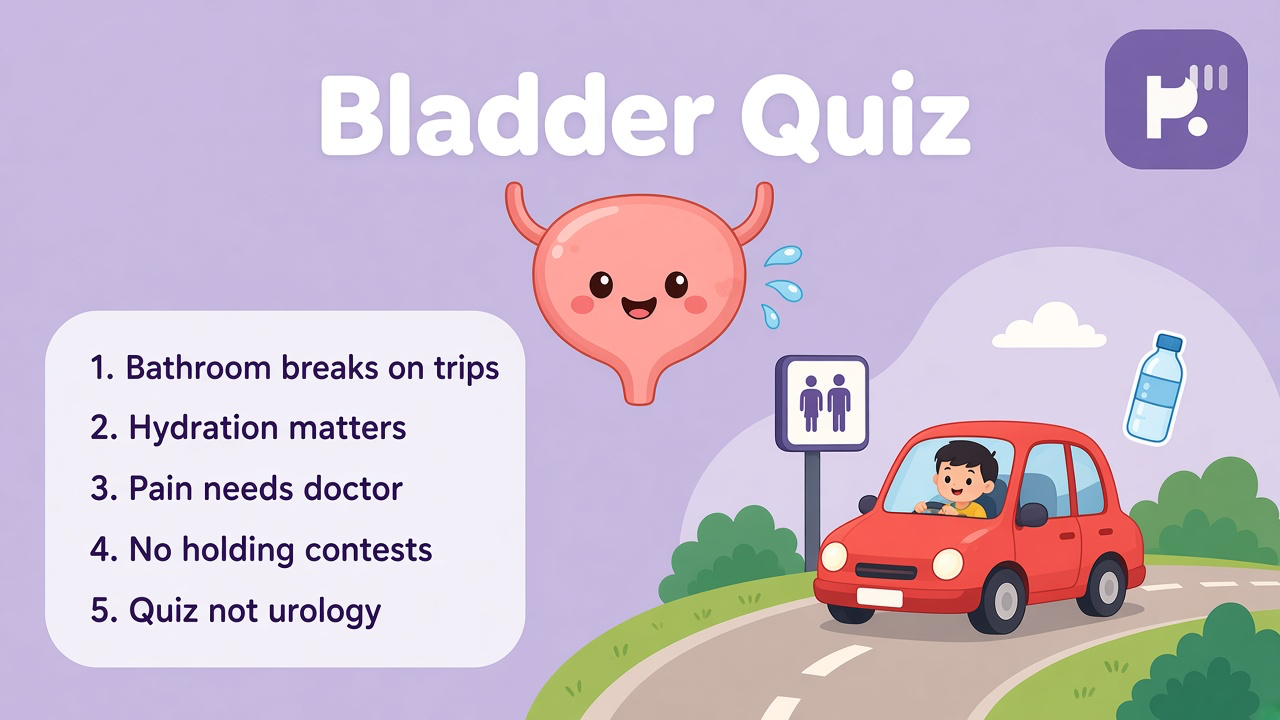
What this quiz can and cannot tell you
Can tell you
- Highlight hydration, break kindness, and humor habits worth revisiting before road trips
- Separate playful reflection from bladder disease cosplay
- Encourage tagged recaps without shame spirals
- Spark better clinician questions when symptoms persist
Cannot tell you
- Diagnose UTIs, incontinence, retention, or other urology conditions
- Measure real bladder volume or replace urodynamic testing
- Prescribe treatment from agree totals
- Prove you may film strangers in restrooms from bar height
Why bladder humor quizzes need hydration kindness, holding awareness, gentle jokes, and urology limits
Search traffic around how full is your bladder quizzes often arrives from road trips, party dares, or readers seeking fair language after shame memes hurt someone they know—not from urology clinics or permission to diagnose leaks. Those goals help when readers name break kindness and unofficial limits together with original stems. They hurt when couch scores become disease labels. Urinary habit play works best when it refuses urology cosplay beside silly reflection.
Dr. Priya Sharma reviews fun novelty screeners with a simple split: reward honest break kindness and anti-shame humor while keeping medical limits visible. Hydration and breaks tracks normal needs without bravado. Holding habit awareness tracks listening to discomfort without dunk threads. Kind bathroom humor tracks consent before jokes. Quiz-not-urology limits keep screeners separate from antibiotic cosplay.
Real players mix bars. You might score high on humor kindness while keeping holding awareness moderate during deadline weeks. Reverse items catch overconfidence: filming strangers, disease nicknames, or bar-height prescriptions should not inflate bars meant to track layered manners.
Pair results with siblings instead of forcing one bathroom story. Our how bad do you have to pee quiz sibling explores overlapping urgency play with its own stems on this wave. Our excretory system quiz stays on classroom kidney-versus-bladder literacy rather than party humor here. Browse the fun and novelty hub for more light screeners. Caption shares as humor warm-up and skip sentencing strangers who never asked for a quiz.
Travel seasons move faster than restroom lines. A holding-awareness bar might dip after one festival weekend while kindness bars stay high until you retake calmly. When you share results, say unofficial habit mirror. When you borrow tips, credit friends who planned rest stops without shame.
| Test | Focus |
|---|---|
| How bad do you have to pee quiz | Urgency play rather than hydration kindness depth on this page |
| Excretory system quiz | Classroom organ literacy rather than party humor caps here |
| Fun and novelty hub | More playful screeners when bathroom memes need another lens |
How Full Is Your Bladder Quiz FAQ
What does the How Full Is Your Bladder Quiz measure?
It measures self-reported urinary habit play around hydration, breaks, kind humor, and unofficial urology limits. You get an index from 0 to 100 plus four domain bars.
Does this quiz diagnose bladder problems?
No. It is playful habit reflection only. Pain, fever, or blood in urine need clinicians.
Can I use results to shame someone who needs frequent breaks?
No. Kind humor items reject shame threads. High bars describe habits you endorsed here, not permission to bully.
How is this different from the how bad do you have to pee quiz?
Both are playful urinary themes. This page emphasizes fullness habit kindness and urology limits; the sibling emphasizes urgency play with separate stems.
Who reviewed this quiz?
Dr. Priya Sharma reviewed the framing, limit language, and result explanations. See our editorial policy for review standards.
Reviewed by