What the Human Trafficking Quiz measures
This quiz does not conduct investigations, provide legal advice, or certify you to accuse someone from bar height. It measures how much you agree with unofficial awareness study reflection grouped four ways: victim-centered language about dignity-first wording; warning sign literacy about coercion patterns without gossip cosplay; reporting and support pathways about 1-888-373-7888, 988, and advocate routes; and quiz-not-investigation limits about refusing sensational headlines. You rate 22 statements from strongly disagree to strongly agree, with reverse-worded traps so outrage moods cannot inflate every bar. Your answers also feed a second chart on closeness and trust habits.
Victim-centered language
Dignity-first study wording.
Warning sign literacy
Patterns without gossip polls.
Reporting and support pathways
Hotlines without hero cosplay.
Quiz not investigation
Study without accusation threads.
How it works
Answer 22 agreement items
Rate each statement from Strongly disagree to Strongly agree. Tap Next after each answer.
Answers sort into four domains
Each answer feeds one of four awareness study groups, and every item also feeds a closeness and trust layer.
See your index and charts
You get a 0 to 100 index, a band, four domain bars, and a second chart for intimacy habits.
Take the Human Trafficking Quiz
Answer 22 short statements to see your trafficking awareness literacy index, four domain bars, and a closeness and trust chart.
What your result means
Your index is the average of all 22 answers, scaled from 0 to 100, with reverse-worded items flipped first. Read pathway bars with limit bars together before you treat a high total as investigation authority. Advocates and trained responders still own active safety work.
| Band | Index range | Typical reading |
|---|---|---|
| Building trafficking awareness literacy | 0 to 35 | Fewer agreed habits on victim-centered language, warning signs, reporting pathways, or quiz-not-investigation limits. |
| Mixed trafficking awareness literacy | 36 to 65 | Solid awareness habits with softer bars on language, rumor checks, or limit items. |
| Strong trafficking awareness literacy | 66 to 100 | Frequent agreement with habits and limits; still unofficial awareness reflection only. |
Tips at a glance
A quick takeaway graphic with topic tips (not your personal quiz scores). Start the quiz for your index, bands, and charts.
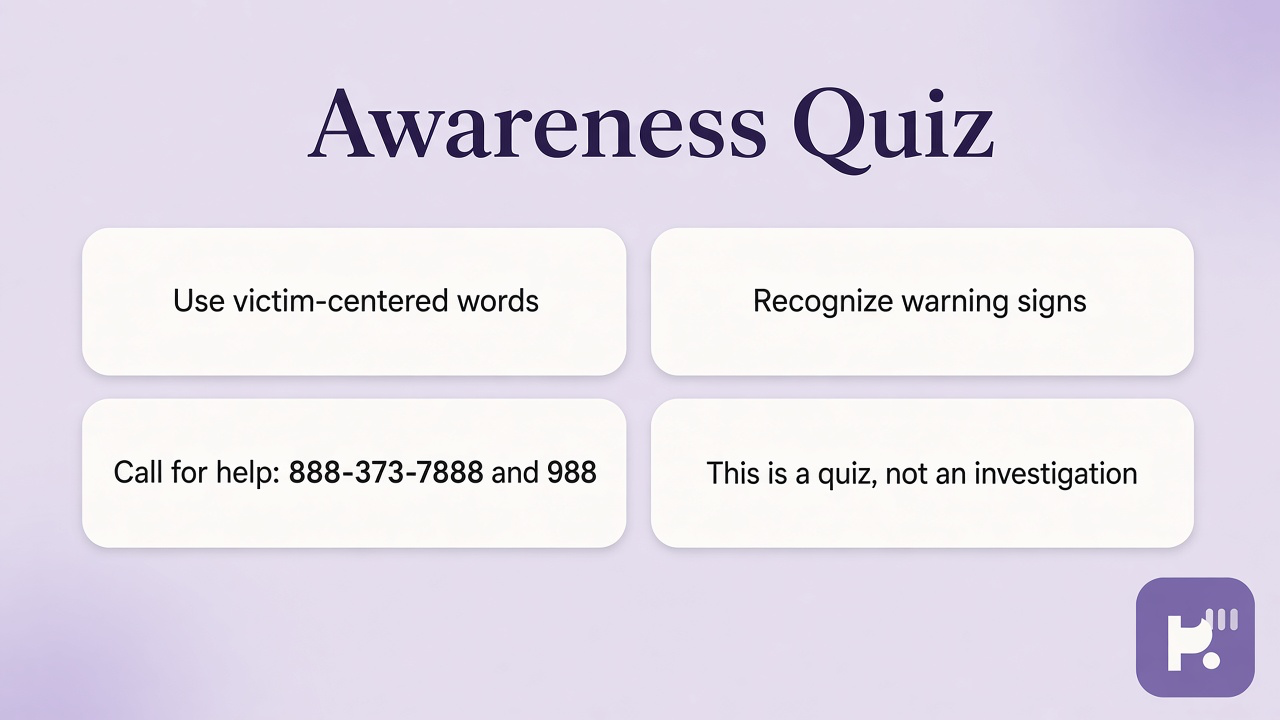
What this quiz can and cannot tell you
Can tell you
- Highlight language, warning sign, and pathway topics worth revisiting before advocacy debates
- Separate awareness reflection from accusation and sensational headline cosplay
- Encourage hotline awareness without vigilante sting spirals
- Spark better study goals without claiming law enforcement license
Cannot tell you
- Prove trafficking occurred or clear someone from couch scores
- Replace advocates, attorneys, or formal investigations
- License public accusation, doxxing, or voyeur content threads
- Diagnose strangers or run solo stings from agree totals
Victim-centered awareness, pathways, and limits without sensational cosplay
People search trafficking awareness quizzes when coursework, headlines, and friend-group rumors collide. Real curricula help when readers pair warning sign language with hotlines and humility. They hurt when couch scores become licenses to accuse neighbors or repost identifying details for engagement.
Victim-centered language keeps dignity in study notes. Survivor-informed modules contrast coercion examples with myths and blame framing that silences help-seeking. Sensational nicknames and click-chase captions are reverse signals this screener tries to catch.
Warning sign literacy covers control, isolation, and document patterns from official sources, not from parking-lot detective fantasies. Urban legends spread fast; primary source checks belong beside any awareness habit you endorse here.
Pair results with siblings instead of forcing one civic story. Our human rights quiz explores broader rights literacy with separate stems when your syllabus overlaps. Our diversity and inclusion in the workplace quiz stays on respect habits at work. Browse the mental health and clinical test hub for more YMYL screeners with study-not-diagnosis framing.
| Test | Focus |
|---|---|
| Human rights quiz | Broader rights literacy rather than trafficking-specific pathway stems here |
| Diversity and inclusion in the workplace quiz | Workplace respect habits rather than coercion awareness depth on this page |
| Emotional abuse questionnaire EAQ-1122 | Close-relationship warning signs rather than trafficking awareness language here |
Human Trafficking Quiz FAQ
What does the Human Trafficking Quiz measure?
It measures self-reported awareness study habits across victim-centered language, warning sign literacy, reporting pathways, and unofficial investigation-limit items, plus a parallel fear-of-intimacy stack chart.
Can this quiz prove someone is a trafficker?
No. Limit items reject accusation cosplay. Only trained investigators and legal processes using evidence rules can assess crimes. Use this tool for study reflection and credible resources.
What should I do if I or someone else may be in danger?
Call the National Human Trafficking Hotline at 1-888-373-7888, call or text 988 (US) if crisis feels immediate, or contact local emergency services. Prioritize safety over score debate.
Is this law enforcement training or legal advice?
No. Consult attorneys and official advocate training when legal questions affect real people. This page stays unofficial awareness reflection.
Who reviewed this quiz?
Dr. Elena Vasquez reviewed the YMYL framing, crisis resources, victim-centered language, and result explanations. See our editorial policy for review standards.
Reviewed by