What How Counterdependent Are You measures
This quiz does not diagnose counterdependency, attachment disorders, or whether ex-partners were clingy from bar height. It measures how much you agree with hyper-independence habit statements grouped four ways: solo competence pride about strength without shame storms; help refusal habits about accepting support when overwhelmed; closeness literacy about intimacy without public pathology roasts; and quiz-not-attachment-diagnosis limits about playful captions and refusing ex autopsy cosplay. You rate 22 statements from strongly disagree to strongly agree, with reverse-worded traps so one snark mood cannot inflate every bar. Your answers also feed a second chart on closeness and trust habits.
Solo competence pride
Strength without walls.
Help refusal habits
Ask before you isolate.
Closeness literacy
Need without enemy labels.
Quiz not attachment diagnosis
Mirror not DSM mailer.
How it works
Answer 22 agreement items
Rate each statement from Strongly disagree to Strongly agree. Tap Next after each answer.
Answers sort into four domains
Each answer feeds one of four counterdependence habit groups, and every item also feeds a closeness and trust layer.
See your index and charts
You get a 0 to 100 index, a band, four domain bars, and a second chart for intimacy habits.
Take the How Counterdependent Are You
Answer 22 short statements to see your index, four domain bars, and a closeness and trust chart.
What your result means
Your index is the average of all 22 answers, scaled from 0 to 100, with reverse-worded items flipped first. Read limit bars together with domain habits before you treat a high score as authority. Licensed clinicians still own attachment assessment when safety or addiction is involved.
| Band | Index range | Typical reading |
|---|---|---|
| Building counterdependence literacy | 0 to 35 | Fewer agreed habits on core domains or unofficial limit items on this screener. |
| Mixed counterdependence habits | 36 to 65 | Solid habits with softer slips on reverse traps or unofficial limit items. |
| Strong counterdependence literacy | 66 to 100 | Frequent agreement with habits and limits; still unofficial only. |
Tips at a glance
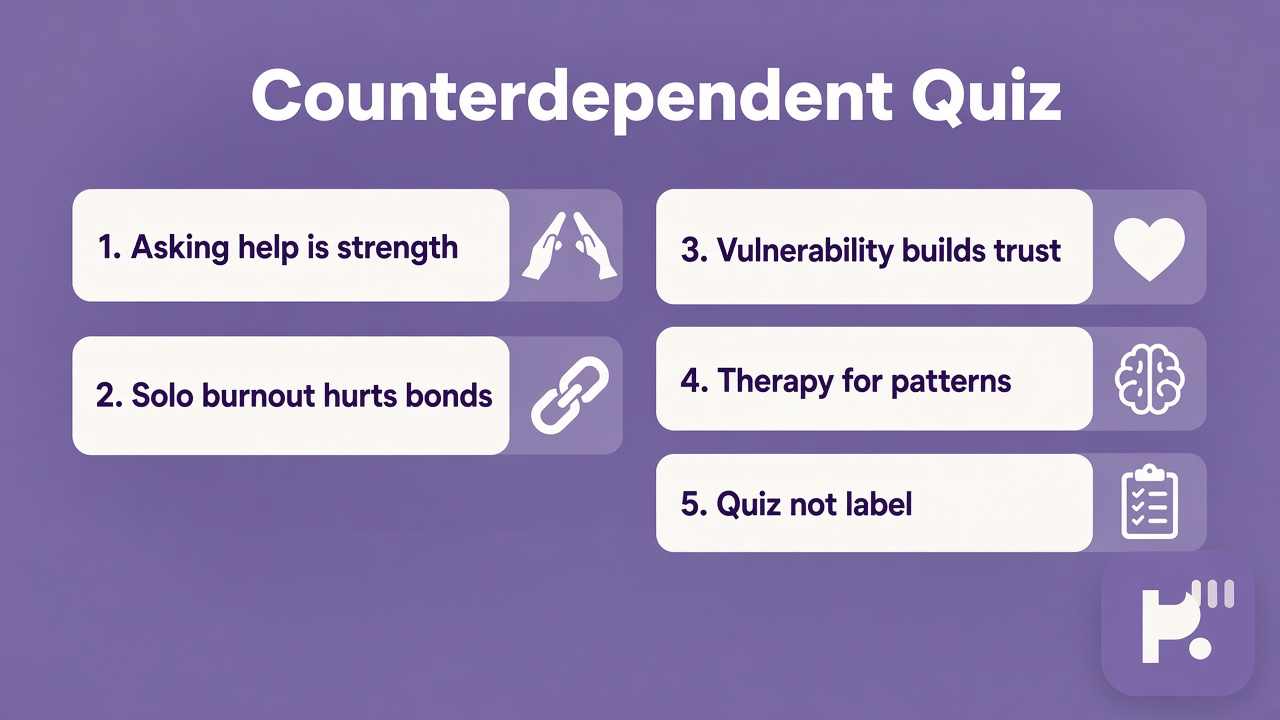
A quick takeaway graphic with topic tips (not your personal quiz scores). Start the quiz for your index, bands, and charts.
What this quiz can and cannot tell you
Can tell you
- Highlight habits worth revisiting before you debate friends from meme totals
- Separate playful reflection from dunk threads and diagnosis cosplay
- Encourage tagged recaps without loyalty trials or psychic certainty
- Spark better questions without claiming clinical or supernatural proof
Cannot tell you
- Diagnose personality disorders, attachment disorders, or parenting failure from bar height
- Replace therapists, pediatricians, spiritual teachers, or crisis lines when harm appears
- Prove past-life facts, citizenship rank, or moral superiority from couch agree totals
- License public enemy labels, passport dunking, or stranger audits from one screener
Why counterdependence memes need solo pride balance, help habits, closeness literacy, and attachment limits
Search traffic around how counterdependent are you quizzes often arrives from breakup threads where hyper-independence gets praised as maturity, not from clinics handing out attachment labels. Those goals help when readers name solo pride and help habits together with unofficial limits. They hurt when couch scores become ex-diagnosis tournaments.
Dr. Priya Sharma reviews relationship screeners with a simple split: reward honest independence and closeness literacy at the same time you keep attachment limits visible. Solo pride tracks strength without mocking neediness. Help refusal tracks accepting support. Closeness literacy tracks intimacy talk without pathology roasts.
Real players mix bars. You might score high on solo pride while help refusal stays moderate, which often describes competent workers who still struggle to ask for emotional support. Reverse items catch overconfidence: invulnerability theater, ex codependent labels, or bar-height attachment myths should not inflate bars meant to track layered habits.
Pair results with siblings instead of forcing one breakup story. Our fear of intimacy quiz explores closeness anxiety with separate stems. Our am I independent quiz widens autonomy reflection without counterdependence limit traps here. Our codependency level test stays on caretaking overload lanes. Browse the relationships and dating hub for more reflection screeners.
| Test | Focus |
|---|---|
| Fear of intimacy quiz | Closeness anxiety habits rather than hyper-independence pride depth here |
| Am I independent quiz | Independence spectrum rather than counterdependence limit stems on this page |
| Codependency level test | Caretaking overload lane rather than solo-pride reflection here |
How Counterdependent Are You FAQ
What does the How Counterdependent Are You measure?
It measures self-reported hyper-independence habits across solo pride, help refusal, closeness literacy, and unofficial limit items, plus a parallel fear-of-intimacy stack chart.
Can this quiz diagnose attachment disorders or prove my ex was codependent?
No. It measures self-reported agreement with habit and limit statements on this page only. Real stakes belong to qualified professionals, official processes, or your own safety planning outside couch screeners.
How is this different from the fear of intimacy quiz?
Fear of intimacy emphasizes closeness anxiety and pull-back habits. This page emphasizes hyper-independence pride, help refusal, and counterdependence literacy with separate stems.
How long does this quiz take?
Most people finish in about five minutes. There are 22 agree statements on a five-point scale. You can pause and return in the same browser session thanks to session autosave.
Who reviewed this quiz?
Dr. Priya Sharma reviewed framing, limits, and result explanations. See our editorial policy for review standards.
Reviewed by