What the Horse Bit Quiz measures
This quiz does not certify trainers, diagnose lameness, or declare which barn mate failed horsemanship from bar height. It measures how much you agree with horse bit study literacy statements grouped four ways: snaffle and mouthpiece basics about joint types and fit without one-size memes; curb and leverage awareness about shanks and educated hands; horse welfare and fitter humility about pain signs, dentists, and individualized horses; and quiz-not-certified-trainer limits about playful captions and refusing barn shame cosplay. You rate 22 statements from strongly disagree to strongly agree, with reverse-worded traps so one lucky clip cannot inflate every bar. Your answers also feed a second chart on closeness and trust habits. The total becomes an index from 0 to 100 where higher means more reported literacy habits on this screener, not proof you should skip professional guidance.
Snaffle and mouthpiece basics
Joints, width, lesson language.
Curb and leverage awareness
Shanks need skill and context.
Horse welfare and fitter humility
Pain checks and pros.
Quiz not certified trainer
Study warm-up not coaching stripes.
How it works
Answer 22 agreement items
Rate each statement from Strongly disagree to Strongly agree. Tap Next after each answer.
Answers sort into four domains
Each answer feeds one of four horse bit literacy groups, and every item also feeds a closeness and trust layer.
See your index and charts
You get a 0 to 100 index, a band, four domain bars, and a second chart for intimacy habits.
Take the Horse Bit Quiz
Answer 22 short statements to see your horse bit study literacy index, four domain bars, and a closeness and trust chart.
What your result means
Your index is the average of all 22 answers, scaled from 0 to 100, with reverse-worded items flipped first. Read trainer-limit bars together with welfare habits before you treat a high score as coaching authority. Certified instructors and veterinarians still own formal assessments.
| Band | Index range | Typical reading |
|---|---|---|
| Building horse bit study literacy | 0 to 35 | Fewer agreed habits on snaffle basics, curb awareness, welfare humility, or unofficial limit items. |
| Mixed horse bit study literacy | 36 to 65 | Solid snaffle recall with softer curb habits, welfare slips, or limit items. |
| Strong horse bit study literacy | 66 to 100 | Frequent agreement with study habits and limits; still unofficial reflection only. |
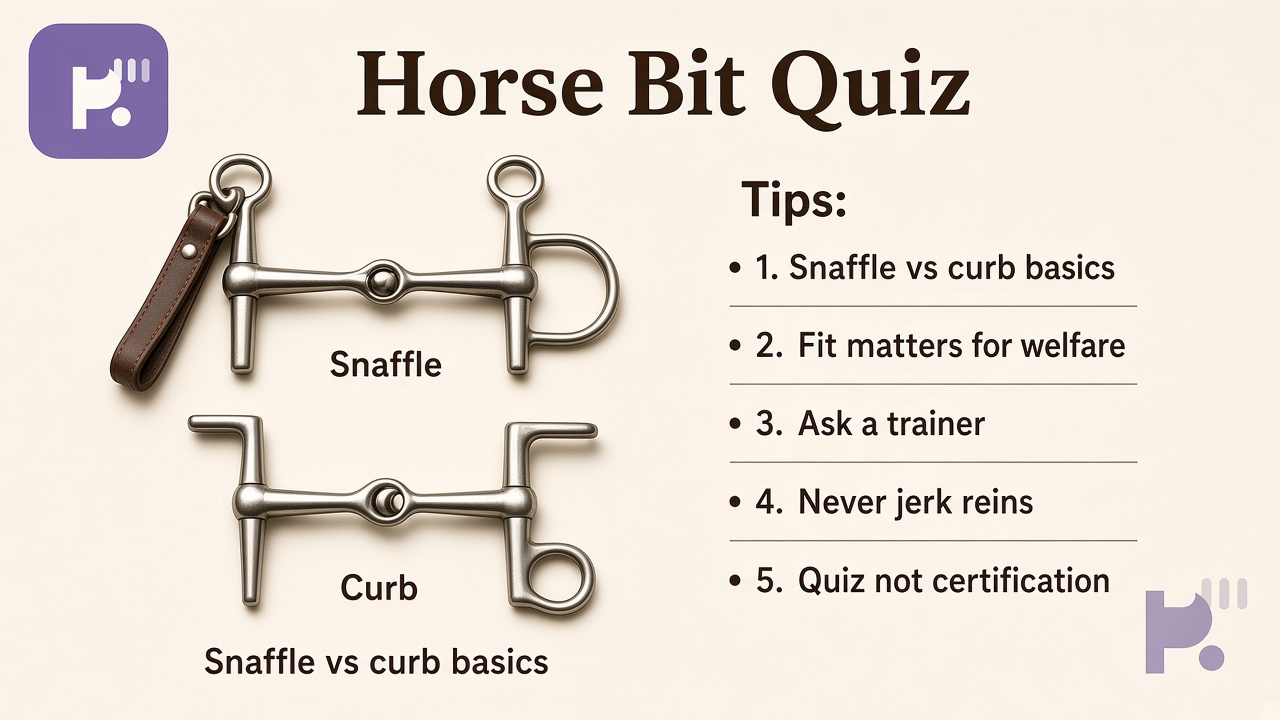
Tips at a glance
A quick takeaway graphic with topic tips (not your personal quiz scores). Start the quiz for your index, bands, and charts.
What this quiz can and cannot tell you
Can tell you
- Highlight snaffle, curb, and welfare habits worth revisiting before tack debates
- Separate respectful study reflection from gear shame and trainer substitution myths
- Encourage tagged recaps without spirals about first-lesson gaps
- Spark better fitter questions without claiming certification authority
Cannot tell you
- Replace certified coaching clinics, instructor exams, or veterinary diagnosis
- Prove you may shame barn mates from literacy bar height
- Certify riding instruction or declare show placements from couch bars
- Predict horse welfare outcomes or declare who is cruel from bars alone
Why horse bit study needs snaffle clarity, curb respect, welfare humility, and trainer separation
Search traffic around horse bit quizzes usually wants snaffle versus curb clarity after a lesson debate, a tack trend thread, or a barn chat that argued over mouth pain, not instructor certification or permission to shame riders. Those goals help when readers name fit basics, ask trainers, and keep agree bars away from credential cosplay. They hurt when literacy bars become public dunk orders. Bit reflection works best when it names welfare humility and unofficial limits together while staying distinct from anatomy siblings.
Dr. Rachel Kim reviews fun novelty screeners with a simple split: reward honest gear vocabulary and honest limits on trainer substitution myths at the same time. Snaffle and mouthpiece basics tracks joint language without one-size memes. Curb and leverage awareness tracks shanks with educated hands. Horse welfare and fitter humility tracks pain signs and professionals. Quiz not certified trainer keeps screeners separate from coaching stripe fantasies.
Real riders mix bars. You might score high on snaffle vocabulary while keeping welfare humility moderate, which often describes strong terms yet occasional barn shame slips. Reverse items catch overconfidence: catalog myths, pain ignoring, or show-floor lectures should not inflate bars meant to track layered barn manners.
Pair results with siblings instead of forcing one forever-bit story. Our animal anatomy quiz explores comparative structure habits when your course moves past tack weeks. Our hobby quiz stays on leisure curiosity rather than mouthpiece detail here. Our horror movie quiz offers unrelated fan study when barn friends want a break from gear talk. Browse the fun and novelty hub for more hobby screeners. When you share tips, credit trainers instead of public tack verdicts.
Show seasons move faster than group chat empathy. A welfare bar might dip after one stressful month while snaffle recall stays high until you retake calmly. When you share results, say unofficial equestrian study habits. Retake after one lesson cycle and watch whether limit bars stay high even if vocabulary rises.
| Test | Focus |
|---|---|
| Animal anatomy quiz | Comparative anatomy study rather than snaffle and curb literacy stems on this page |
| Hobby quiz | General leisure curiosity rather than horse bit welfare detail here |
| Horror movie quiz | Unrelated fan film study rather than equestrian tack habits on this screener |
Horse Bit Quiz FAQ
What does the Horse Bit Quiz measure?
It measures how much you agree with statements about snaffle and mouthpiece basics, curb and leverage awareness, horse welfare and fitter humility, and quiz-not-trainer limits. You get an index from 0 to 100 plus four bars reflecting self-rated study habits on this screener.
Is this a riding instructor certification?
No. This page offers playful equestrian study reflection. Certified coaching programs and instructor exams own formal credentials.
Can I use results to tell someone their bit is abusive?
No. Welfare and limit items reject public shame myths. High bars describe habits you endorsed here, not permission to judge strangers without seeing their horse and team.
How is this different from the animal anatomy quiz?
The animal anatomy sibling emphasizes comparative structure study. This quiz emphasizes mouthpiece types, curb leverage, and barn welfare humility with separate stems.
Who reviewed this quiz?
Dr. Rachel Kim reviewed the equestrian study framing, welfare language, and result explanations. See our editorial policy for review standards.
Reviewed by