What this animal anatomy quiz measures
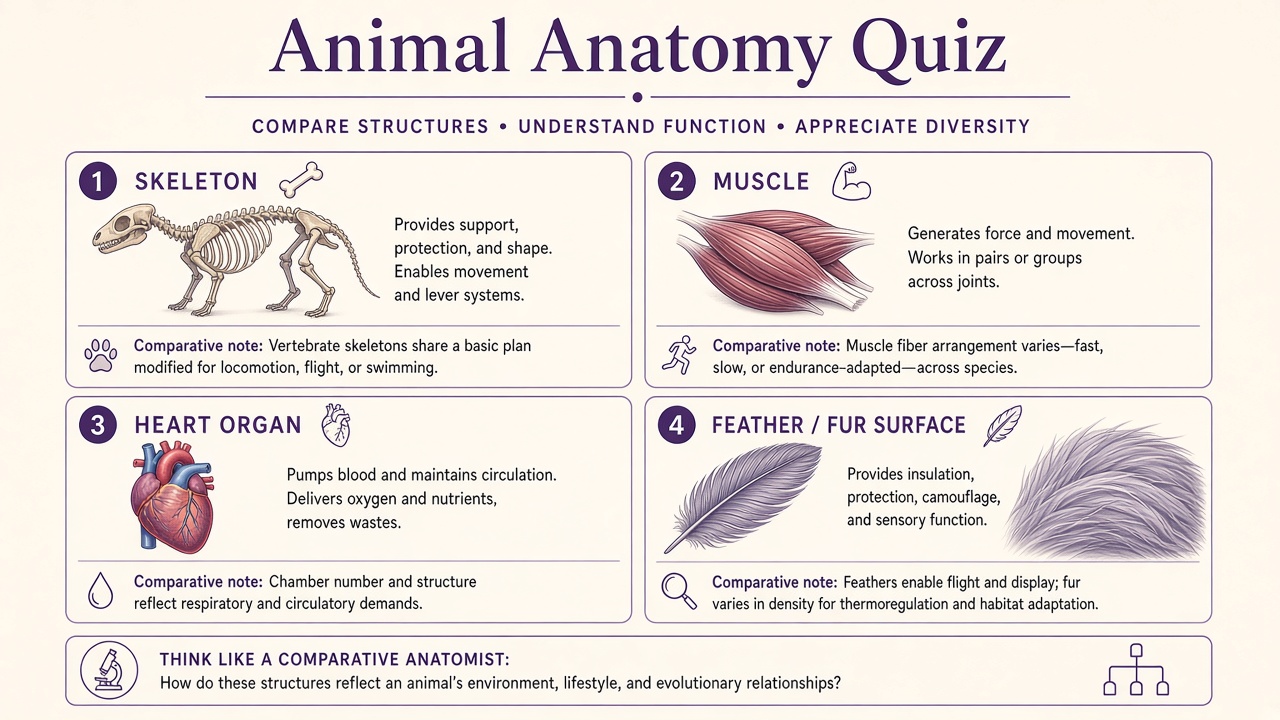
This animal anatomy quiz estimates introductory comparative anatomy familiarity across skeletal structure, muscular systems, organ systems, and surface features. Twenty agree-disagree items align with common high-school and intro college biology themes. Each item also maps to a fear-of-intimacy stack layer when science confidence feels socially risky.
Skeletal structure
Bones, joints, and skeleton adaptations across vertebrate groups.
Muscular systems
Major muscle groups and movement mechanics in common animals.
Organ systems
Heart, lung, digestive, and sensory organs in familiar species.
Surface features
Fur, scales, feathers, claws, and external anatomy landmarks.
How it works
Answer 20 agreement items
Rate each statement from Strongly disagree to Strongly agree. You click Next after each answer.
Items map to domains and stack
Your answers accumulate percentages for four primary domains plus four fear-of-intimacy stack layers.
View index and dual charts
Results show your animal anatomy knowledge index, band label, domain bars, and intimacy stack chart.
Take the animal anatomy quiz
Answer 20 original items about bones, muscles, organs, and external features in familiar animals. Your responses produce an index from 0 to 100, four domain scores, and a fear-of-intimacy stack chart.
What your result means
Your animal anatomy knowledge index is the normalized total across all items on a 0 to 100 scale. Higher scores mean more agreement on this screener. Domain bars show whether skeleton, muscle, organ, or surface features drive your result most.
| Band | Index range | Typical reading |
|---|---|---|
| Lower Animal Anatomy Knowledge Signals | 0 to 35 | Fewer endorsed anatomy familiarity items |
| Mixed Animal Anatomy Knowledge Signals | 36 to 65 | Blend of solid and fuzzy anatomy recall |
| Higher Animal Anatomy Knowledge Signals | 66 to 100 | Strong self-reported anatomy familiarity |
What your report looks like
What this quiz can and cannot tell you
Can tell you
- How strongly animal anatomy knowledge patterns showed up in this self-report screener
- An index from 0 to 100 plus fear-of-intimacy stack index with domain bars
- Which anatomy domain feels strongest in your current answers
Cannot tell you
- Veterinary licensing exam scores or dissection practical grades
- Clinical diagnosis for any animal
- What professors would score on a proctored lab final
Why people search animal anatomy quizzes
Students search animal anatomy quiz when comparative anatomy units, vet assistant programs, or wildlife volunteer training approach. The Quiz Hub built this as an original agree-disagree screener with domain bars rather than copied textbook multiple-choice banks.
Sample items ask about hollow bird bones, antagonistic muscle pairs, gill versus lung gas exchange, or scale versus feather coverings. Compare with our anatomical landmarks quiz for human surface points, animal behavior quiz, or the fun and novelty hub. Read our editorial policy for review standards.
Animal Anatomy Quiz FAQ
What does the animal anatomy quiz measure?
Twenty agree-disagree items map to skeletal structure, muscular systems, organ systems, and surface features. You receive an animal anatomy knowledge index from 0 to 100 where higher scores mean more agreement on this screener.
Can this quiz certify veterinary knowledge?
No. Veterinary exams require supervised assessment, clinical hours, and licensing boards. This screener uses self-report agreement items only.
How is this different from human anatomy quizzes?
This quiz focuses on comparative animal themes across classes such as mammals, birds, and fish. Human-focused tests like anatomical landmarks quiz use clinical surface terminology.
What is the fear-of-intimacy stack?
Parallel stack layers show vulnerability pull-back, trust hesitation, disclosure limits, and closeness anxiety that may pair with hiding science confusion in class or study groups.
Who reviewed this content?
Dr. James Whitfield reviewed the test framing and result explanations. See our editorial policy for review standards.
Reviewed by